Laboratory of Malaria and Vector Research, National Institute of Allergy and Infectious Diseases, National Institutes of Health, Rockville, MD, USA.
BMC Genomics. 2013 Dec 13;14:875. doi: 10.1186/1471-2164-14-875.
Psorophora mosquitoes are exclusively found in the Americas and have been associated with transmission of encephalitis and West Nile fever viruses, among other arboviruses. Mosquito salivary glands represent the final route of differentiation and transmission of many parasites. They also secrete molecules with powerful pharmacologic actions that modulate host hemostasis, inflammation, and immune response. Here, we employed next generation sequencing and proteome approaches to investigate for the first time the salivary composition of a mosquito member of the Psorophora genus. We additionally discuss the evolutionary position of this mosquito genus into the Culicidae family by comparing the identity of its secreted salivary compounds to other mosquito salivary proteins identified so far.
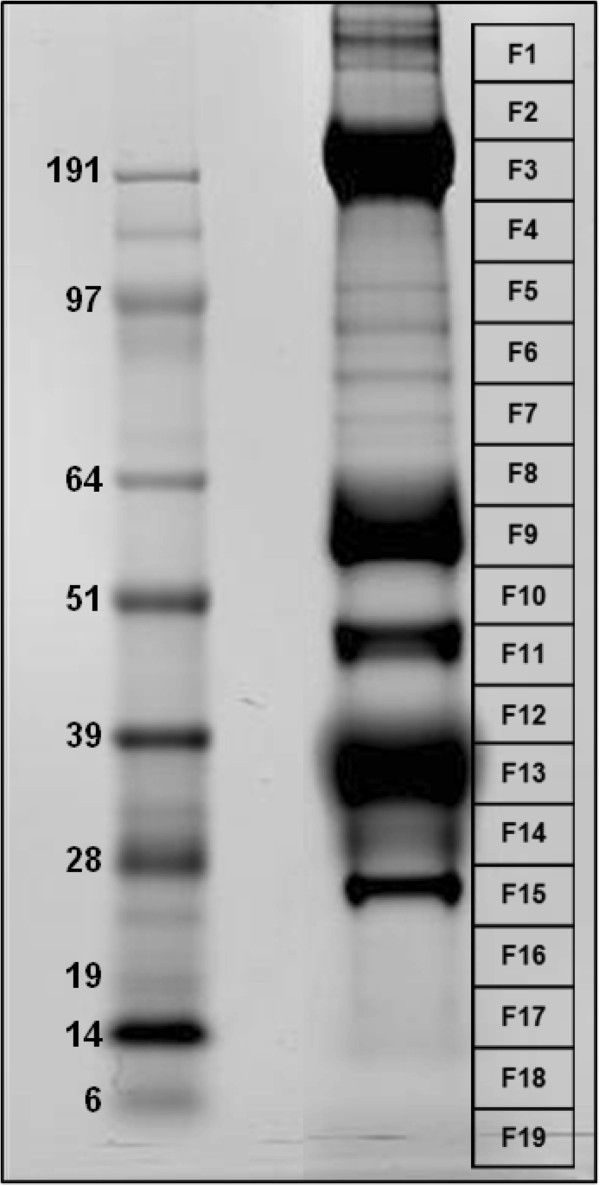
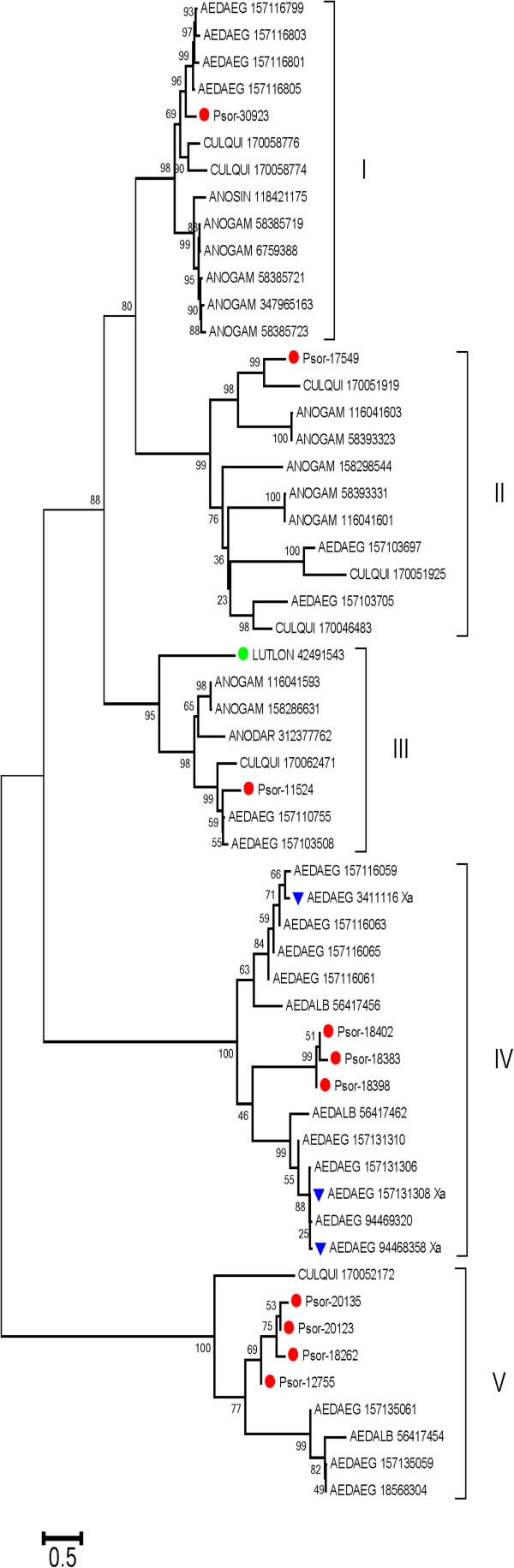
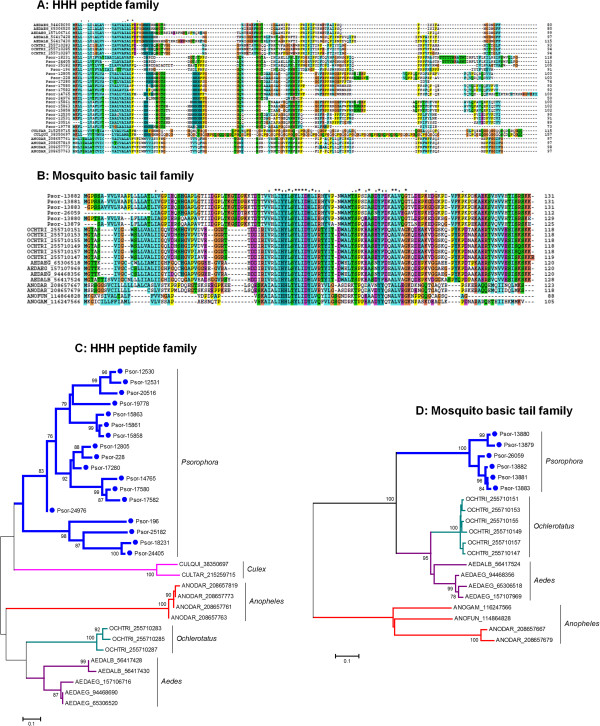
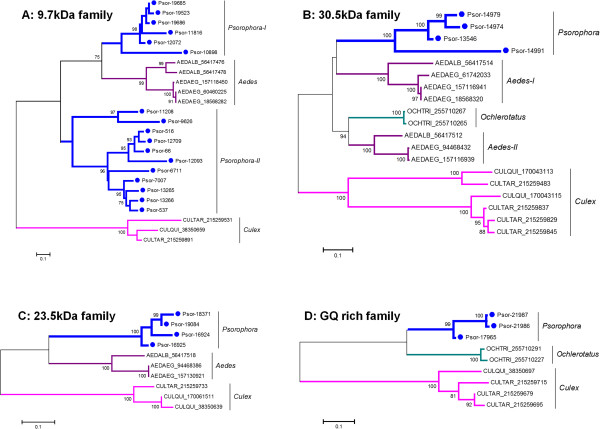
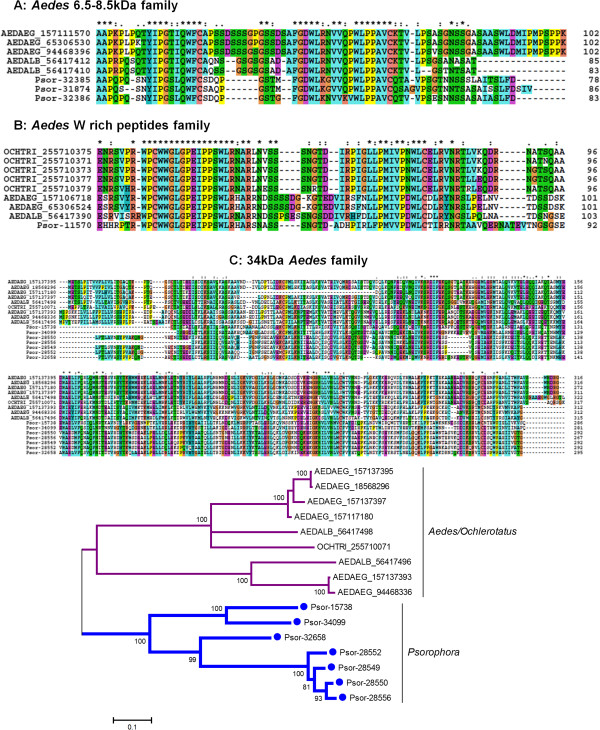
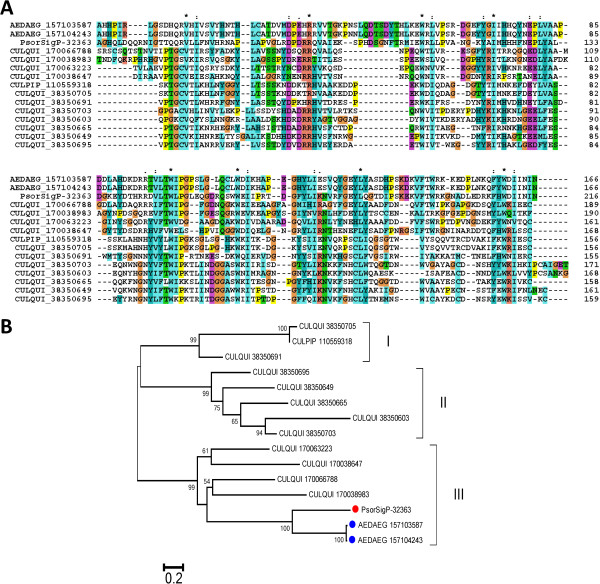
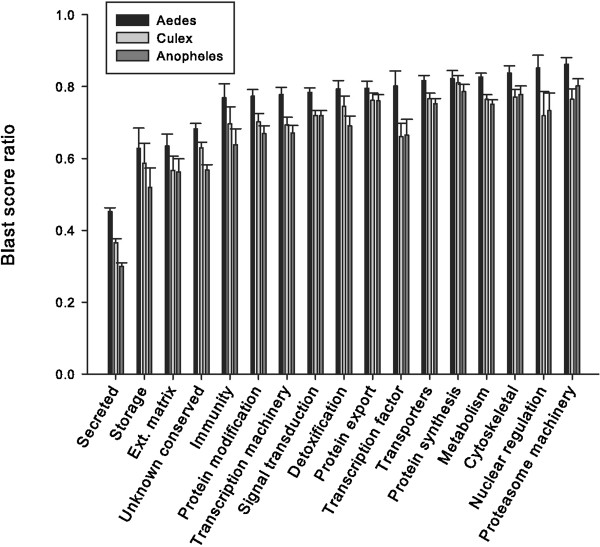
Illumina sequencing resulted in 13,535,229 sequence reads, which were assembled into 3,247 contigs. All families were classified according to their in silico-predicted function/ activity. Annotation of these sequences allowed classification of their products into 83 salivary protein families, twenty (24.39%) of which were confirmed by our subsequent proteome analysis. Two protein families were deorphanized from Aedes and one from Ochlerotatus, while four protein families were described as novel to Psorophora genus because they had no match with any other known mosquito salivary sequence. Several protein families described as exclusive to Culicines were present in Psorophora mosquitoes, while we did not identify any member of the protein families already known as unique to Anophelines. Also, the Psorophora salivary proteins had better identity to homologs in Aedes (69.23%), followed by Ochlerotatus (8.15%), Culex (6.52%), and Anopheles (4.66%), respectively.
This is the first sialome (from the Greek sialo = saliva) catalog of salivary proteins from a Psorophora mosquito, which may be useful for better understanding the lifecycle of this mosquito and the role of its salivary secretion in arboviral transmission.
Psorophora 蚊子仅存在于美洲,与脑炎和西尼罗河热等虫媒病毒的传播有关。蚊子的唾液腺代表许多寄生虫最终分化和传播的途径。它们还分泌具有强大药理作用的分子,调节宿主的止血、炎症和免疫反应。在这里,我们首次采用下一代测序和蛋白质组学方法研究了 Psorophora 属蚊子的唾液成分。我们还通过比较迄今为止鉴定的其他蚊子唾液蛋白的分泌唾液化合物的身份,讨论了这种蚊子属在库蚊科中的进化地位。
Illumina 测序产生了 13,535,229 条序列,这些序列被组装成 3,247 个连续体。根据其在硅预测的功能/活性,所有家族都被分类。对这些序列的注释允许将它们的产物分类为 83 种唾液蛋白家族,其中 20 种(24.39%)通过我们随后的蛋白质组分析得到证实。两个蛋白家族从 Aedes 和一个从 Ochlerotatus 去孤儿化,而四个蛋白家族被描述为 Psorophora 属的新蛋白家族,因为它们与任何其他已知的蚊子唾液序列都没有匹配。一些被描述为 Culicines 特有的蛋白家族存在于 Psorophora 蚊子中,而我们没有发现任何属于已经被认为是 Anophelines 特有的蛋白家族的成员。此外,Psorophora 唾液蛋白与 Aedes(69.23%)的同源物具有更好的同一性,其次是 Ochlerotatus(8.15%)、Culex(6.52%)和 Anopheles(4.66%)。
这是首例来自 Psorophora 蚊子的唾液蛋白的唾液组学(源自希腊语 sialo=唾液)目录,这可能有助于更好地了解这种蚊子的生命周期及其唾液分泌在虫媒病毒传播中的作用。