Mansour Mohamed Ahmed, Mahmoud Ahmed Abdelaal Ahmed, Geddawy Mohammed
Department of Anesthesia, Faculty of Medicine, Cairo University, Egypt.
Department of Anesthesia, Beni Suef University, Egypt.
Saudi J Anaesth. 2013 Oct;7(4):387-91. doi: 10.4103/1658-354X.121045.
The objective of this study was to evaluate the efficacy and safety of giving general anesthesia without the use of any opioids either systemic or intraperitoneal in bariatric surgery.
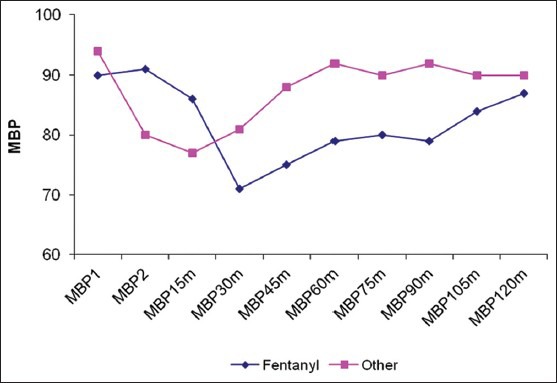
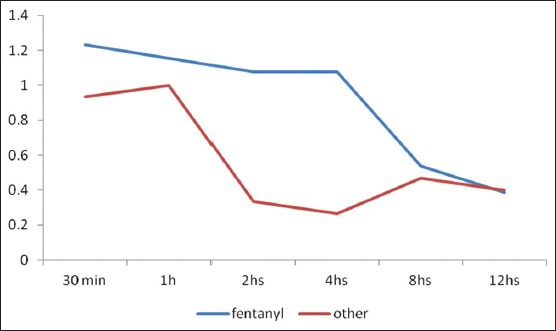
Prospective randomized controlled trial. Obese patients (body mass index >50 Kg/m(2)) undergoing laparoscopic sleeve gastrectomies were recruited and provided an informed signed consent. Patients were randomized using a computer generated randomization table to receive either opioid or non-opioid based anesthesia. The patient and the investigator scoring patient outcome after surgery were blinded to the anesthetic protocol. Primary outcomes were hemodynamics in the form of "heart rate, systolic, diastolic, and mean arterial blood pressure" on induction and ½ hourly thereafter. Pain monitoring through visual analog scale (VAS) 30 min after recovery, hourly for 2 h and every 4 h for 24 h was also recorded. Pain monitoring through VAS and post-operative nausea and vomiting 30 min after recovery were also recorded and finally patient satisfaction and acute pain nurse satisfaction.
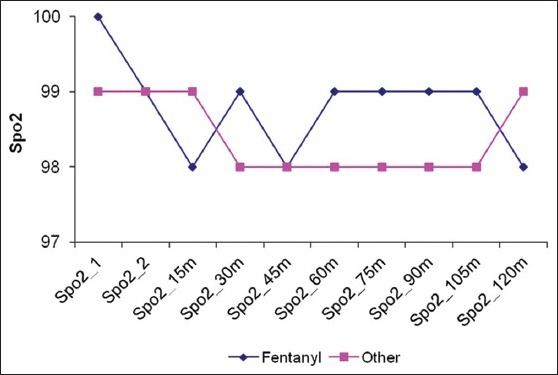
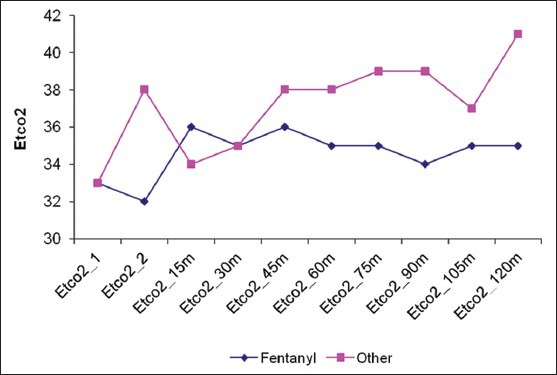
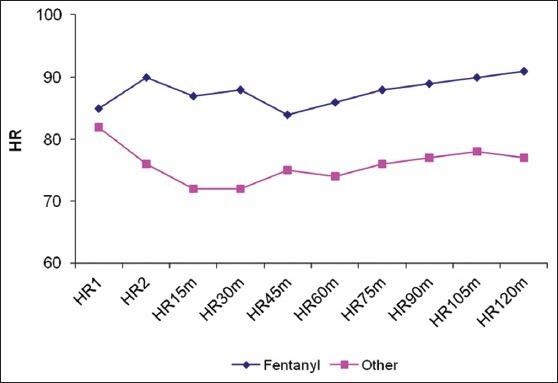
There was no difference in background characteristics in both groups. There were no statistically significant differences in different outcomes as heart rate, mean blood pressure, O2 saturation in different timings between groups at any of the determined eight time points but pain score and nurse satisfaction showed a trend to better performance with non-opioid treatment.
Nonopioid based general anesthesia for Bariatric surgery is as effective as opioid one. There is no need to use opioids for such surgery especially that there was a trend to less pain in non-opioid anesthesia.
本研究的目的是评估在减肥手术中不使用任何全身性或腹膜内阿片类药物进行全身麻醉的有效性和安全性。
前瞻性随机对照试验。招募接受腹腔镜袖状胃切除术的肥胖患者(体重指数>50 Kg/m²),并获得其签署的知情同意书。使用计算机生成的随机化表将患者随机分为接受基于阿片类药物或非阿片类药物的麻醉。患者和评估术后患者结局的研究者对麻醉方案不知情。主要结局指标为诱导时以及此后每半小时以“心率、收缩压、舒张压和平均动脉血压”形式呈现的血流动力学指标。还记录了恢复后30分钟通过视觉模拟量表(VAS)进行的疼痛监测,术后2小时内每小时记录一次,术后24小时内每4小时记录一次。还记录了恢复后30分钟通过VAS进行的疼痛监测以及术后恶心和呕吐情况,最后记录患者满意度和急性疼痛护理满意度。
两组的背景特征无差异。在任何确定的八个时间点,两组在不同时间点的心率、平均血压、血氧饱和度等不同结局指标上均无统计学显著差异,但疼痛评分和护理满意度显示非阿片类药物治疗有表现更好的趋势。
减肥手术中基于非阿片类药物的全身麻醉与基于阿片类药物的全身麻醉一样有效。此类手术无需使用阿片类药物,特别是非阿片类麻醉有疼痛减轻的趋势。