Alba Sandra, Nathan Rose, Schulze Alexander, Mshinda Hassan, Lengeler Christian
Royal Tropical Institute (KIT), KIT Biomedical Research, Amsterdam, The Netherlands, Ifakara Health Institute, Dar es Salaam, Tanzania, Novartis Foundation for Sustainable Development, Basel, Switzerland, Tanzania Commission for Science and Technology, Dar es Salaam, Tanzania, Swiss Tropical and Public Health Institute, Department of Epidemiology and Public Health, Switzerland and Faculty of Science, University of Basel, Basel, Switzerland.
Int J Epidemiol. 2014 Feb;43(1):204-15. doi: 10.1093/ije/dyt231. Epub 2013 Dec 19.
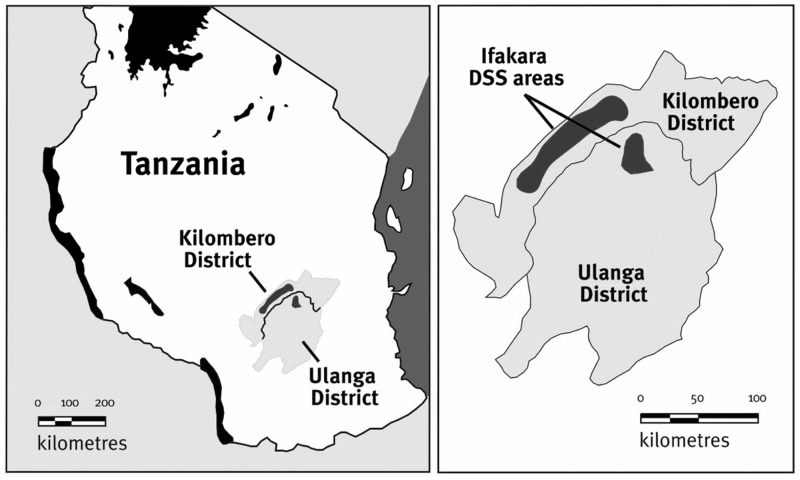
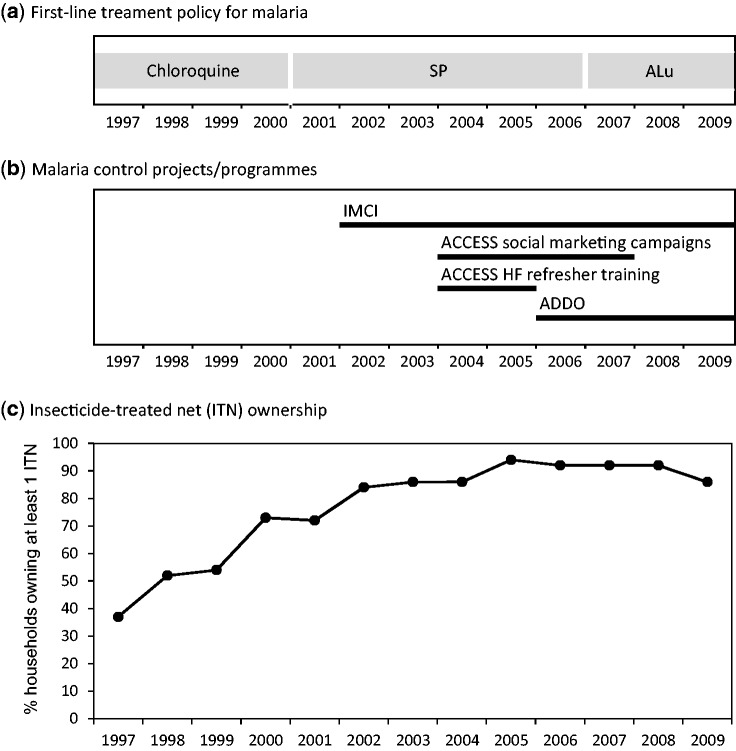
Between 1997 and 2009, a number of key malaria control interventions were implemented in the Kilombero and Ulanga Districts in south central Tanzania to increase insecticide-treated nets (ITN) coverage and improve access to effective malaria treatment. In this study we estimated the contribution of these interventions to observed decreases in child mortality.
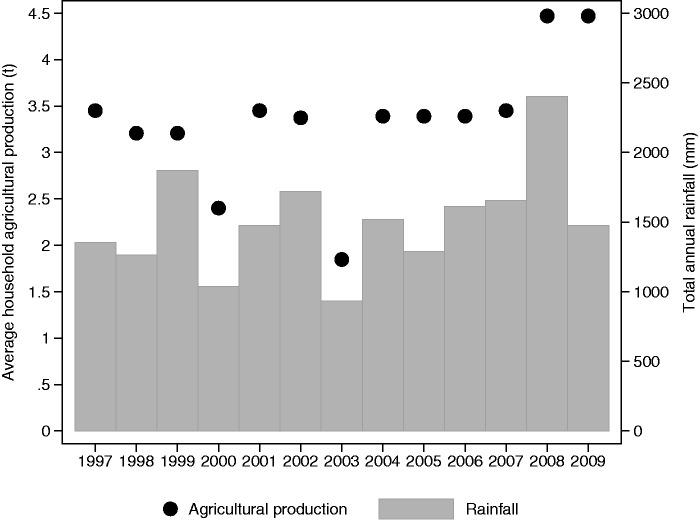
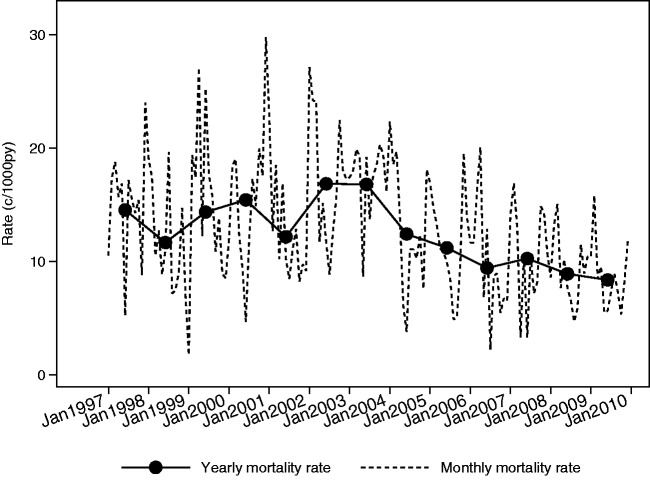
The local Health and Demographic Surveillance Site (HDSS) provided monthly estimates of child mortality rates (age 1 to 5 years) expressed as cases per 1000 person-years (c/1000py) between 1997 and 2009. We conducted a time series analysis of child mortality rates and explored the contribution of rainfall and household food security. We used Poisson regression with linear and segmented effects to explore the impact of malaria control interventions on mortality.
Child mortality rates decreased by 42.5% from 14.6 c/1000py in 1997 to 8.4 c/1000py in 2009. Analyses revealed the complexity of child mortality patterns and a strong association with rainfall and food security. All malaria control interventions were associated with decreases in child mortality, accounting for the effect of rainfall and food security.
Reaching the fourth Millenium Development Goal will require the contribution of many health interventions, as well as more general improvements in socio-environmental and nutritional conditions. Distinguishing between the effects of these multiple factors is difficult and represents a major challenge in assessing the effect of routine interventions. However, this study suggests that credible estimates can be obtained when high-quality data on the most important factors are available over a sufficiently long time period.
1997年至2009年间,坦桑尼亚中南部的基洛梅罗区和乌朗加区实施了多项关键的疟疾控制干预措施,以提高经杀虫剂处理蚊帐(ITN)的覆盖率,并改善获得有效疟疾治疗的机会。在本研究中,我们估计了这些干预措施对观察到的儿童死亡率下降的贡献。
当地的卫生和人口监测点(HDSS)提供了1997年至2009年间每月的儿童死亡率(1至5岁)估计值,以每1000人年的病例数(c/1000py)表示。我们对儿童死亡率进行了时间序列分析,并探讨了降雨和家庭粮食安全的贡献。我们使用具有线性和分段效应的泊松回归来探讨疟疾控制干预措施对死亡率的影响。
儿童死亡率从1997年的14.6 c/1000py下降了42.5%,至2009年的8.4 c/1000py。分析揭示了儿童死亡模式的复杂性以及与降雨和粮食安全的强烈关联。所有疟疾控制干预措施都与儿童死亡率的下降有关,这考虑了降雨和粮食安全的影响。
实现第四个千年发展目标将需要许多卫生干预措施的贡献,以及社会环境和营养状况更普遍的改善。区分这些多种因素的影响很困难,并且是评估常规干预措施效果的一项重大挑战。然而,本研究表明,当在足够长的时间段内获得关于最重要因素的高质量数据时,可以获得可靠的估计值。