Chen Weiqin, Zhou Hongyi, Liu Siyang, Fhaner Cassie J, Gross Bethany C, Lydic Todd A, Reid Gavin E
Department of Physiology, Medical College of Georgia at Georgia Regents University, Augusta, Georgia, United States of America.
Department of Chemistry, Michigan State University, East Lansing, Michigan, United States of America.
PLoS One. 2013 Dec 16;8(12):e82526. doi: 10.1371/journal.pone.0082526. eCollection 2013.
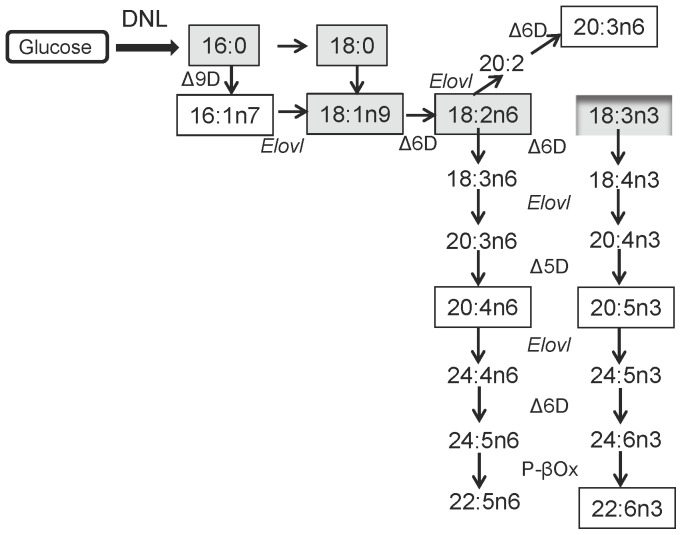
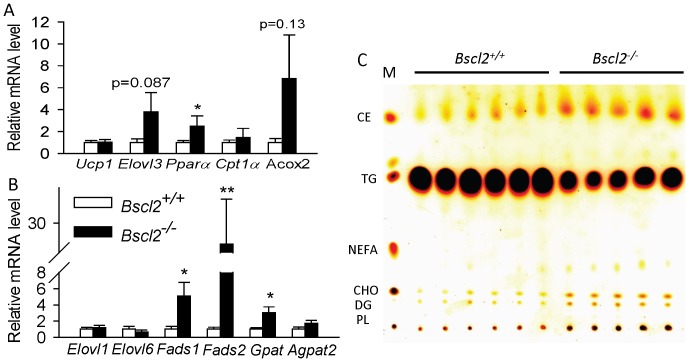
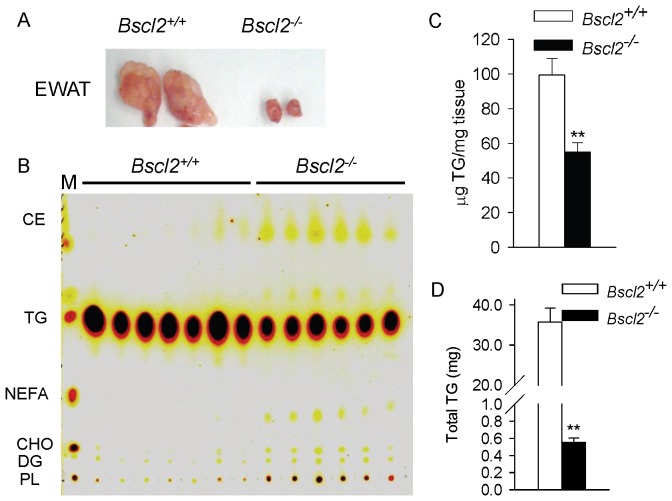
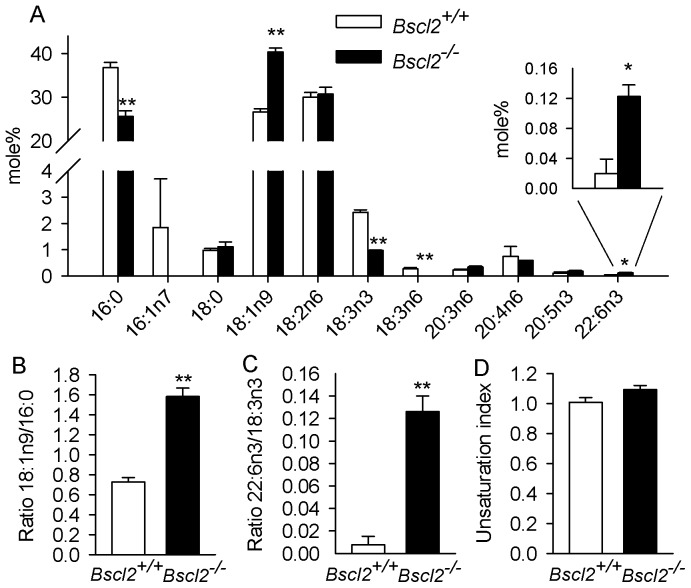
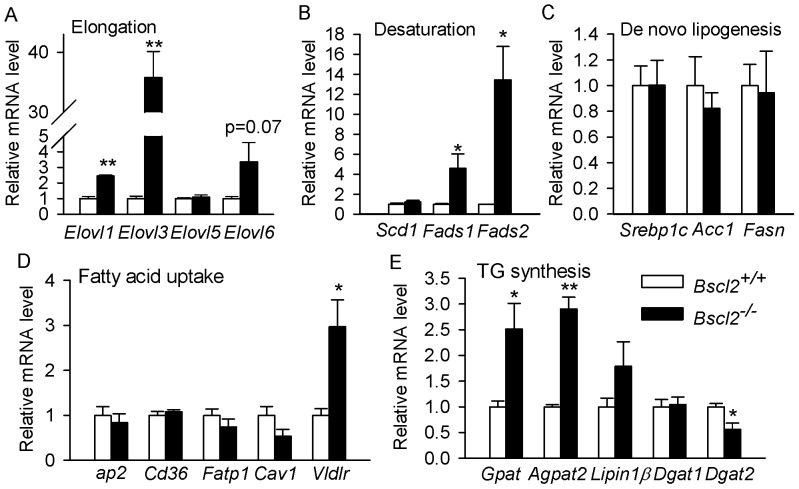
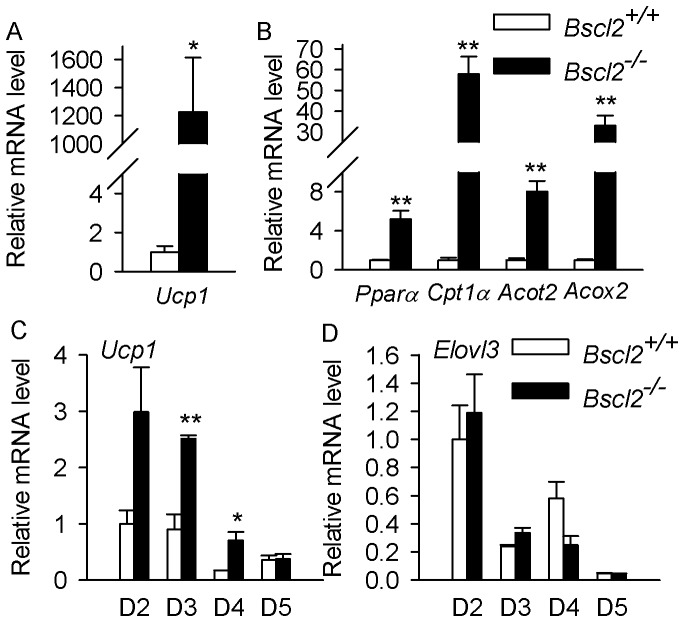
Mutations in BSCL2 underlie human congenital generalized lipodystrophy type 2 disease. We previously reported that Bscl2 (-/-) mice develop lipodystrophy of white adipose tissue (WAT) due to unbridled lipolysis. The residual epididymal WAT (EWAT) displays a browning phenotype with much smaller lipid droplets (LD) and higher expression of brown adipose tissue marker proteins. Here we used targeted lipidomics and gene expression profiling to analyze lipid profiles as well as genes involved in lipid metabolism in WAT of wild-type and Bscl2(-/-) mice. Analysis of total saponified fatty acids revealed that the residual EWAT of Bscl2(-/-) mice contained a much higher proportion of oleic 18:1n9 acid concomitant with a lower proportion of palmitic 16:0 acid, as well as increased n3- polyunsaturated fatty acids (PUFA) remodeling. The acyl chains in major species of triacylglyceride (TG) and diacylglyceride (DG) in the residual EWAT of Bscl2(-/-) mice were also enriched with dietary fatty acids. These changes could be reflected by upregulation of several fatty acid elongases and desaturases. Meanwhile, Bscl2(-/-) adipocytes from EWAT had increased gene expression in lipid uptake and TG synthesis but not de novo lipogenesis. Both mitochondria and peroxisomal β-oxidation genes were also markedly increased in Bscl2(-/-) adipocytes, highlighting that these machineries were accelerated to shunt the lipolysis liberated fatty acids through uncoupling to dissipate energy. The residual subcutaneous white adipose tissue (ScWAT) was not browning but displays similar changes in lipid metabolism. Overall, our data emphasize that, other than being essential for adipocyte differentiation, Bscl2 is also important in fatty acid remodeling and energy homeostasis.
BSCL2基因的突变是人类2型先天性全身性脂肪营养不良症的病因。我们之前报道过,Bscl2基因敲除小鼠由于不受控制的脂肪分解而出现白色脂肪组织(WAT)的脂肪营养不良。残余的附睾白色脂肪组织(EWAT)呈现出褐色化表型,脂滴(LD)小得多,且褐色脂肪组织标记蛋白的表达更高。在这里,我们使用靶向脂质组学和基因表达谱分析来研究野生型和Bscl2基因敲除小鼠WAT中的脂质谱以及参与脂质代谢的基因。对总皂化脂肪酸的分析表明,Bscl2基因敲除小鼠的残余EWAT中油酸18:1n9酸的比例高得多,同时棕榈酸16:0酸的比例较低,并且n3-多不饱和脂肪酸(PUFA)重塑增加。Bscl2基因敲除小鼠残余EWAT中甘油三酯(TG)和甘油二酯(DG)主要种类中的酰基链也富含膳食脂肪酸。这些变化可以通过几种脂肪酸延长酶和去饱和酶的上调来反映。同时,来自EWAT的Bscl2基因敲除脂肪细胞在脂质摄取和TG合成方面的基因表达增加,但从头脂肪生成方面没有增加。Bscl2基因敲除脂肪细胞中的线粒体和过氧化物酶体β-氧化基因也显著增加,这突出表明这些机制被加速,通过解偶联来分流脂肪分解释放的脂肪酸以消耗能量。残余的皮下白色脂肪组织(ScWAT)没有褐色化,但在脂质代谢方面表现出类似的变化。总体而言,我们的数据强调,Bscl2除了对脂肪细胞分化至关重要外,在脂肪酸重塑和能量稳态中也很重要。