Department of Physiology, Biochemistry and Pharmacology (Biochemistry), College of Veterinary Medicine and Animal Resources, King Faisal University, Al Hofuf, Al-Ahsa, Saudi Arabia.
BMC Complement Altern Med. 2013 Dec 24;13:368. doi: 10.1186/1472-6882-13-368.
The effects of curcumin on the activities and gene expression of antioxidant enzymes, superoxide dismutase (SOD), catalase (CAT), glutathione peroxidase (GPX), glutathione-S-transferase (G-ST), B-cell CLL/lymphoma 2 (Bcl-2) and insulin like growth factor-1 (IGF-1) in diabetic rats were studied.
Twenty four rats were assigned to three groups (8 rats for each). Rats of first group were non diabetic and rats of the second group were rendered diabetic by streptozotocin (STZ). Both groups received vehicle, corn oil only (5 ml/kg body weight) and served as negative and positive controls, respectively. Rats of the third group were rendered diabetic and received oral curcumin dissolved in corn oil at a dose of 15 mg/5 ml/kg body weight for 6 weeks.
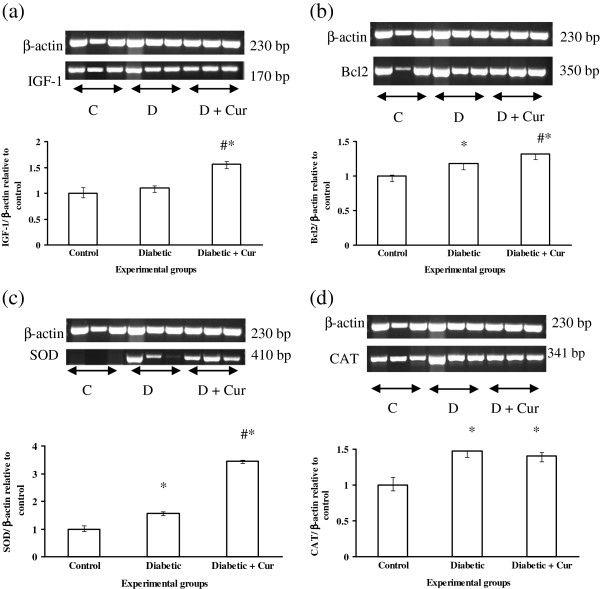
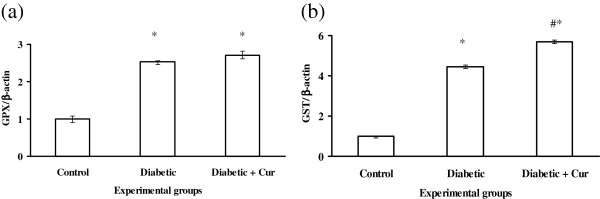
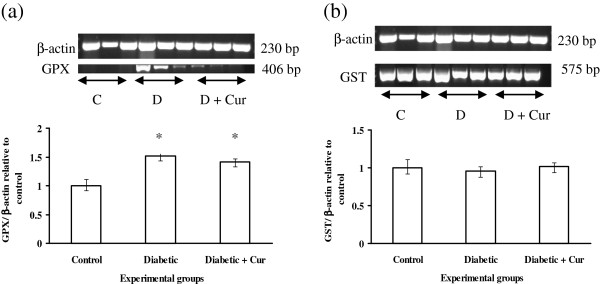
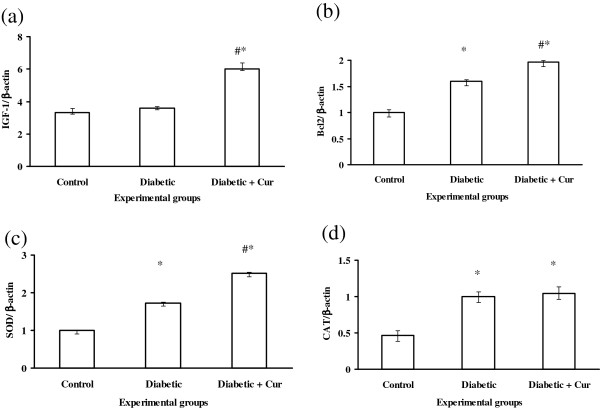
Diabetic rats showed significant increase of blood glucose, thiobarbituric acid reactive substances (TBARS) and activities of all antioxidant enzymes with significant reduction of reduced glutathione (GSH) compare to the control non diabetic group. Gene expression of Bcl2, SOD, CAT, GPX and GST was increased significantly in diabetic untreated rats compare to the control non diabetic group. The administration of curcumin to diabetic rats normalized significantly their blood sugar level and TBARS values and increased the activities of all antioxidant enzymes and GSH concentration. In addition, curcumin treated rats showed significant increase in gene expression of IGF-1, Bcl2, SOD and GST compare to non diabetic and diabetic untreated rats.
Curcumin was antidiabetic therapy, induced hypoglycemia by up-regulation of IGF-1 gene and ameliorate the diabetes induced oxidative stress via increasing the availability of GSH, increasing the activities and gene expression of antioxidant enzymes and Bcl2. Further studies are required to investigate the actual mechanism of action of curcumin regarding the up regulation of gene expression of examined parameters.
研究了姜黄素对糖尿病大鼠抗氧化酶(超氧化物歧化酶[SOD]、过氧化氢酶[CAT]、谷胱甘肽过氧化物酶[GPX]、谷胱甘肽-S-转移酶[G-ST]、B 细胞 CLL/淋巴瘤 2 [Bcl-2]和胰岛素样生长因子-1 [IGF-1])的活性和基因表达的影响。
将 24 只大鼠分为三组(每组 8 只)。第一组大鼠为非糖尿病大鼠,第二组大鼠用链脲佐菌素(STZ)制成糖尿病大鼠。两组均给予载体,即玉米油(5ml/kg 体重),分别作为阴性和阳性对照。第三组大鼠制成糖尿病大鼠,并给予溶于玉米油的姜黄素(剂量为 15mg/5ml/kg 体重),连续灌胃 6 周。
与非糖尿病对照组相比,糖尿病大鼠的血糖、硫代巴比妥酸反应物(TBARS)和所有抗氧化酶的活性显著升高,还原型谷胱甘肽(GSH)浓度显著降低。与非糖尿病对照组相比,未经治疗的糖尿病大鼠的 Bcl2、SOD、CAT、GPX 和 GST 基因表达显著增加。姜黄素给药可显著降低糖尿病大鼠的血糖水平和 TBARS 值,增加所有抗氧化酶和 GSH 浓度的活性。此外,与非糖尿病大鼠和未经治疗的糖尿病大鼠相比,姜黄素治疗的大鼠 IGF-1、Bcl2、SOD 和 GST 基因表达显著增加。
姜黄素是一种抗糖尿病疗法,通过上调 IGF-1 基因诱导低血糖,并通过增加 GSH 的可用性、增加抗氧化酶和 Bcl2 的活性和基因表达来改善糖尿病引起的氧化应激。需要进一步研究以探讨姜黄素上调所检查参数的基因表达的实际作用机制。