Department of Pathology, University of Illinois at Chicago, Chicago, IL, USA.
Department of Pathology, University of Illinois at Chicago, Chicago, IL, USA; Department of Pathology, Xinxiang Medical University, Xinxiang, China.
J Steroid Biochem Mol Biol. 2014 Mar;140:116-32. doi: 10.1016/j.jsbmb.2013.12.010. Epub 2013 Dec 25.
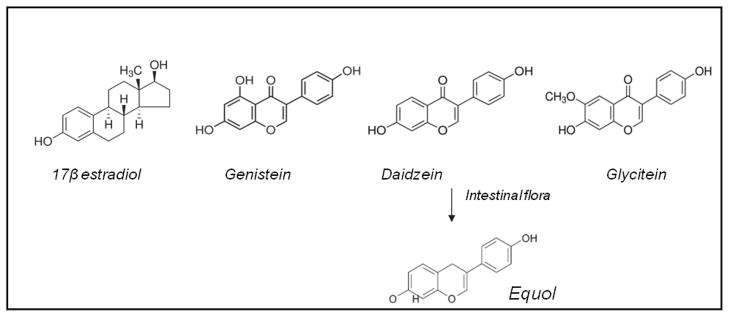
Soy isoflavones are dietary components for which an association has been demonstrated with reduced risk of prostate cancer (PCa) in Asian populations. However, the exact mechanism by which these isoflavones may prevent the development or progression of PCa is not completely understood. There are a growing number of animal and in vitro studies that have attempted to elucidate these mechanisms. The predominant and most biologically active isoflavones in soy products, genistein, daidzein, equol, and glycetin, inhibit prostate carcinogenesis in some animal models. Cell-based studies show that soy isoflavones regulate genes that control cell cycle and apoptosis. In this review, we discuss the literature relevant to the molecular events that may account for the benefit of soy isoflavones in PCa prevention or treatment. These reports show that although soy isoflavone-induced growth arrest and apoptosis of PCa cells are plausible mechanisms, other chemo protective mechanisms are also worthy of consideration. These possible mechanisms include antioxidant defense, DNA repair, inhibition of angiogenesis and metastasis, potentiation of radio- and chemotherapeutic agents, and antagonism of estrogen- and androgen-mediated signaling pathways. Moreover, other cells in the cancer milieu, such as the fibroblastic stromal cells, endothelial cells, and immune cells, may be targeted by soy isoflavones, which may contribute to soy-mediated prostate cancer prevention. In this review, these mechanisms are discussed along with considerations about the doses and the preclinical models that have been used.
大豆异黄酮是一种饮食成分,已证明其与亚洲人群前列腺癌(PCa)风险降低有关。然而,这些异黄酮预防 PCa 发生或进展的确切机制尚不完全清楚。越来越多的动物和体外研究试图阐明这些机制。大豆产品中的主要且生物活性最强的异黄酮——染料木黄酮、大豆苷元和黄豆黄素、以及它们的代谢物雌马酚和丙二酰基大豆苷元,在一些动物模型中抑制前列腺癌发生。基于细胞的研究表明,大豆异黄酮可调节控制细胞周期和细胞凋亡的基因。在这篇综述中,我们讨论了与可能解释大豆异黄酮在 PCa 预防或治疗中有益作用的分子事件相关的文献。这些报告表明,尽管大豆异黄酮诱导 PCa 细胞生长停滞和凋亡是合理的机制,但其他化学保护机制也值得考虑。这些可能的机制包括抗氧化防御、DNA 修复、抑制血管生成和转移、增强放射和化学治疗药物的作用以及拮抗雌激素和雄激素介导的信号通路。此外,癌症微环境中的其他细胞,如成纤维细胞基质细胞、内皮细胞和免疫细胞,可能是大豆异黄酮的作用靶点,这可能有助于大豆介导的前列腺癌预防。在这篇综述中,讨论了这些机制,并考虑了使用的剂量和临床前模型。