Bawage Swapnil Subhash, Tiwari Pooja Munnilal, Pillai Shreekumar, Dennis Vida, Singh Shree Ram
Center for NanoBiotechnology Research, Alabama State University, Montgomery, AL 36104, USA.
Adv Virol. 2013;2013:595768. doi: 10.1155/2013/595768. Epub 2013 Dec 9.
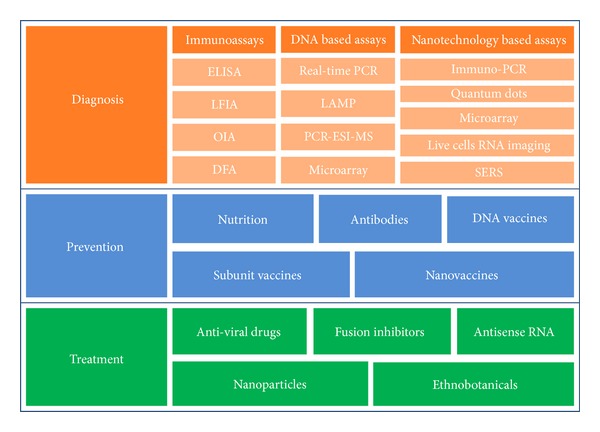
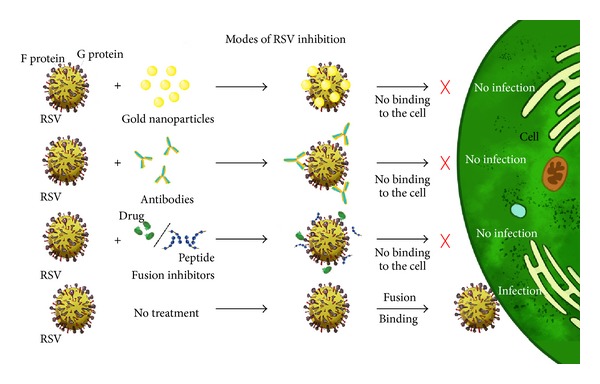
Human respiratory syncytial virus (RSV) is a common cause of respiratory infection in infants and the elderly, leading to significant morbidity and mortality. The interdisciplinary fields, especially biotechnology and nanotechnology, have facilitated the development of modern detection systems for RSV. Many anti-RSV compounds like fusion inhibitors and RNAi molecules have been successful in laboratory and clinical trials. But, currently, there are no effective drugs for RSV infection even after decades of research. Effective diagnosis can result in effective treatment, but the progress in both of these facets must be concurrent. The development in prevention and treatment measures for RSV is at appreciable pace, but the implementation into clinical practice still seems a challenge. This review attempts to present the promising diverse research approaches and advancements in the area of diagnosis, prevention, and treatment that contribute to RSV management.
人类呼吸道合胞病毒(RSV)是婴幼儿和老年人呼吸道感染的常见病因,可导致严重的发病和死亡。跨学科领域,尤其是生物技术和纳米技术,推动了现代RSV检测系统的发展。许多抗RSV化合物,如融合抑制剂和RNAi分子,已在实验室和临床试验中取得成功。但是,即使经过数十年的研究,目前仍没有针对RSV感染的有效药物。有效的诊断可以带来有效的治疗,但这两个方面的进展必须同步。RSV预防和治疗措施的发展速度可观,但在临床实践中的应用似乎仍然是一个挑战。本综述试图介绍在RSV管理方面有前景的多种诊断、预防和治疗研究方法及进展。