Bibber Bernadette, Sinha Garima, Lobba Aline R M, Greco Steven J, Rameshwar Pranela
Rutgers Graduate School of Biomedical and Health Sciences, Newark, NJ 07103, USA ; Department of Medicine-Hematology/Oncology Rutgers, New Jersey Medical School, Newark, NJ 07103, USA.
Department of Biochemistry, University of São Paulo, 05026-000 Sao Paulo, SP, Brazil.
Stem Cells Int. 2013;2013:241048. doi: 10.1155/2013/241048. Epub 2013 Dec 10.
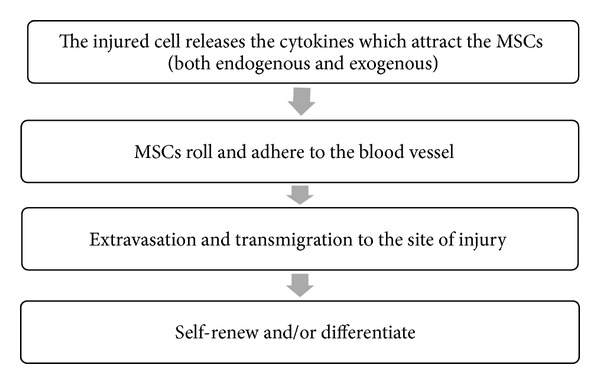
Mesenchymal stem cells (MSCs) are multipotent cells found in both fetal and adult tissues. MSCs show promise for cellular therapy for several disorders such as those associated with inflammation. In adults, MSCs primarily reside in the bone marrow (BM) and adipose tissues. In BM, MSCs are found at low frequency around blood vessels and trabecula. MSCs are attractive candidates for regenerative medicine given their ease in harvesting and expansion and their unique ability to bypass the immune system in an allogeneic host. Additionally, MSCs exert pathotropism by their ability to migrate to diseased regions. Despite the "attractive" properties of MSCs, their translation to patients requires indepth research. "Off-the-shelf" MSCs are proposed for use in an allogeneic host. Thus, the transplanted MSCs, when placed in a foreign host, could receive cue from the microenvironment for cellular transformation. An important problem with the use of MSCs involves their ability to facilitate the support of breast and other cancers as carcinoma-associated fibroblasts. MSCs could show distinct effect on each subset of cancer cells. This could lead to untoward effect during MSC therapy since the MSCs would be able to interact with undiagnosed cancer cells, which might be in a dormant state. Based on these arguments, further preclinical research is needed to ensure patient safety with MSC therapy. Here, we discuss the basic biology of MSCs, discuss current applications, and provide evidence why it is important to understand MSC biology in the context of diseased microenvironment for safe application.
间充质干细胞(MSCs)是存在于胎儿和成人组织中的多能细胞。MSCs在治疗多种疾病(如与炎症相关的疾病)的细胞疗法中显示出前景。在成人中,MSCs主要存在于骨髓(BM)和脂肪组织中。在BM中,MSCs在血管和小梁周围以低频率被发现。鉴于MSCs易于获取和扩增,以及它们在同种异体宿主中绕过免疫系统的独特能力,它们是再生医学中颇具吸引力的候选细胞。此外,MSCs能够迁移到病变区域,从而表现出对病变组织的趋向性。尽管MSCs具有这些“吸引人的”特性,但将其应用于患者仍需要深入研究。“现成可用的”MSCs被提议用于同种异体宿主。因此,移植的MSCs在置于异体宿主中时,可能会从微环境中获得细胞转化的信号。使用MSCs的一个重要问题涉及其作为癌相关成纤维细胞促进乳腺癌和其他癌症生长的能力。MSCs可能对每个癌细胞亚群表现出不同的作用。这可能会在MSC治疗期间导致不良影响,因为MSCs能够与未被诊断出的癌细胞(可能处于休眠状态)相互作用。基于这些观点,需要进一步的临床前研究以确保MSC治疗对患者的安全性。在此,我们讨论MSCs的基本生物学特性,探讨当前的应用,并提供证据说明为什么在患病微环境背景下理解MSC生物学特性对于安全应用至关重要。