Fisher Charles G, Goldschlager Tony, Boriani Stefano, Varga Peter Pal, Fehlings Michael G, Bilsky Mark H, Dekutoski Mark B, Luzzati Alessandro, Williams Richard P, Berven Sigurd, Chou Dean, Reynolds Jeremy J, Quraishi Nasir A, Rhines Laurence D, Bettegowda Chetan, Gokaslan Ziya L
Division of Spine, Department of Orthopaedics, University of British Columbia and Vancouver Coastal Health, Vancouver, British Columbia, Canada.
Department of Degenerative and Oncological Spine Surgery, Rizzoli Institute, Bologna, Italy.
Evid Based Spine Care J. 2013 Oct;4(2):160-2. doi: 10.1055/s-0033-1357365.
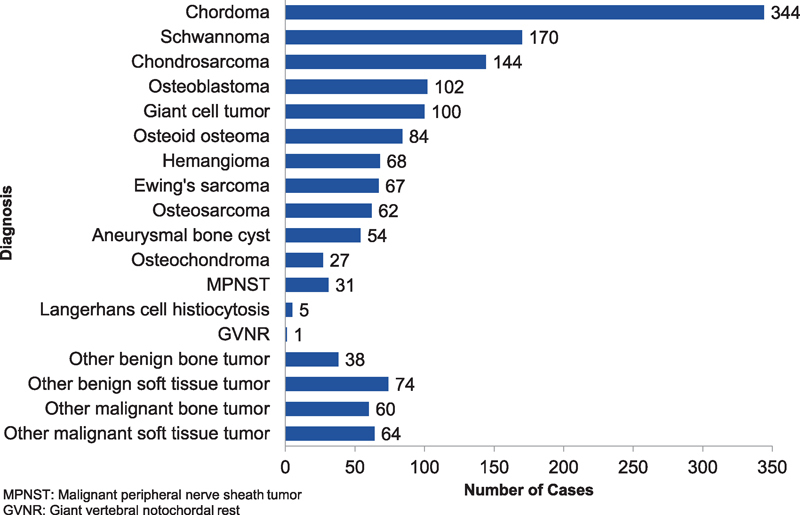
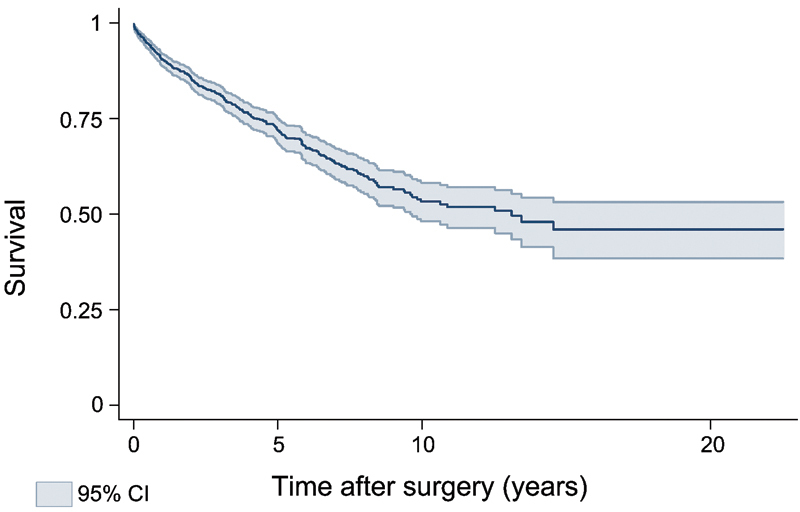
Study Type Retrospective cohort. Introduction The treatment of rare neoplastic conditions is challenging, especially because studies providing high levels of evidence are often lacking. Such is the case with primary tumors of the spine (PTS), which have a low incidence, are pathologically heterogeneous, and have diverse treatment approaches.1 Despite these difficulties, appropriate evidence-based care of these complex patients is imperative. Failure to follow validated oncologic principles may lead to unnecessary mortality and profound morbidity. Objective With the aim of offering patients the most appropriate treatment based on the best available evidence, a novel scientific model was developed and employed. This article outlines this model, which has not only provided significant evidence guiding treatment of this rare condition, but we believe is readily transferrable to other similarly rare conditions. Methods A four-stage approach was employed. (1) Planning: Data from large volume centers were reviewed together with results from a feasibility questionnaire to provide insight into epidemiology, patient volumes, tumor pathology, treatment modalities, and outcomes. (2) Recruitment: Centers with sufficient volume and valid data were enrolled and provided with the necessary infrastructure. This included study coordinators and a secure, Web-based database (REDCap, Vanderbilt University, Nashville, Tennessee, United States) to capture international data from six modules comprising: demographic, clinical, diagnostic, therapeutic, local recurrence, perioperative morbidity fields, and a cross-sectional survey to update survival information. The AOSpine Knowledge Forum Tumor designed these modules and provided funding. Each center received institutional ethics approval. (3) Retrospective stage: Prospectively collected data from all recruited centers were reviewed and analyzed retrospectively. (4) Prospective stage: Following interim analysis, prospective data collection has been implemented. In addition, a PTS bio-bank network has been created to link clinical data with tumor pathology and molecular analysis. Results It took 18 months to implement stages 1 to 3 of this model and stage 4 is ongoing. A total of 1,495 tumor cases were captured and diagnosed as one of the 18 primary spine tumor subtypes listed (Fig. 1). The most prevalent diagnosis was chordoma (n = 344, 23%). There were 674 females and 821 males with a mean age of 43 ± 19 years at the time of surgery. Surgical treatment was performed between 1981 and 2012. The survival at 5 and 10 years postsurgery was 71.9 and 53.3%, respectively, with a median survival of 13 years postsurgery (Fig. 2). Conclusions To date, this is the largest international collection of PTS. This novel scientific model has not only aggregated a large amount of PTS data, but has also established an international collaborative network of spine oncology centers. The access to large volumes of clinical and bio-bank data will generate further research to guide and enhance the clinical management of PTS. This novel scientific model could be of similar tremendous value if applied to other rare neoplastic conditions.
回顾性队列研究。引言:罕见肿瘤疾病的治疗具有挑战性,尤其是因为通常缺乏提供高质量证据的研究。脊柱原发性肿瘤(PTS)就是这种情况,其发病率低,病理异质性高,治疗方法多样。尽管存在这些困难,但对这些复杂患者进行适当的循证治疗势在必行。不遵循经过验证的肿瘤学原则可能导致不必要的死亡和严重的发病情况。目的:为了基于现有最佳证据为患者提供最合适的治疗,开发并采用了一种新的科学模型。本文概述了该模型,它不仅为这种罕见疾病的治疗提供了重要证据,而且我们认为它很容易应用于其他类似的罕见疾病。方法:采用四阶段方法。(1)规划:回顾来自大量中心的数据以及可行性调查问卷的结果,以深入了解流行病学、患者数量、肿瘤病理学、治疗方式和结果。(2)招募:招募有足够病例数量和有效数据的中心,并为其提供必要的基础设施。这包括研究协调员和一个安全的基于网络的数据库(REDCap,美国田纳西州纳什维尔范德比尔特大学),以收集来自六个模块的国际数据,包括:人口统计学、临床、诊断、治疗、局部复发、围手术期发病情况领域,以及一项横断面调查以更新生存信息。AOSpine知识论坛肿瘤学组设计了这些模块并提供了资金。每个中心均获得机构伦理批准。(3)回顾性阶段:对所有招募中心前瞻性收集的数据进行回顾性审查和分析。(4)前瞻性阶段:在中期分析之后,已实施前瞻性数据收集。此外,还建立了一个PTS生物样本库网络,将临床数据与肿瘤病理学和分子分析联系起来。结果:该模型的第1至3阶段实施耗时18个月,第4阶段正在进行中。共收集并诊断了1495例肿瘤病例,属于列出的18种原发性脊柱肿瘤亚型之一(图1)。最常见的诊断是脊索瘤(n = 344,23%)。手术时共有674名女性和821名男性,平均年龄为43±19岁。手术治疗在1981年至2012年期间进行。术后5年和10年的生存率分别为71.9%和53.3%,术后中位生存期为13年(图2)。结论:迄今为止,这是最大规模的国际PTS病例收集。这种新的科学模型不仅汇总了大量PTS数据,还建立了一个脊柱肿瘤学中心的国际协作网络。获取大量临床和生物样本库数据将产生进一步的研究,以指导和加强PTS的临床管理。如果应用于其他罕见肿瘤疾病,这种新的科学模型可能具有同样巨大的价值。