Suckling David Maxwell, Sforza René François Henri
Biosecurity Group, The New Zealand Institute of Plant and Food Research Ltd, Christchurch, New Zealand ; Better Border Biosecurity, Christchurch, New Zealand.
European Biological Control Laboratory, USDA-ARS, Campus International de Baillarguet, Montferrier-sur-Lez, France.
PLoS One. 2014 Jan 13;9(1):e84847. doi: 10.1371/journal.pone.0084847. eCollection 2014.
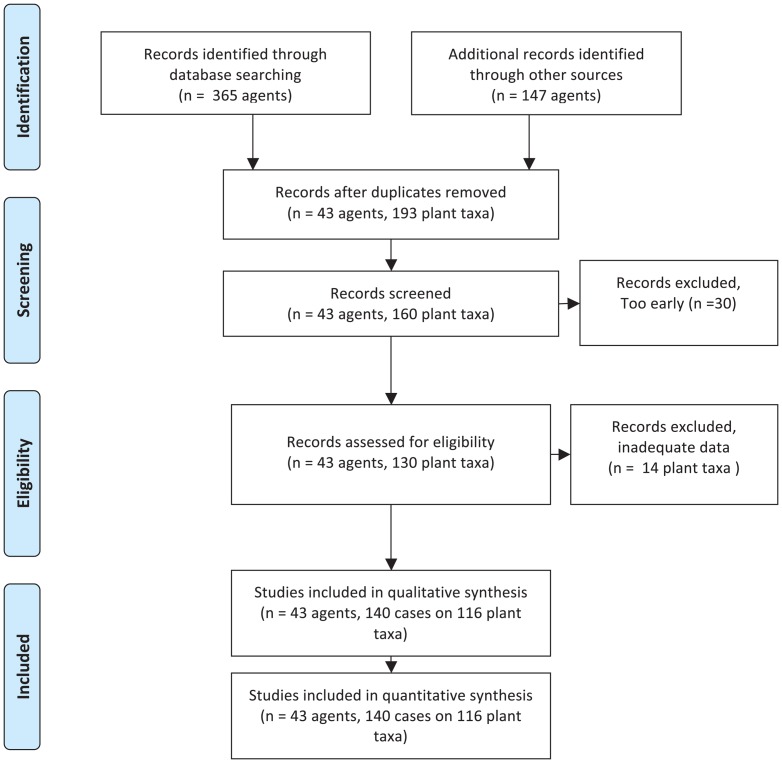
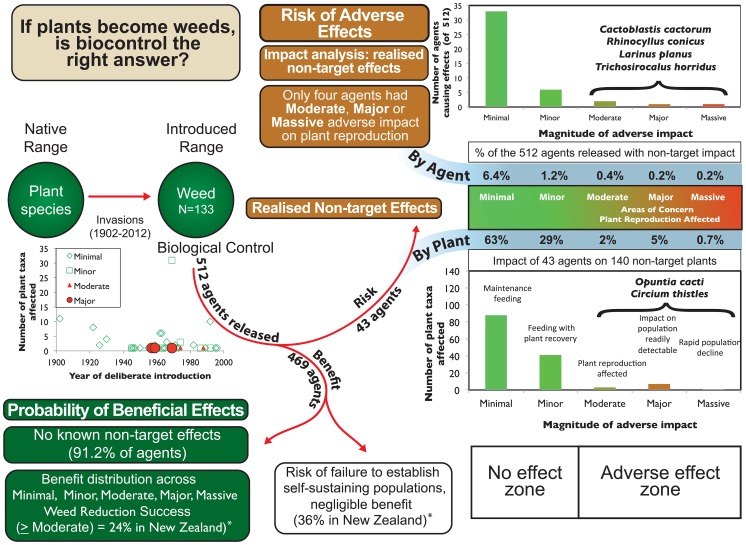
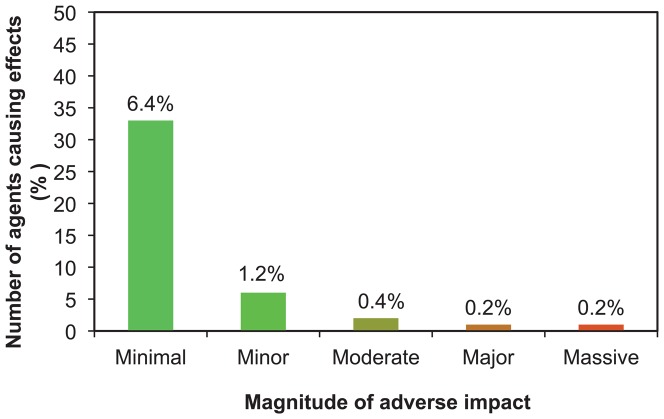
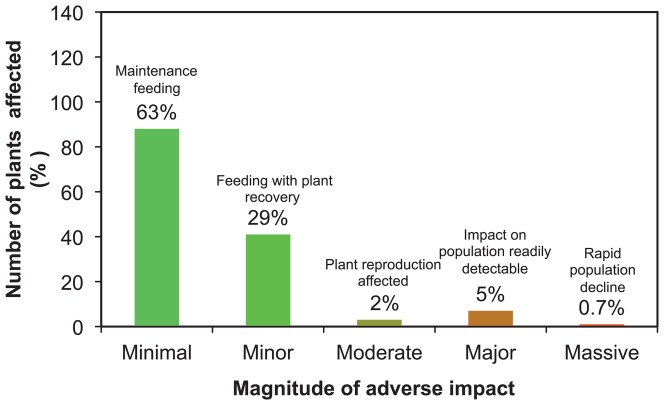
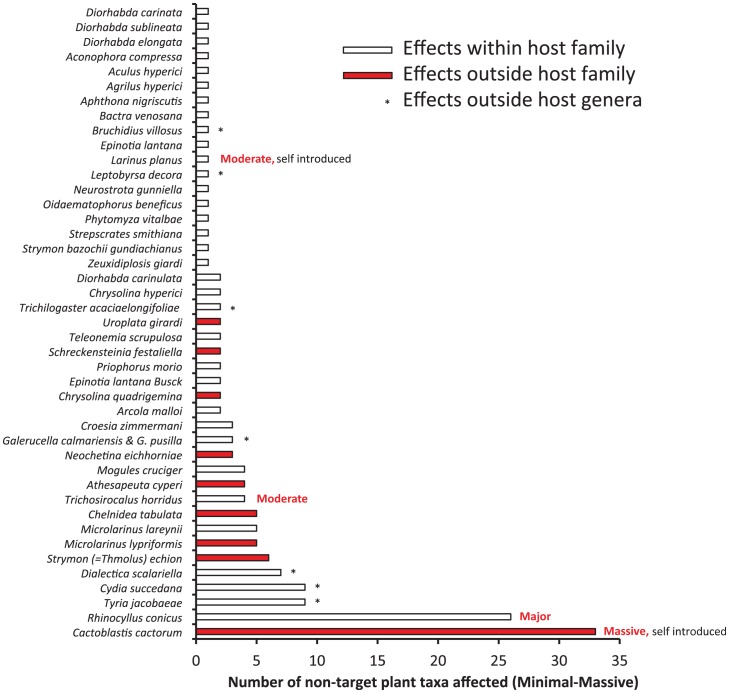
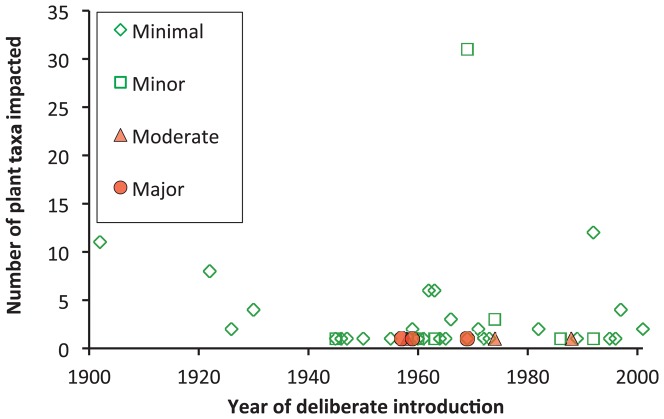
A systematic review focused by plant on non-target impacts from agents deliberately introduced for the biological control of weeds found significant non-target impacts to be rare. The magnitude of direct impact of 43 biocontrol agents on 140 non-target plants was retrospectively categorized using a risk management framework for ecological impacts of invasive species (minimal, minor, moderate, major, massive). The vast majority of agents introduced for classical biological control of weeds (>99% of 512 agents released) have had no known significant adverse effects on non-target plants thus far; major effects suppressing non-target plant populations could be expected to be detectable. Most direct non-target impacts on plants (91.6%) were categorized as minimal or minor in magnitude with no known adverse long-term impact on non-target plant populations, but a few cacti and thistles are affected at moderate (n = 3), major (n = 7) to massive (n = 1) scale. The largest direct impacts are from two agents (Cactoblastis cactorum on native cacti and Rhinocyllus conicus on native thistles), but these introductions would not be permitted today as more balanced attitudes exist to plant biodiversity, driven by both society and the scientific community. Our analysis shows (as far as is known), weed biological control agents have a biosafety track record of >99% of cases avoiding significant non-target impacts on plant populations. Some impacts could have been overlooked, but this seems unlikely to change the basic distribution of very limited adverse effects. Fewer non-target impacts can be expected in future because of improved science and incorporation of wider values. Failure to use biological control represents a significant opportunity cost from the certainty of ongoing adverse impacts from invasive weeds. It is recommended that a simple five-step scale be used to better communicate the risk of consequences from both action (classical biological control) and no action (ongoing impacts from invasive weeds).
一项以植物为重点的系统综述,关注故意引入用于杂草生物防治的药剂对非目标生物的影响,发现重大非目标影响很少见。使用入侵物种生态影响风险管理框架(最小、轻微、中等、重大、巨大)对43种生物防治药剂对140种非目标植物的直接影响程度进行了回顾性分类。迄今为止,绝大多数引入用于杂草经典生物防治的药剂(释放的512种药剂中的>99%)对非目标植物没有已知的重大不利影响;预计可以检测到抑制非目标植物种群的重大影响。对植物的大多数直接非目标影响(91.6%)在程度上被分类为最小或轻微,对非目标植物种群没有已知的长期不利影响,但少数仙人掌和蓟受到中等(n = 3)、重大(n = 7)到巨大(n = 1)规模的影响。最大的直接影响来自两种药剂(仙人掌螟对本地仙人掌的影响以及锥尾犀金龟对本地蓟的影响),但由于社会和科学界推动的对植物生物多样性的更平衡态度,如今不会允许进行这些引入。我们的分析表明(据目前所知),杂草生物防治药剂在>99%的案例中具有避免对植物种群产生重大非目标影响的生物安全记录。一些影响可能被忽视了,但这似乎不太可能改变非常有限的不利影响的基本分布。由于科学的改进和更广泛价值观的纳入,预计未来非目标影响会更少。不采用生物防治代表着来自入侵杂草持续不利影响确定性的重大机会成本。建议使用一个简单的五步量表,以便更好地传达行动(经典生物防治)和不行动(入侵杂草的持续影响)的后果风险。