Department of Medical Sciences, University of Trieste, Trieste, Italy.
Wellcome Trust Sanger Institute, Hinxton, Cambridge, United Kingdom ; Wolfson Centre for Age-Related Diseases, King's College, London, United Kingdom.
PLoS One. 2014 Jan 14;9(1):e85352. doi: 10.1371/journal.pone.0085352. eCollection 2014.
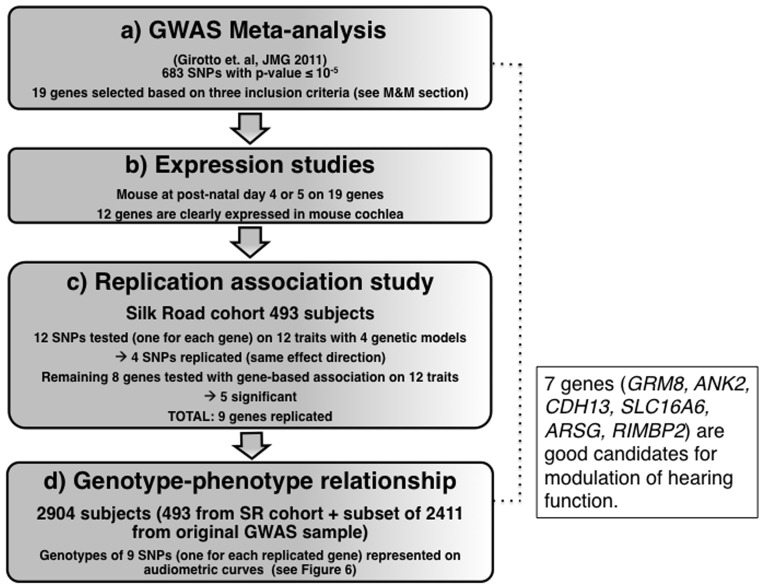
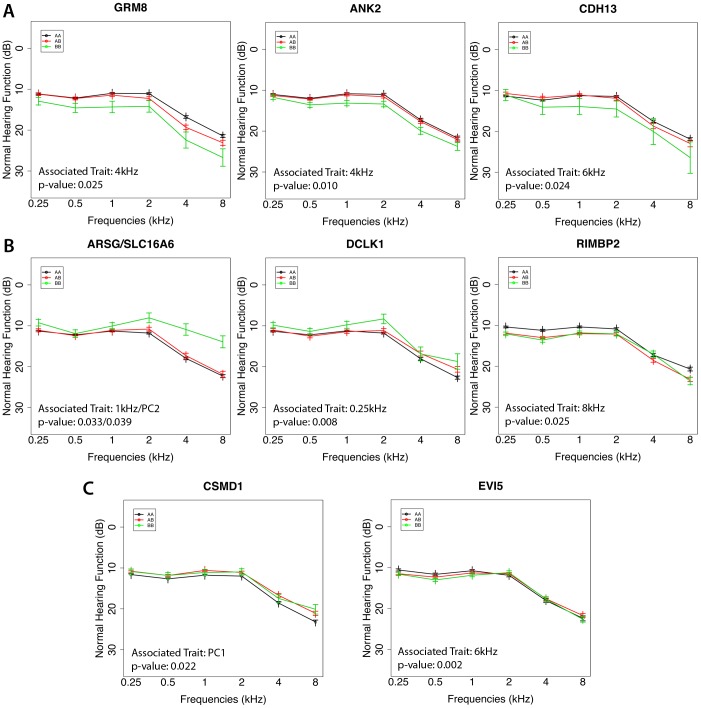
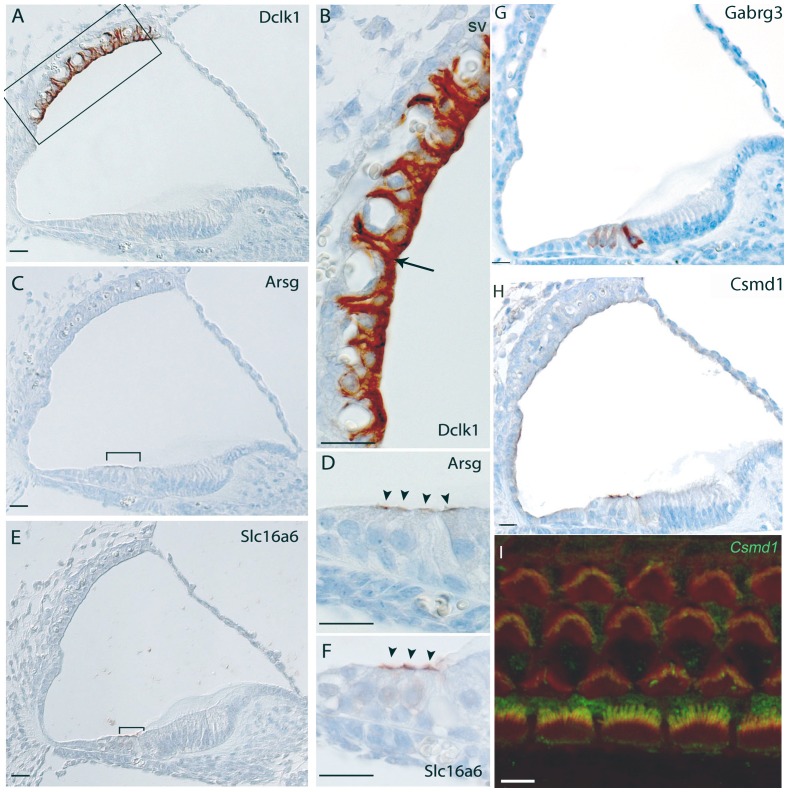
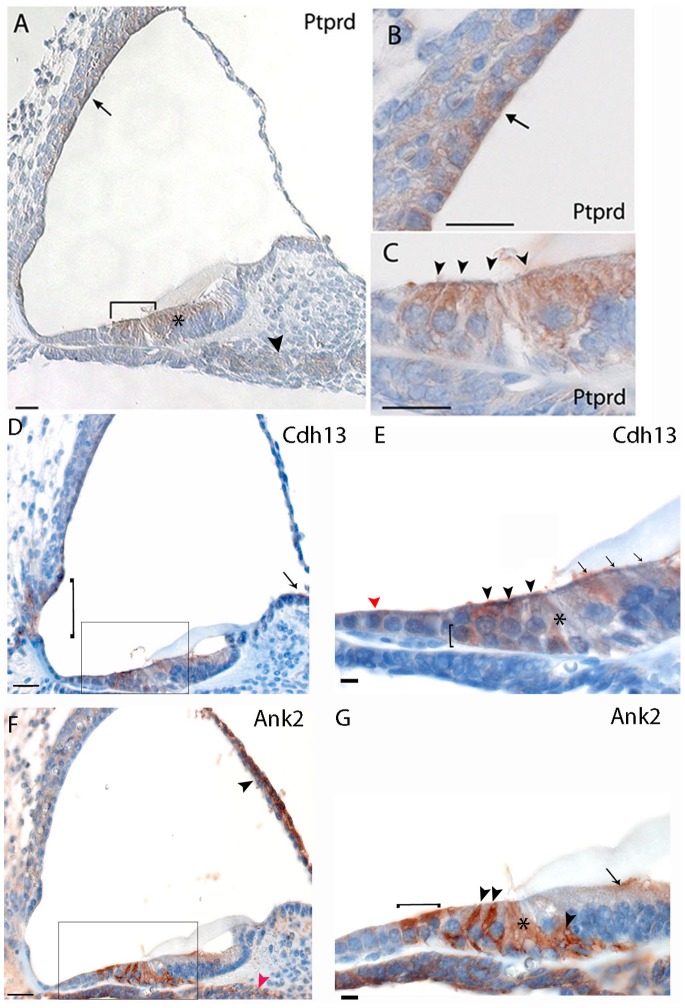
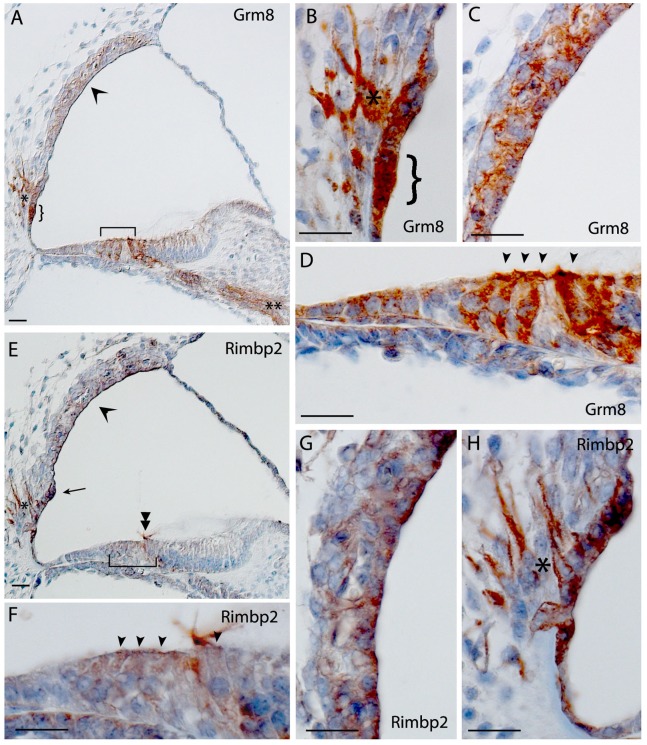
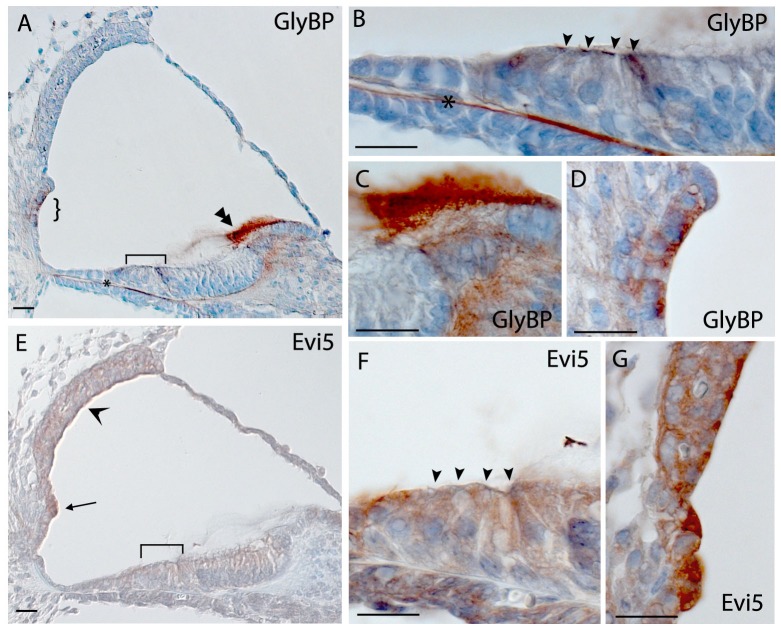
Considerable progress has been made in identifying deafness genes, but still little is known about the genetic basis of normal variation in hearing function. We recently carried out a Genome Wide Association Study (GWAS) of quantitative hearing traits in southern European populations and found several SNPs with suggestive but none with significant association. In the current study, we followed up these SNPs to investigate which of them might show a genuine association with auditory function using alternative approaches. Firstly, we generated a shortlist of 19 genes from the published GWAS results. Secondly, we carried out immunocytochemistry to examine expression of these 19 genes in the mouse inner ear. Twelve of them showed distinctive cochlear expression patterns. Four showed expression restricted to sensory hair cells (Csmd1, Arsg, Slc16a6 and Gabrg3), one only in marginal cells of the stria vascularis (Dclk1) while the others (Ptprd, Grm8, GlyBP, Evi5, Rimbp2, Ank2, Cdh13) in multiple cochlear cell types. In the third step, we tested these 12 genes for replication of association in an independent set of samples from the Caucasus and Central Asia. Nine out of them showed nominally significant association (p<0.05). In particular, 4 were replicated at the same SNP and with the same effect direction while the remaining 5 showed a significant association in a gene-based test. Finally, to look for genotype-phenotype relationship, the audiometric profiles of the three genotypes of the most strongly associated gene variants were analyzed. Seven out of the 9 replicated genes (CDH13, GRM8, ANK2, SLC16A6, ARSG, RIMBP2 and DCLK1) showed an audiometric pattern with differences between different genotypes further supporting their role in hearing function. These data demonstrate the usefulness of this multistep approach in providing new insights into the molecular basis of hearing and may suggest new targets for treatment and prevention of hearing impairment.
在确定耳聋基因方面已经取得了相当大的进展,但对于听力功能正常变异的遗传基础仍知之甚少。我们最近对南欧人群的定量听力特征进行了全基因组关联研究(GWAS),发现了一些具有提示意义但没有显著关联的 SNP。在当前的研究中,我们对这些 SNP 进行了随访,以使用替代方法研究哪些 SNP 可能与听觉功能真正相关。首先,我们从已发表的 GWAS 结果中生成了 19 个基因的候选名单。其次,我们进行了免疫细胞化学实验,以检查这些基因在小鼠内耳中的表达。其中 12 个基因显示出独特的耳蜗表达模式。4 个基因仅在血管纹的感觉毛细胞中表达(Csmd1、Arsg、Slc16a6 和 Gabrg3),1 个基因仅在血管纹的边缘细胞中表达(Dclk1),而其他基因(Ptprd、Grm8、GlyBP、Evi5、Rimbp2、Ank2、Cdh13)在多种耳蜗细胞类型中表达。在第三步中,我们在来自高加索和中亚的独立样本中测试了这 12 个基因的关联复制。其中 9 个基因表现出名义上的显著关联(p<0.05)。特别是,4 个基因在相同的 SNP 和相同的效应方向上得到了复制,而其余 5 个基因在基于基因的测试中表现出显著的关联。最后,为了寻找基因型-表型关系,分析了最强烈相关基因变异体的三种基因型的听力曲线特征。在 9 个被复制的基因中(CDH13、GRM8、ANK2、SLC16A6、ARSG、RIMBP2 和 DCLK1),有 7 个基因的听力模式存在不同基因型之间的差异,进一步支持了它们在听力功能中的作用。这些数据表明,这种多步骤方法在提供听力分子基础的新见解方面是有用的,并可能为听力损伤的治疗和预防提供新的靶点。