Keshavarz A, Minaiyan M, Ghannadi A, Mahzouni P
Department of Pharmacology and Toxicology and Isfahan Pharmaceutical Sciences Research Center, School of Pharmacy and Pharmaceutical Sciences, Isfahan University of Medical Sciences, Isfahan, I.R.Iran.
Department of Pharmacognosy and Isfahan Pharmaceutical Sciences Research Center, School of Pharmacy and Pharmaceutical Sciences, Isfahan University of Medical Sciences, Isfahan, I.R.Iran.
Res Pharm Sci. 2013 Jan;8(1):1-8.
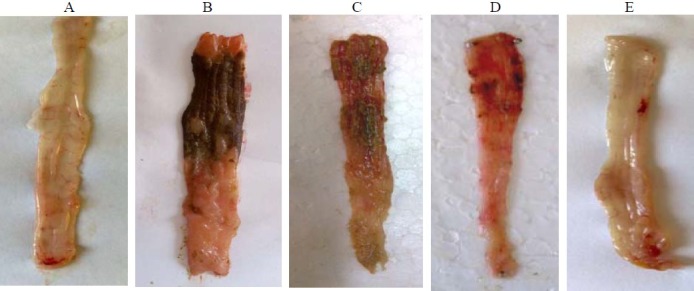
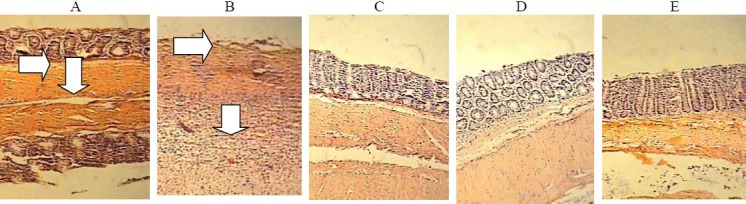
Carum carvi L. (Apiaceae family) or caraway is a common household plant grown around the world including Iran. Caraway fruits are used as flavoring agent in foods and beverages, and have various traditional uses in ethnomedicine. Anti-inflammatory, spasmolytic, antimicrobial, antioxidant, carminative and immunomodulatory properties of caraway suggest that it might exert beneficial effects on inflammatory bowel disease (IBD). Therefore, this study was carried out to investigate the effects of caraway hydroalcoholic extract (CHE) and its essential oil (CEO) in an immunological model of colitis in rats induced by trinitrobenzene sulfonic acid (TNBS). Different doses of CHE (100, 200, 400 mg/kg) and CEO (100, 200, 400 μl/kg) were administered orally (p.o.) and also doses of CHE (100, 400 mg/kg) and CEO (100, 400 μl/kg) were given intraperitoneally (i.p.) to the separate groups of male Wistar rats (n=6). Administration of the doses started 6 h after induction of colitis and continued daily for 5 consecutive days. Wet colon weight/length ratio was measured and tissue damage scores as well as indices of colitis were evaluated both macroscopically and histopathologically. CHE and CEO at all doses tested were effective in reducing colon tissue lesions and colitis indices and the efficacy was nearly the same when different doses of plant fractions were administered p.o. or i.p. Administration of prednisolone (p.o., 4 mg/kg), Asacol® (mesalazine microgranules, p.o., 100 mg/kg) and hydrocortisone acetate (i.p., 20 mg/kg) as references were effective in reducing colon tissue injures as well. These data suggest that caraway fractions are both effective and possess anti-colitic activity irrespective of the dose and route of administration.
葛缕子(伞形科)或香菜籽是一种常见的家庭植物,在包括伊朗在内的世界各地均有种植。香菜籽果实被用作食品和饮料中的调味剂,并且在民族医学中有多种传统用途。香菜籽的抗炎、解痉、抗菌、抗氧化、驱风健胃和免疫调节特性表明,它可能对炎症性肠病(IBD)产生有益影响。因此,本研究旨在研究香菜籽水醇提取物(CHE)及其精油(CEO)在三硝基苯磺酸(TNBS)诱导的大鼠结肠炎免疫模型中的作用。将不同剂量的CHE(100、200、400mg/kg)和CEO(100、200、400μl/kg)经口(p.o.)给药,并且将CHE(100、400mg/kg)和CEO(100、400μl/kg)的剂量分别腹腔内(i.p.)给予不同组的雄性Wistar大鼠(n=6)。给药在结肠炎诱导后6小时开始,连续每日给药5天。测量湿结肠重量/长度比,并从宏观和组织病理学上评估组织损伤评分以及结肠炎指标。所有测试剂量的CHE和CEO均能有效减轻结肠组织损伤和结肠炎指标,并且当经口或腹腔内给予不同剂量的植物提取物时,疗效几乎相同。给予泼尼松龙(p.o.,4mg/kg)、艾迪莎(美沙拉嗪微粒,p.o.,100mg/kg)和醋酸氢化可的松(i.p.,20mg/kg)作为对照也能有效减轻结肠组织损伤。这些数据表明,无论剂量和给药途径如何,香菜籽提取物均有效且具有抗结肠炎活性。