1. National Center for NanoScience and Technology, 11 BeiYiTiao, ZhongGuanCun, Beijing, 100190, China. ; 2. Institute for Systems Biology, 401 Terry Avenue N, Seattle, Washington 98109, USA. ; 3. State Key Laboratory of Proteomics, Beijing Proteomics Research Center, Beijing 100850, China.
2. Institute for Systems Biology, 401 Terry Avenue N, Seattle, Washington 98109, USA.
Theranostics. 2014 Jan 14;4(2):215-28. doi: 10.7150/thno.7868. eCollection 2014.
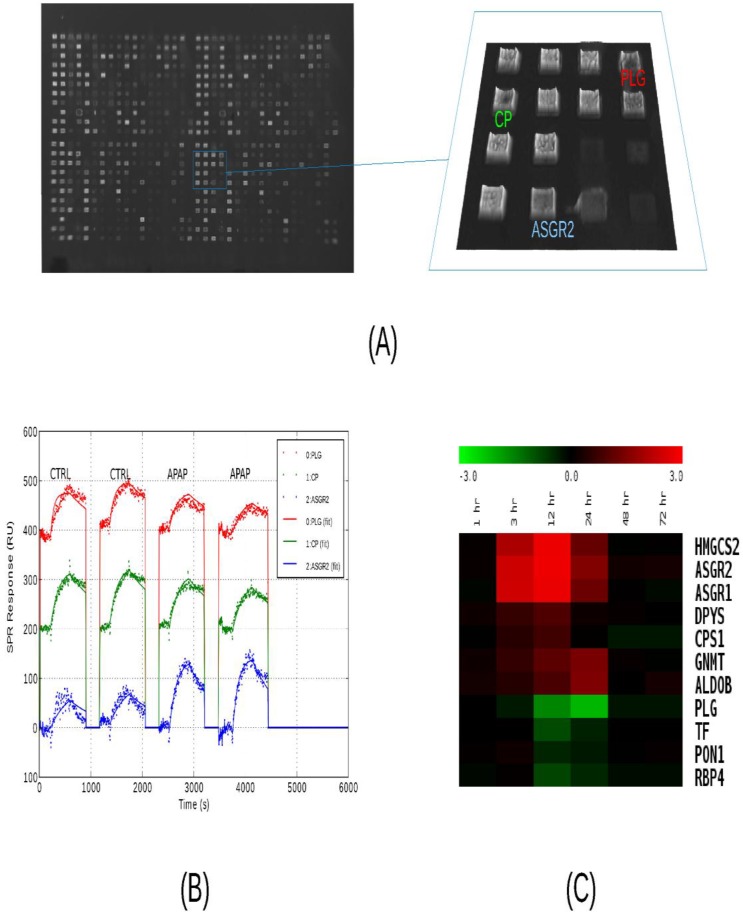
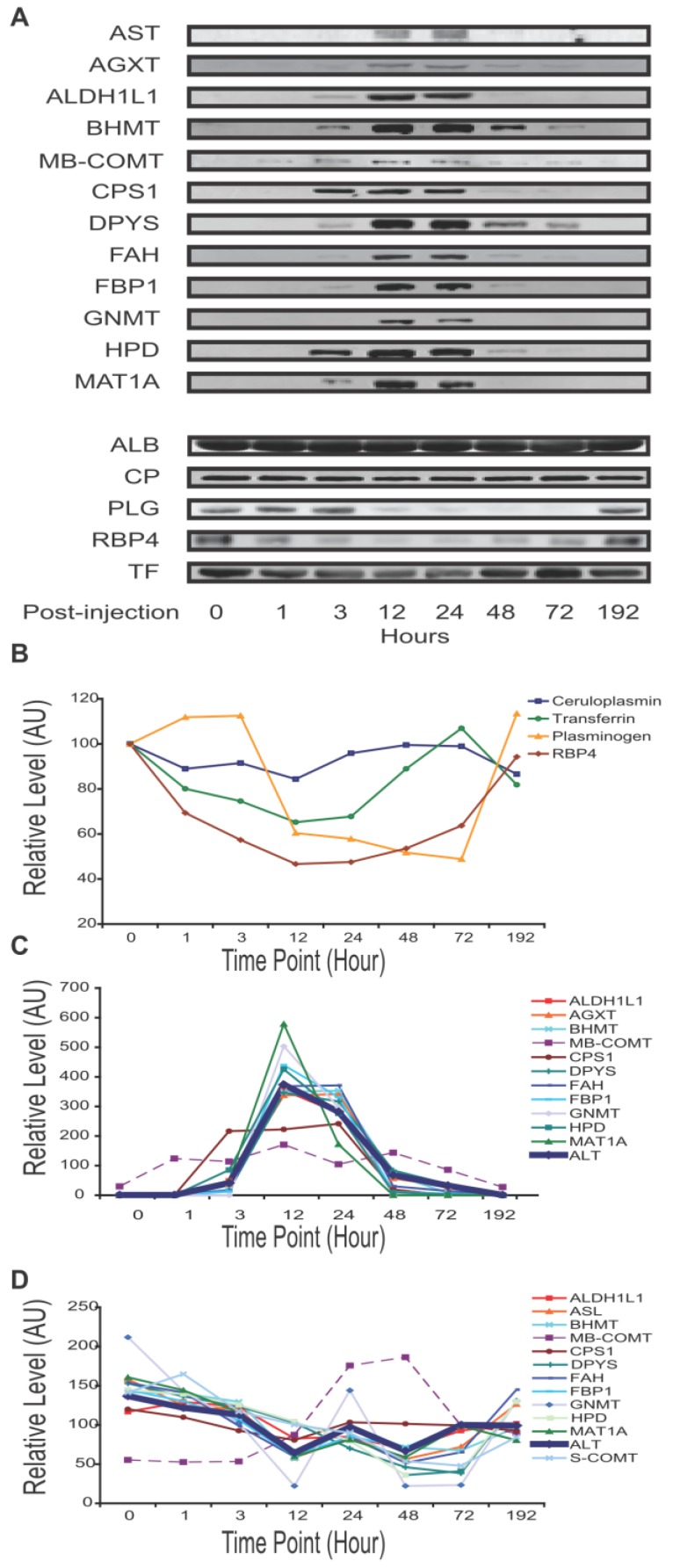
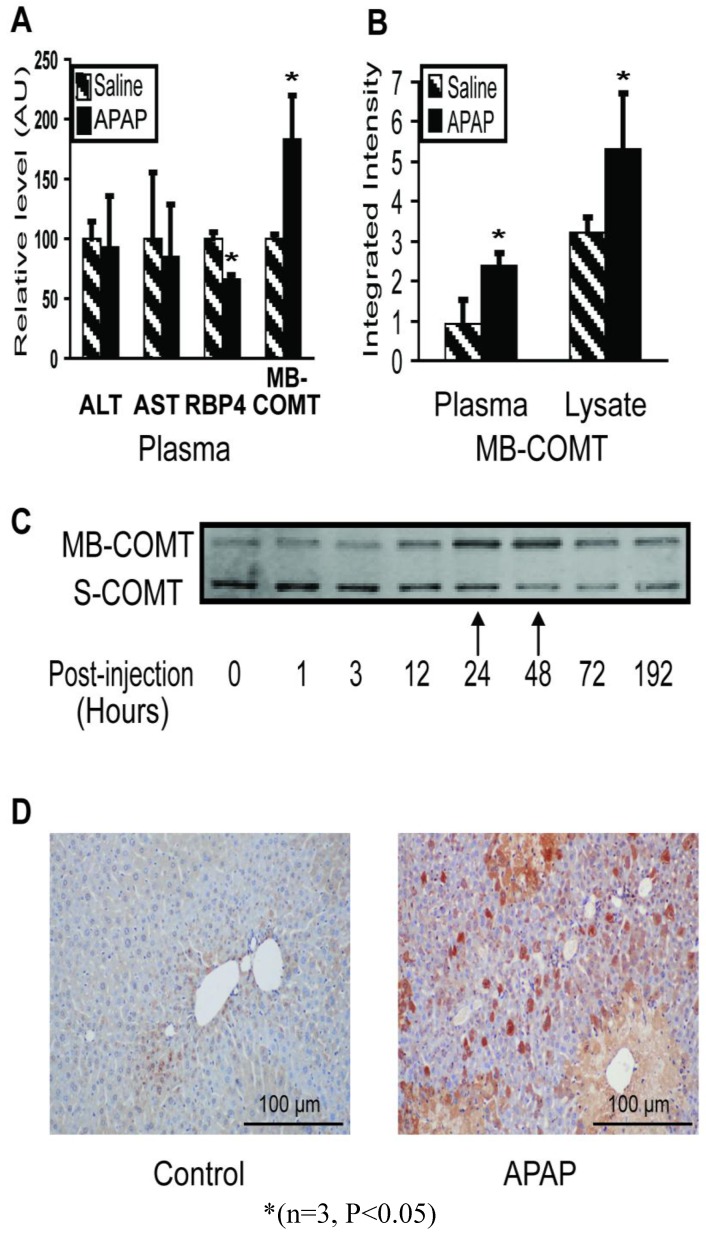
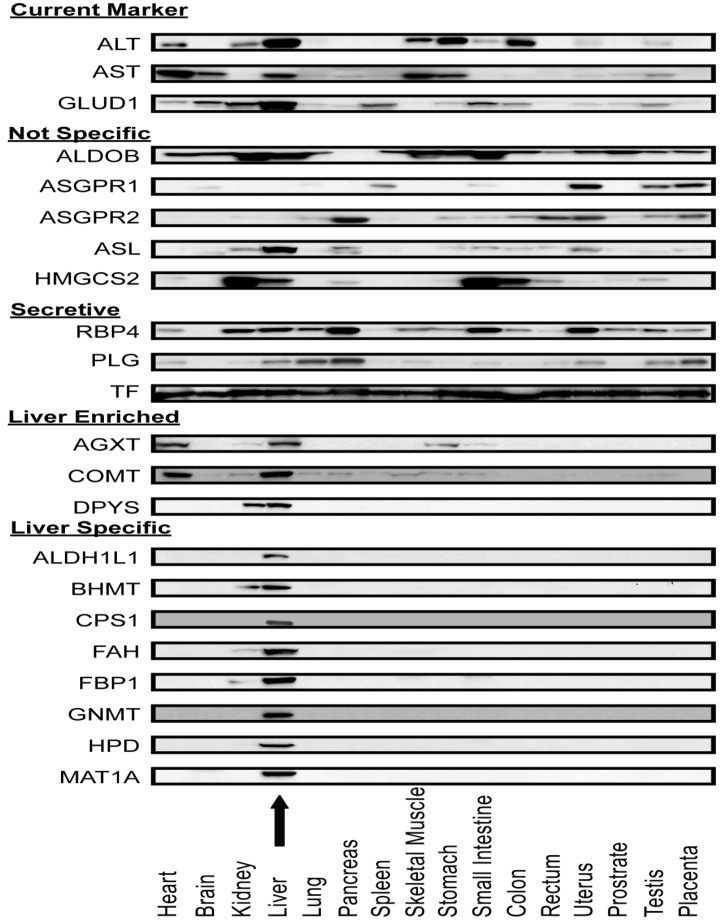
We discuss here a new approach to detecting hepatotoxicity by employing concentration changes of liver-specific blood proteins during disease progression. These proteins are capable of assessing the behaviors of their cognate liver biological networks for toxicity or disease perturbations. Blood biomarkers are highly desirable diagnostics as blood is easily accessible and baths virtually all organs. Fifteen liver-specific blood proteins were identified as markers of acetaminophen (APAP)-induced hepatotoxicity using three proteomic technologies: label-free antibody microarrays, quantitative immunoblotting, and targeted iTRAQ mass spectrometry. Liver-specific blood proteins produced a toxicity signature of eleven elevated and four attenuated blood protein levels. These blood protein perturbations begin to provide a systems view of key mechanistic features of APAP-induced liver injury relating to glutathione and S-adenosyl-L-methionine (SAMe) depletion, mitochondrial dysfunction, and liver responses to the stress. Two markers, elevated membrane-bound catechol-O-methyltransferase (MB-COMT) and attenuated retinol binding protein 4 (RBP4), report hepatic injury significantly earlier than the current gold standard liver biomarker, alanine transaminase (ALT). These biomarkers were perturbed prior to onset of irreversible liver injury. Ideal markers should be applicable for both rodent model studies and human clinical trials. Five of these mouse liver-specific blood markers had human orthologs that were also found to be responsive to human hepatotoxicity. This panel of liver-specific proteins has the potential to effectively identify the early toxicity onset, the nature and extent of liver injury and report on some of the APAP-perturbed liver networks.
我们在这里讨论了一种通过检测疾病进展过程中肝脏特异性血液蛋白浓度变化来检测肝毒性的新方法。这些蛋白质能够评估其同源肝脏生物网络对毒性或疾病干扰的行为。血液生物标志物是非常理想的诊断方法,因为血液容易获取且几乎可以检测到所有器官。使用三种蛋白质组学技术:无标记抗体微阵列、定量免疫印迹和靶向 iTRAQ 质谱,鉴定了 15 种肝脏特异性血液蛋白作为对乙酰氨基酚(APAP)诱导肝毒性的标志物。肝脏特异性血液蛋白产生了 11 种升高和 4 种降低的血液蛋白水平的毒性特征。这些血液蛋白的变化开始提供了一个关于 APAP 诱导肝损伤的关键机制特征的系统观点,涉及谷胱甘肽和 S-腺苷甲硫氨酸(SAMe)耗竭、线粒体功能障碍以及肝脏对压力的反应。两种标志物,升高的膜结合儿茶酚-O-甲基转移酶(MB-COMT)和降低的视黄醇结合蛋白 4(RBP4),比当前的金标准肝生物标志物丙氨酸转氨酶(ALT)更早报告肝损伤。这些生物标志物在不可逆肝损伤发生之前就已经发生了变化。理想的标志物应该适用于啮齿动物模型研究和人类临床试验。这 5 种小鼠肝脏特异性血液标志物有人类同源物,也被发现对人类肝毒性有反应。这组肝脏特异性蛋白质有可能有效地识别早期毒性发作、肝损伤的性质和程度,并报告一些 APAP 扰乱的肝脏网络。