Department of Physiotherapy and Rehabilitation, Faculty of Health Sciences, Hacettepe University, Samanpazari, Ankara 06100, Turkey.
BMC Pulm Med. 2014 Jan 27;14:6. doi: 10.1186/1471-2466-14-6.
Chronic obstructive pulmonary disease (COPD) has significant systemic effects that substantially impact quality of life and survival. The purpose of this study was to assess and compare peripheral muscle strength and endurance, exercise capacity, fatigue perception and quality of life between patients with COPD and healthy subjects.
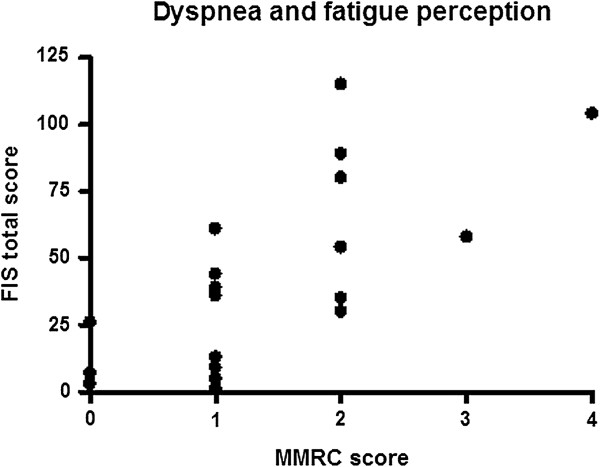
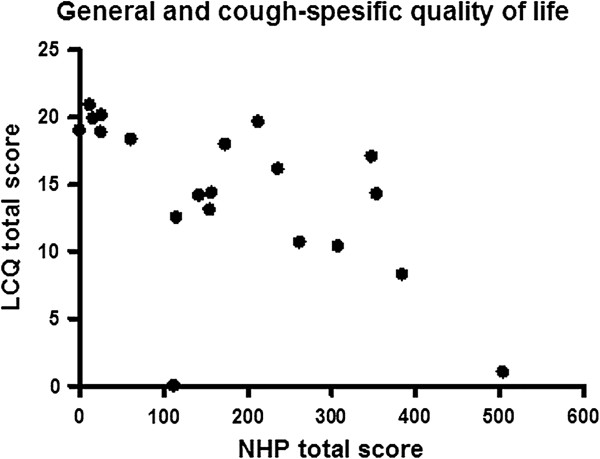
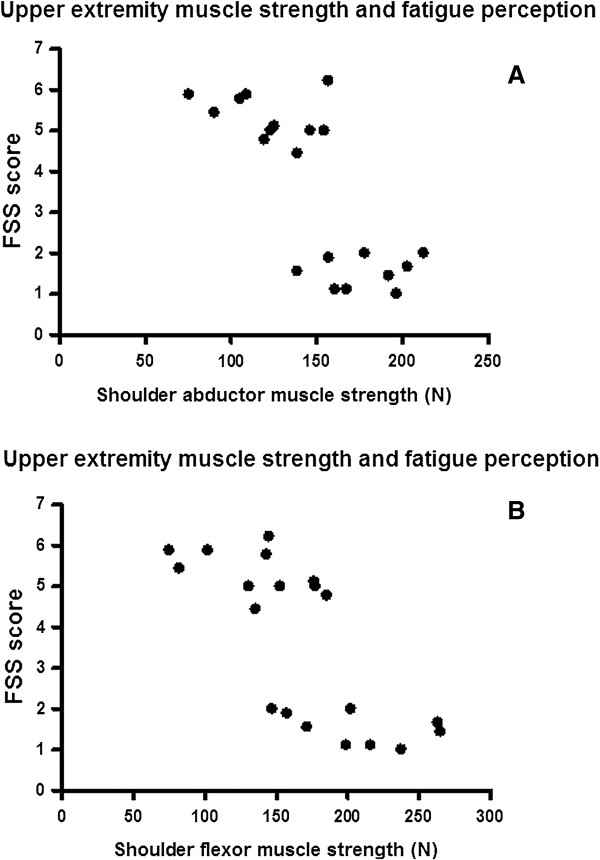
Twenty COPD patients (mean FEV1 49.3 ± 19.2%) and 20 healthy subjects were included in the study. Pulmonary function testing and six-minute walk test (6MWT) were performed. Peripheral muscle strength was measured with a hand-held dynamometer, peripheral muscle endurance was evaluated with sit-ups, squats and modified push-ups tests. Fatigue perception was assessed using the Fatigue Impact Scale (FIS) and Fatigue Severity Scale (FSS). General quality of life was determined with the Nottingham Health Profile (NHP), and cough-specific quality of life was evaluated with the Leicester Cough Questionnaire (LCQ).
Pulmonary functions, strength of shoulder abductor and flexor muscles, numbers of sit-ups and squats, 6MWT distance and 6MWT% were significantly lower in COPD patients than in healthy subjects (p < 0.05). FIS psychosocial sub-dimension and total scores, NHP scores for all sub-dimensions except pain sub-dimension of the COPD group were significantly higher than those of healthy subjects (p < 0.05). The LCQ physical, psychological and social sub-dimensions and total scores were significantly lower in COPD patients than in healthy subjects (p < 0.05).
Pulmonary functions, peripheral muscle strength and endurance, exercise capacity and quality of life were adversely affected in patients with COPD. There are greater effect of fatigue on psychosocial functioning and general daily life activities and effect of cough on the quality of life in patients with COPD. This study supports the idea that COPD patients must be evaluated in a comprehensive manner for planning pulmonary rehabilitation programs.
慢性阻塞性肺疾病(COPD)具有显著的全身效应,对生活质量和生存率有重大影响。本研究的目的是评估和比较 COPD 患者与健康受试者之间的外周肌肉力量和耐力、运动能力、疲劳感和生活质量。
纳入 20 名 COPD 患者(平均 FEV1 为 49.3±19.2%)和 20 名健康受试者。进行肺功能测试和 6 分钟步行试验(6MWT)。使用手持测力计测量外周肌肉力量,通过仰卧起坐、深蹲和改良俯卧撑测试评估外周肌肉耐力。使用疲劳影响量表(FIS)和疲劳严重程度量表(FSS)评估疲劳感。使用诺丁汉健康调查问卷(NHP)评估一般生活质量,使用莱斯特咳嗽问卷(LCQ)评估咳嗽特异性生活质量。
与健康受试者相比,COPD 患者的肺功能、肩外展和内收肌力量、仰卧起坐和深蹲次数、6MWT 距离和 6MWT%均显著降低(p<0.05)。FIS 心理社会维度和总分,除 COPD 组疼痛维度外的 NHP 所有维度得分均显著高于健康受试者(p<0.05)。LCQ 身体、心理和社会维度以及总分在 COPD 患者中均显著低于健康受试者(p<0.05)。
COPD 患者的肺功能、外周肌肉力量和耐力、运动能力和生活质量均受到不良影响。疲劳对心理社会功能和日常活动的影响更大,咳嗽对 COPD 患者的生活质量影响更大。本研究支持 COPD 患者必须进行全面评估,以制定肺康复计划的观点。