Hoben Matthias, Bär Marion, Mahler Cornelia, Berger Sarah, Squires Janet E, Estabrooks Carole A, Kruse Andreas, Behrens Johann
Network Aging Research (NAR), Ruprecht-Karls-University Heidelberg, Bergheimer Str, 20, 69115 Heidelberg, Germany.
BMC Res Notes. 2014 Jan 31;7:67. doi: 10.1186/1756-0500-7-67.
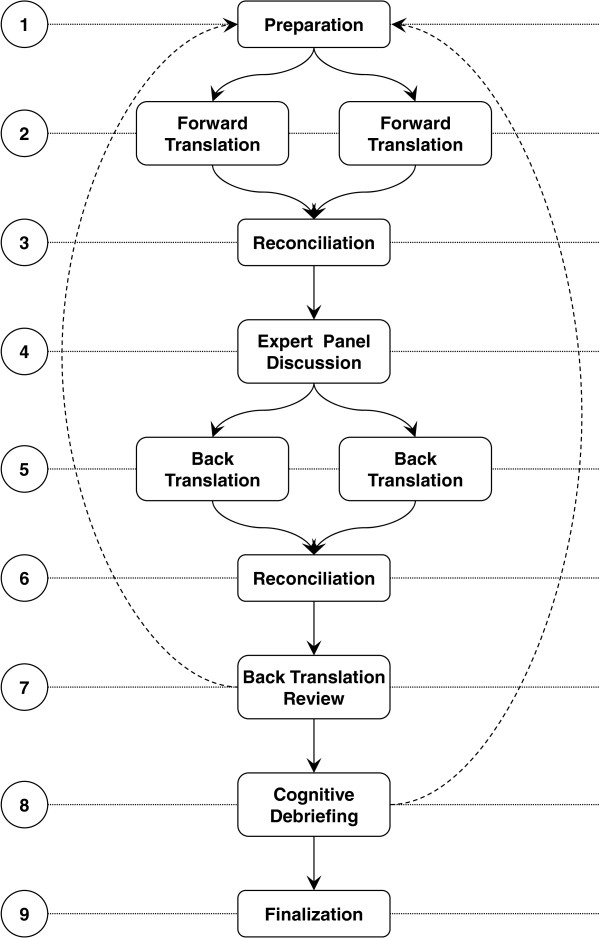
To study the association between organizational context and research utilization in German residential long term care (LTC), we translated three Canadian assessment instruments: the Alberta Context Tool (ACT), Estabrooks' Kinds of Research Utilization (RU) items and the Conceptual Research Utilization Scale. Target groups for the tools were health care aides (HCAs), registered nurses (RNs), allied health professionals (AHPs), clinical specialists and care managers. Through a cognitive debriefing process, we assessed response processes validity-an initial stage of validity, necessary before more advanced validity assessment.
We included 39 participants (16 HCAs, 5 RNs, 7 AHPs, 5 specialists and 6 managers) from five residential LTC facilities. We created lists of questionnaire items containing problematic items plus items randomly selected from the pool of remaining items. After participants completed the questionnaires, we conducted individual semi-structured cognitive interviews using verbal probing. We asked participants to reflect on their answers for list items in detail. Participants' answers were compared to concept maps defining the instrument concepts in detail. If at least two participants gave answers not matching concept map definitions, items were revised and re-tested with new target group participants.
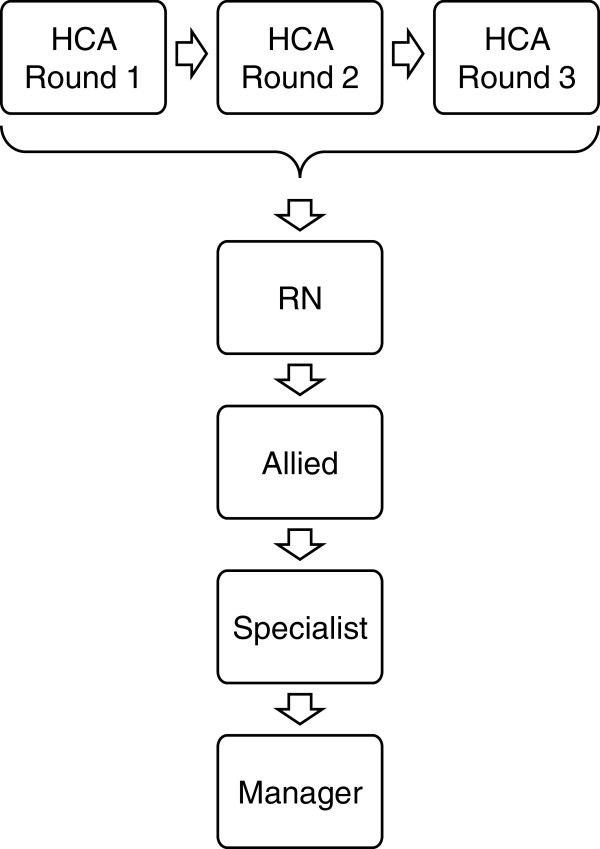
Cognitive debriefings started with HCAs. Based on the first round, we modified 4 of 58 ACT items, 1 ACT item stem and all 8 items of the RU tools. All items were understood by participants after another two rounds. We included revised HCA ACT items in the questionnaires for the other provider groups. In the RU tools for the other provider groups, we used different wording than the HCA version, as was done in the original English instruments. Only one cognitive debriefing round was needed with each of the other provider groups.
Cognitive debriefing is essential to detect and respond to problematic instrument items, particularly when translating instruments for heterogeneous, less well educated provider groups such as HCAs. Cognitive debriefing is an important step in research tool development and a vital component of establishing response process validity evidence. Publishing cognitive debriefing results helps researchers to determine potentially critical elements of the translated tools and assists with interpreting scores.
为研究德国长期护理机构中的组织环境与研究应用之间的关联,我们翻译了三种加拿大评估工具:艾伯塔省环境工具(ACT)、埃斯塔布鲁克斯的研究应用类型(RU)项目以及概念性研究应用量表。这些工具的目标群体包括医疗护理员(HCA)、注册护士(RN)、专职医疗人员(AHP)、临床专家和护理经理。通过认知性预试过程,我们评估了反应过程效度——效度的初始阶段,在进行更高级别的效度评估之前是必要的。
我们纳入了来自五个长期护理机构的39名参与者(16名医疗护理员、5名注册护士、7名专职医疗人员、5名专家和6名经理)。我们创建了包含有问题项目以及从其余项目库中随机选取的项目的问卷项目列表。在参与者完成问卷后,我们使用口头探查进行个体半结构化认知访谈。我们要求参与者详细思考他们对列表项目的回答。将参与者的回答与详细定义工具概念的概念图进行比较。如果至少两名参与者给出的答案与概念图定义不匹配,则对项目进行修订,并与新的目标群体参与者进行重新测试。
认知性预试从医疗护理员开始。基于第一轮,我们修改了58个ACT项目中的4个、1个ACT项目主干以及RU工具的所有8个项目。经过另外两轮后,所有项目都被参与者理解。我们将修订后的医疗护理员ACT项目纳入了针对其他提供者群体的问卷中。在针对其他提供者群体的RU工具中,我们使用了与医疗护理员版本不同的措辞,就像在原始英文工具中那样。对其他每个提供者群体只需要进行一轮认知性预试。
认知性预试对于检测和应对有问题的工具项目至关重要,特别是在为医疗护理员等异质性、受教育程度较低的提供者群体翻译工具时。认知性预试是研究工具开发中的重要一步,也是建立反应过程效度证据的重要组成部分。公布认知性预试结果有助于研究人员确定翻译工具中潜在的关键要素,并有助于解释分数。