Faghih Rose T, Dahleh Munther A, Adler Gail K, Klerman Elizabeth B, Brown Emery N
Department of Electrical Engineering and Computer Science, Massachusetts Institute of Technology, Cambridge, Massachusetts, United States of America ; Laboratory for Information and Decision Systems, Massachusetts Institute of Technology, Cambridge, Massachusetts, United States of America ; Department of Anesthesia, Critical Care and Pain Medicine, Massachusetts General Hospital, Boston, Massachusetts, United States of America.
Department of Electrical Engineering and Computer Science, Massachusetts Institute of Technology, Cambridge, Massachusetts, United States of America ; Laboratory for Information and Decision Systems, Massachusetts Institute of Technology, Cambridge, Massachusetts, United States of America.
PLoS One. 2014 Jan 28;9(1):e85204. doi: 10.1371/journal.pone.0085204. eCollection 2014.
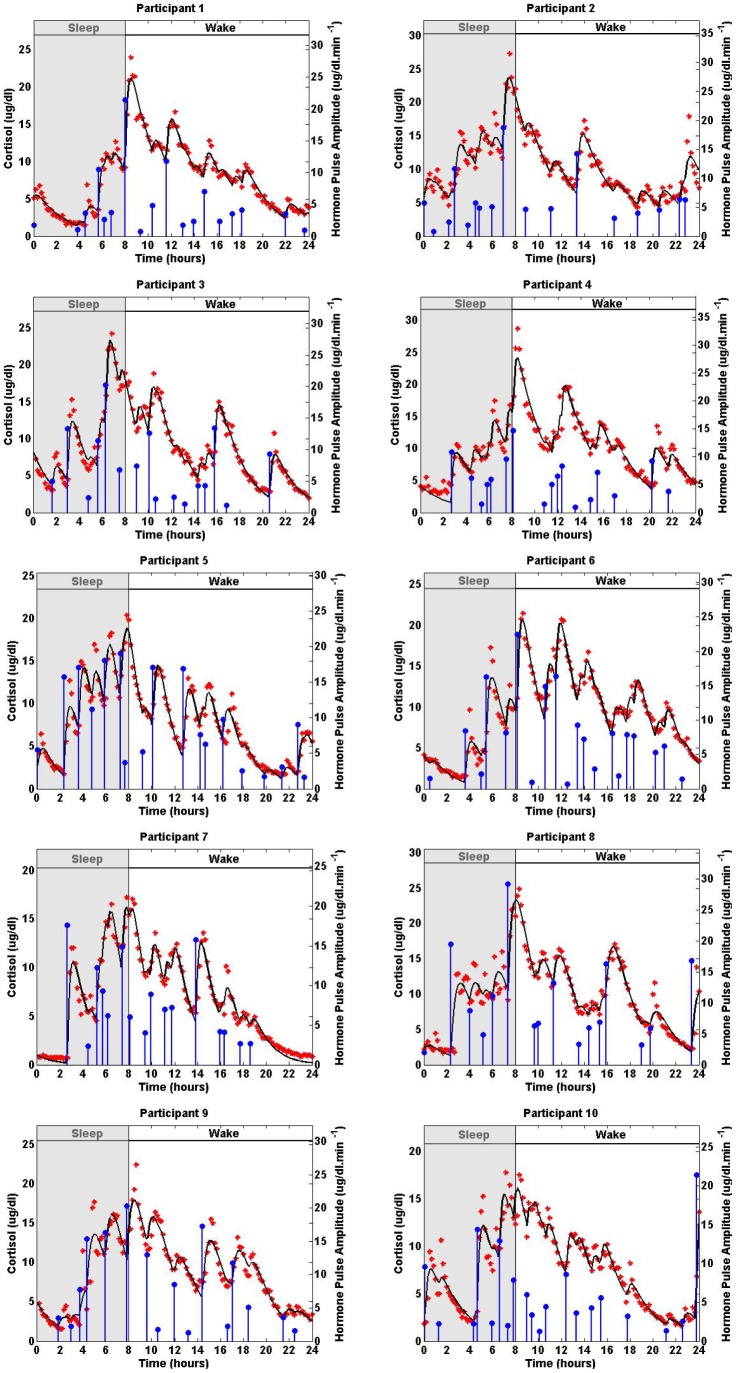
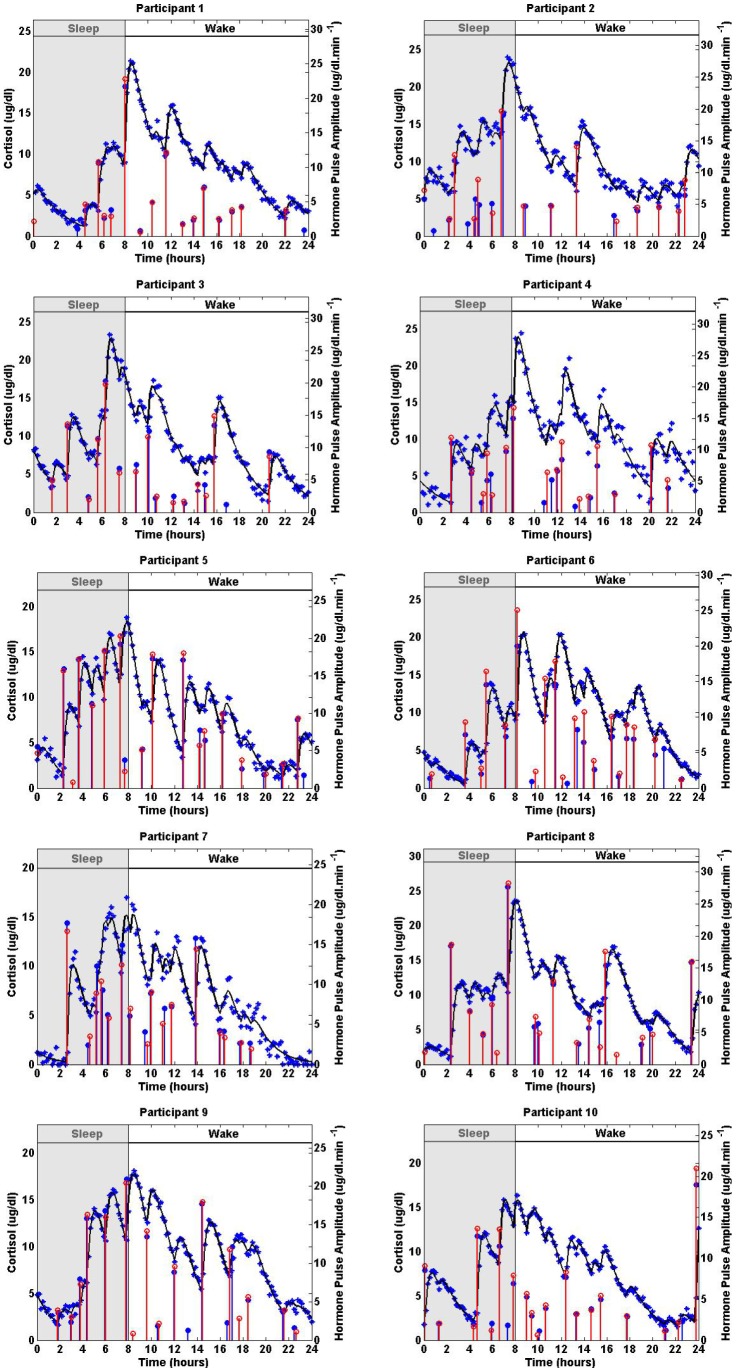
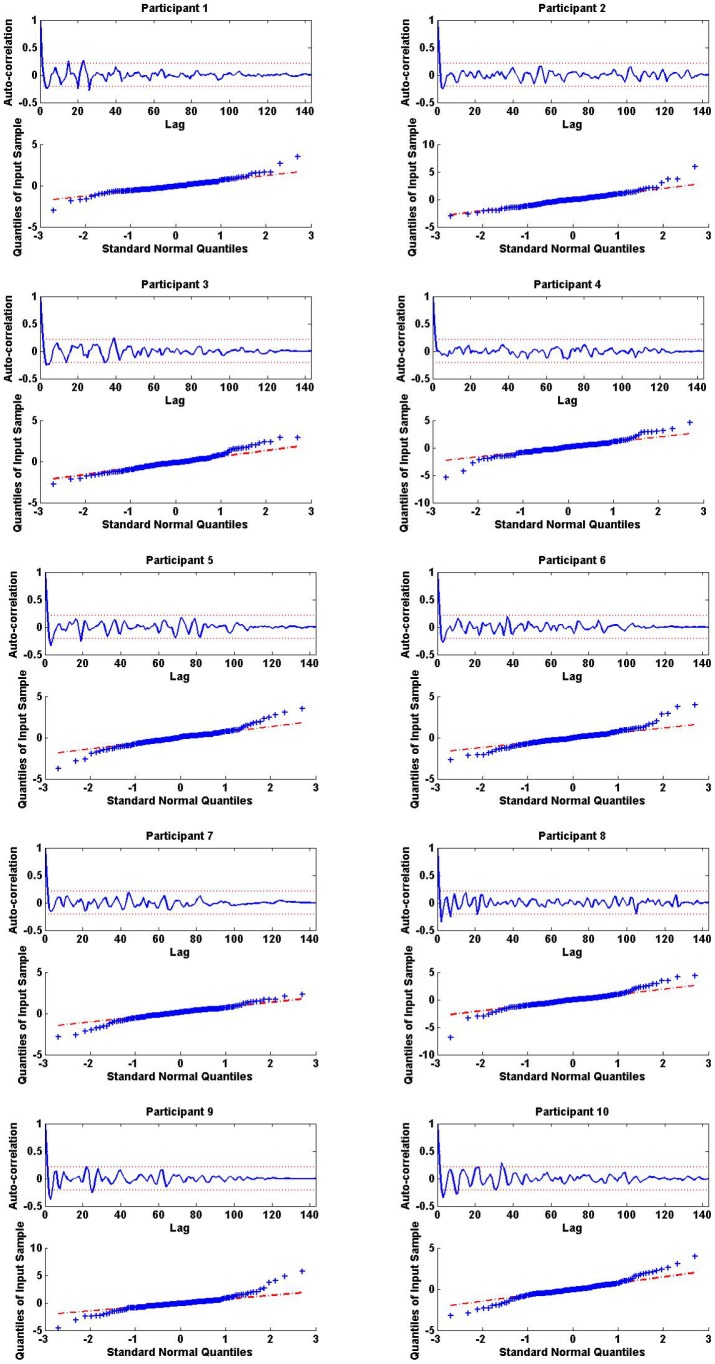
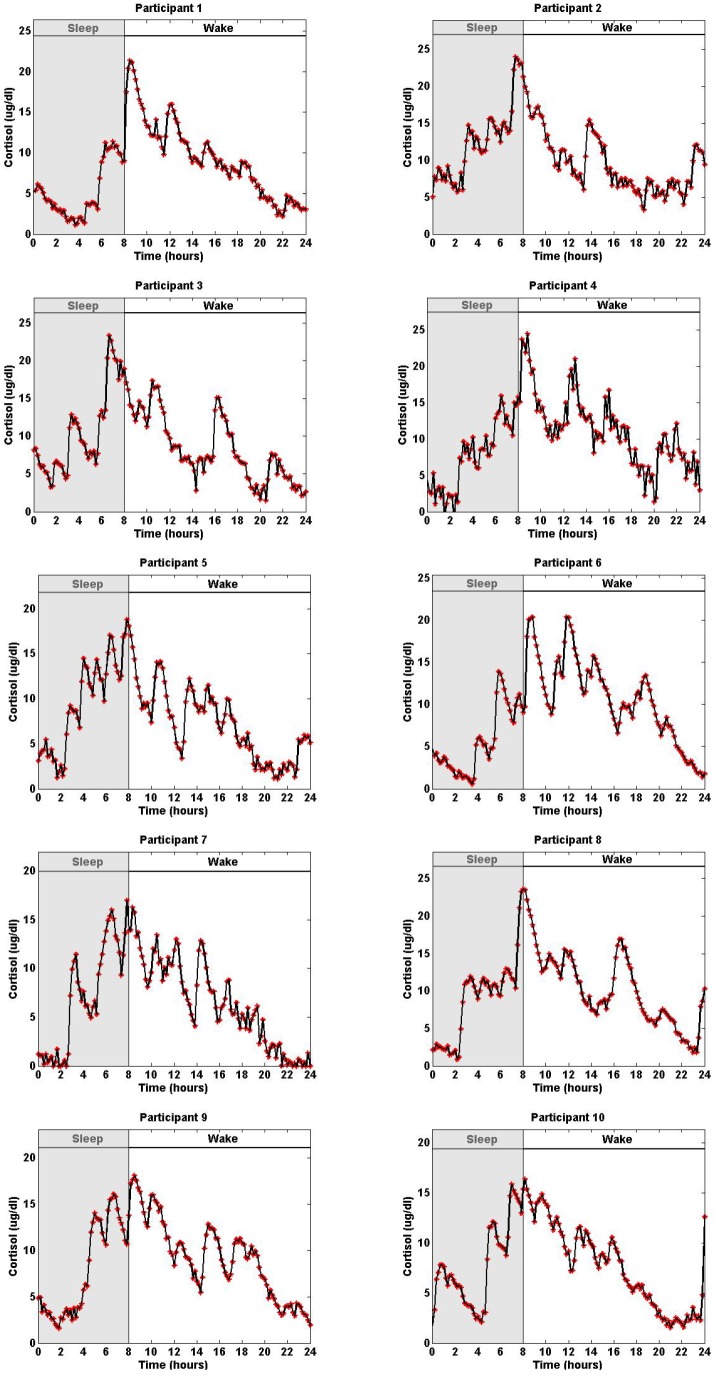
The pulsatile release of cortisol from the adrenal glands is controlled by a hierarchical system that involves corticotropin releasing hormone (CRH) from the hypothalamus, adrenocorticotropin hormone (ACTH) from the pituitary, and cortisol from the adrenal glands. Determining the number, timing, and amplitude of the cortisol secretory events and recovering the infusion and clearance rates from serial measurements of serum cortisol levels is a challenging problem. Despite many years of work on this problem, a complete satisfactory solution has been elusive. We formulate this question as a non-convex optimization problem, and solve it using a coordinate descent algorithm that has a principled combination of (i) compressed sensing for recovering the amplitude and timing of the secretory events, and (ii) generalized cross validation for choosing the regularization parameter. Using only the observed serum cortisol levels, we model cortisol secretion from the adrenal glands using a second-order linear differential equation with pulsatile inputs that represent cortisol pulses released in response to pulses of ACTH. Using our algorithm and the assumption that the number of pulses is between 15 to 22 pulses over 24 hours, we successfully deconvolve both simulated datasets and actual 24-hr serum cortisol datasets sampled every 10 minutes from 10 healthy women. Assuming a one-minute resolution for the secretory events, we obtain physiologically plausible timings and amplitudes of each cortisol secretory event with R (2) above 0.92. Identification of the amplitude and timing of pulsatile hormone release allows (i) quantifying of normal and abnormal secretion patterns towards the goal of understanding pathological neuroendocrine states, and (ii) potentially designing optimal approaches for treating hormonal disorders.
肾上腺皮质醇的脉冲式释放受一个分级系统控制,该系统涉及下丘脑分泌的促肾上腺皮质激素释放激素(CRH)、垂体分泌的促肾上腺皮质激素(ACTH)以及肾上腺分泌的皮质醇。确定皮质醇分泌事件的数量、时间和幅度,并从血清皮质醇水平的连续测量中恢复输注和清除率是一个具有挑战性的问题。尽管在这个问题上已经进行了多年的研究,但一直没有找到一个完全令人满意的解决方案。我们将这个问题表述为一个非凸优化问题,并使用一种坐标下降算法来解决它,该算法有一个有原则的组合:(i)使用压缩感知来恢复分泌事件的幅度和时间,以及(ii)使用广义交叉验证来选择正则化参数。仅使用观察到的血清皮质醇水平,我们使用一个二阶线性微分方程对肾上腺皮质醇分泌进行建模,该方程具有脉冲输入,代表对ACTH脉冲作出反应而释放的皮质醇脉冲。使用我们的算法,并假设在24小时内脉冲数量在15到22个脉冲之间,我们成功地对模拟数据集和来自10名健康女性的每10分钟采样一次的实际24小时血清皮质醇数据集进行了反卷积。假设分泌事件的分辨率为一分钟,我们获得了每个皮质醇分泌事件在生理上合理的时间和幅度,R(2)高于0.92。确定脉冲式激素释放的幅度和时间允许(i)量化正常和异常分泌模式,以了解病理性神经内分泌状态为目标,以及(ii)潜在地设计治疗激素紊乱的最佳方法。