Department of Microbiology and Immunology, Witebsky Center for Microbial Pathogenesis and Immunology, University at Buffalo, the State University of New York, Buffalo, NY, USA.
Wiley Interdiscip Rev RNA. 2014 May-Jun;5(3):393-406. doi: 10.1002/wrna.1219. Epub 2014 Feb 4.
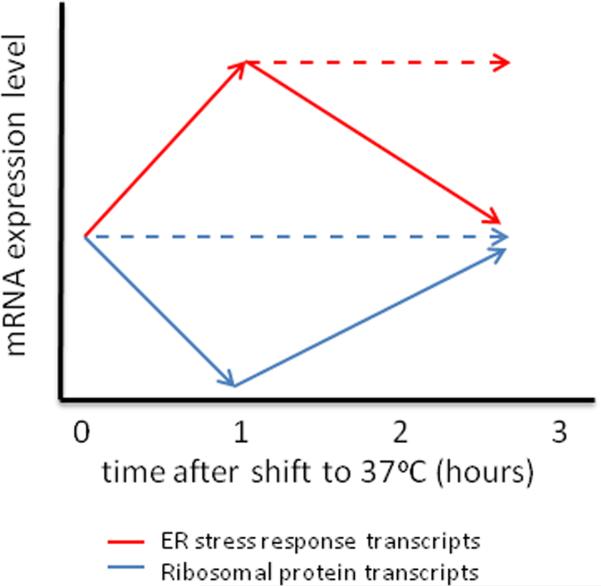
Cryptococcus neoformans is an environmental fungus that can cause severe disease in humans. C. neoformans encounters a multitude of stresses within the human host to which it must adapt in order to survive and proliferate. Upon stressful changes in the external milieu, C. neoformans must reprogram its gene expression to properly respond to and combat stress in order to maintain homeostasis. Several studies have investigated the changes that occur in response to these stresses to begin to unravel the mechanisms of adaptation in this organism. Here, we review studies that have explored stress-induced changes in gene expression with a focus on host temperature adaptation. We compare global messenger RNA (mRNA) expression data compiled from several studies and identify patterns that suggest that orchestrated, transient responses occur. We also utilize the available expression data to explore the possibility of a common stress response that may contribute to cellular protection against a variety of stresses in C. neoformans. In addition, we review studies that have revealed the significance of post-transcriptional mechanisms of mRNA regulation in response to stress, and discuss how these processes may contribute to adaptation and virulence.
新生隐球菌是一种环境真菌,可导致人类严重疾病。新生隐球菌在人体宿主中会遇到多种压力,必须适应这些压力才能生存和繁殖。当外部环境发生应激性变化时,新生隐球菌必须重新编程其基因表达,以正确应对和抵御压力,从而维持体内平衡。已有多项研究调查了应对这些压力的变化,以开始揭示该生物体适应的机制。在这里,我们回顾了研究应激诱导的基因表达变化的研究,重点关注宿主温度适应。我们比较了几项研究中汇总的全球信使 RNA (mRNA) 表达数据,并确定了表明协调、短暂反应发生的模式。我们还利用可用的表达数据来探索可能存在的共同应激反应,这种反应可能有助于新生隐球菌抵抗各种应激的细胞保护。此外,我们还回顾了揭示应激反应中 mRNA 调控的转录后机制重要性的研究,并讨论了这些过程如何有助于适应和毒力。