Arnaoutis Giannis, Kavouras Stavros A, Angelopoulou Athanasia, Skoulariki Chara, Bismpikou Stefani, Mourtakos Stamatis, Sidossis Labros S
1Laboratory of Nutrition & Clinical Dietetics, Department of Nutrition and Dietetics, Harokopio University, Athens, Greece; 2Human Performance Laboratory, Department of Health, Human Performance and Recreation, University of Arkansas, Fayetteville, Arkansas; and 3Department of Internal Medicine-Geriatrics, Sealy Center on Aging, Institute for Translational Sciences and Shriners Burns Institute, University of Texas Medical Branch, Galveston, Texas.
J Strength Cond Res. 2015 Dec;29(12):3447-52. doi: 10.1519/JSC.0000000000000400.
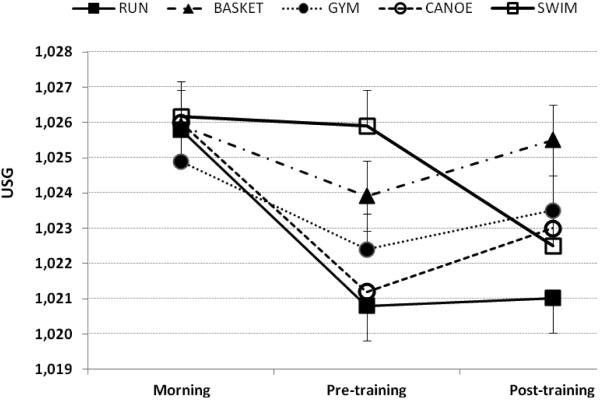
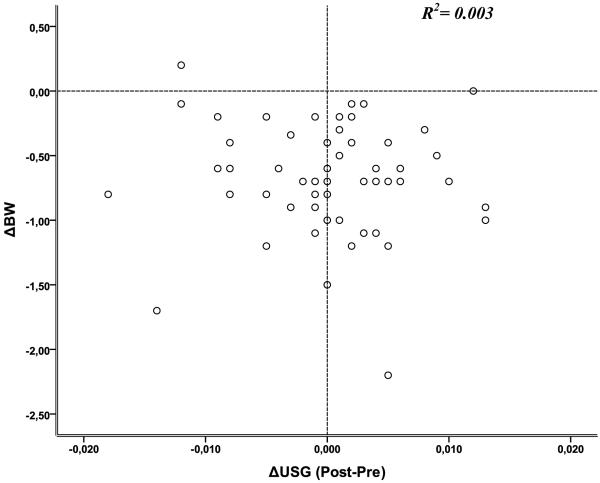
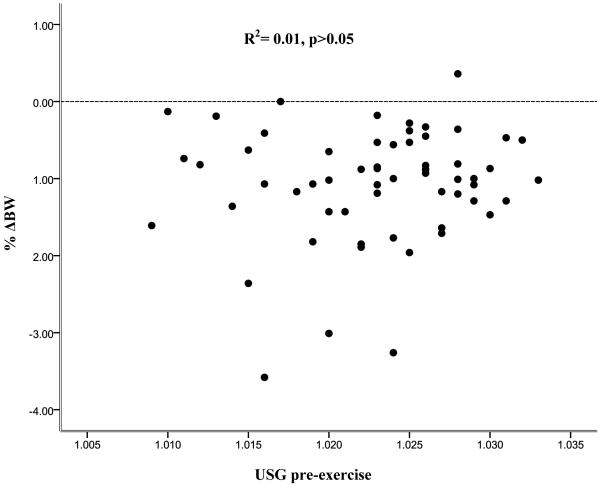
Although there are many studies demonstrating a high percentage of adult athletes who start exercise in suboptimal hydration state, limited data concerning hydration levels in athletic youth exist. The purpose of this study was to identify the hydration status of elite young athletes of different sports, during a typical day of training. Fifty-nine young elite male athletes from different sports (basketball, gymnastics, swimming, running, and canoeing) participated in the study (age: 15.2 ± 1.3 years; years of training: 7.7 ± 2.0). Hydration status was assessed in the morning, before and immediately after practice. Data collection took place at the same time of the day, with mean environmental temperature and humidity at the time of the measurements at 27.6 ± 0.9° C and 58 ± 8%, respectively. All athletes trained for approximately 90 minutes, and they were consuming fluids ad libitum throughout their practice. Over 89% of the athletes were hypohydrated (urine specific gravity [USG] ≥1.020 mg·dl) based on their first morning urine sample. Pretraining urine samples revealed that 76.3% of the athletes were hypohydrated, whereas a significant high percent remained hypohydrated even after training according to USG values ≥1.020 mg·dl (74.5%) and urine color scale: 5-6 (76.3%). Mean body weight loss during training was -1.1 ± 0.07%. We concluded that the prevalence of hypohydration among elite young athletes is very high, as indicated by the USG and urine color values. The majority of the athletes was hypohydrated throughout the day and dehydrated even more during practice despite fluid availability.
尽管有许多研究表明,有很大比例的成年运动员开始运动时处于非最佳水合状态,但关于青少年运动员水合水平的数据有限。本研究的目的是确定不同运动项目的优秀年轻运动员在典型训练日的水合状态。来自不同运动项目(篮球、体操、游泳、跑步和皮划艇)的59名年轻优秀男性运动员参与了该研究(年龄:15.2±1.3岁;训练年限:7.7±2.0年)。在早晨、训练前和训练后立即评估水合状态。数据收集在一天中的同一时间进行,测量时的平均环境温度和湿度分别为27.6±0.9°C和58±8%。所有运动员训练约90分钟,训练期间随意饮用液体。根据他们早晨的第一次尿液样本,超过89%的运动员处于低水合状态(尿比重[USG]≥1.020mg·dl)。训练前的尿液样本显示,76.3%的运动员处于低水合状态,而根据USG值≥1.020mg·dl(74.5%)和尿色量表:5-6(76.3%),即使在训练后仍有相当高比例的运动员处于低水合状态。训练期间的平均体重减轻为-1.1±0.07%。我们得出结论,根据USG和尿色值表明,优秀年轻运动员中低水合的患病率非常高。大多数运动员一整天都处于低水合状态,尽管有液体供应,但在训练期间脱水更严重。