Västermark Ake, Saier Milton H
Department of Molecular Biology, University of California at San Diego, La Jolla, CA 92093-0116, United States.
Department of Molecular Biology, University of California at San Diego, La Jolla, CA 92093-0116, United States.
Curr Opin Microbiol. 2014 Apr;18:8-15. doi: 10.1016/j.mib.2014.01.002. Epub 2014 Feb 8.
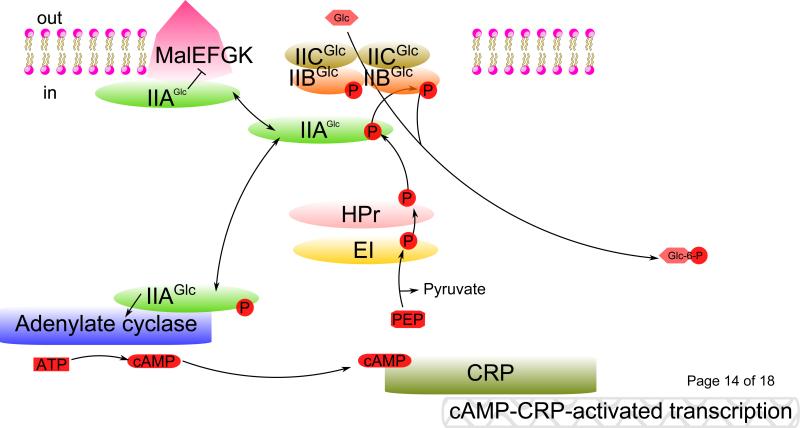
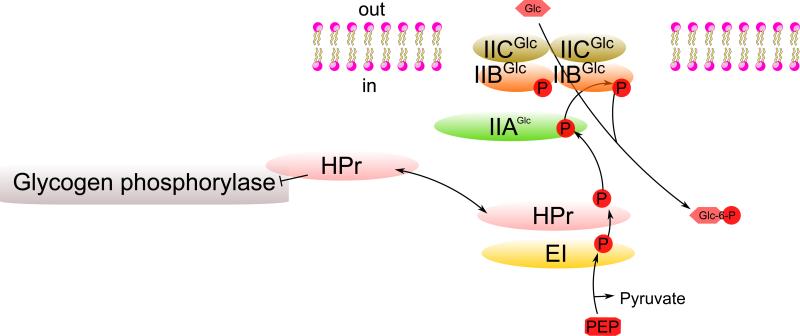
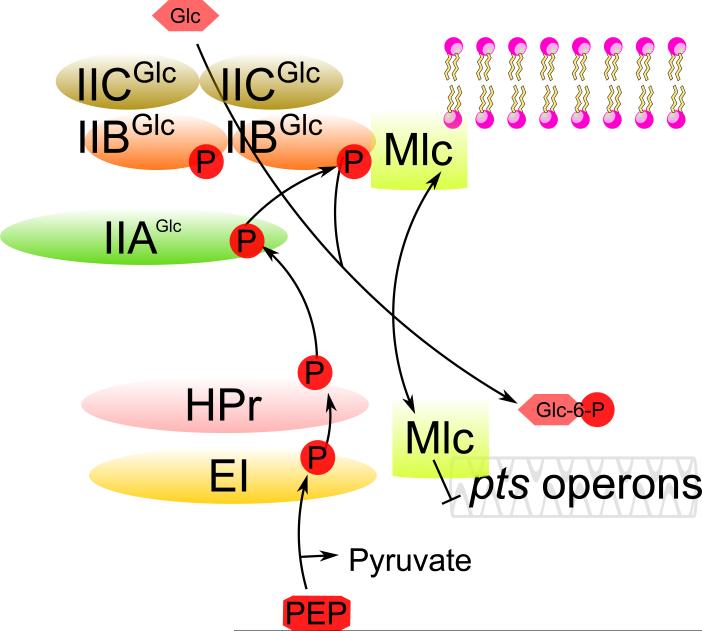
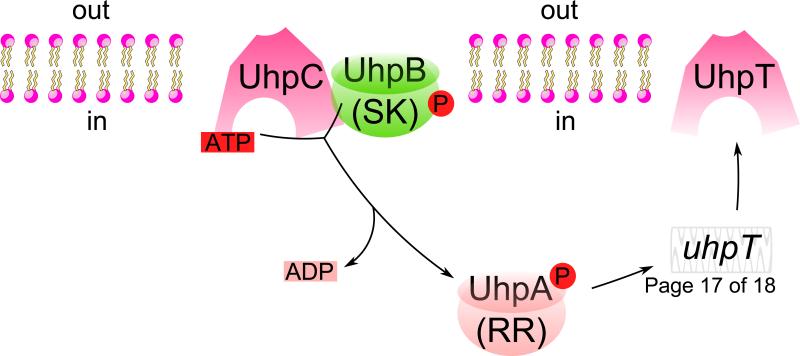
Transport proteins have sometimes gained secondary regulatory functions that influence gene expression and metabolism. These functions allow communication with the external world via mechanistically distinctive signal transduction pathways. In this brief review we focus on three transport systems in Escherichia coli that control and coordinate carbon, exogenous hexose-phosphate and phosphorous metabolism. The transport proteins that play central roles in these processes are: first, the phosphoenolpyruvate (PEP)-dependent phosphotransferase system (PTS), second, the glucose-6-phosphate receptor, UhpC, and third, the phosphate-specific transporter, PstSABC, respectively. While the PTS participates in multiple complex regulatory processes, three of which are discussed here, UhpC and the Pst transporters exemplify differing strategies.
转运蛋白有时会获得影响基因表达和代谢的二级调节功能。这些功能允许通过机制独特的信号转导途径与外部世界进行通讯。在这篇简短的综述中,我们聚焦于大肠杆菌中控制和协调碳、外源磷酸己糖和磷代谢的三种转运系统。在这些过程中起核心作用的转运蛋白分别是:第一,磷酸烯醇丙酮酸(PEP)依赖性磷酸转移酶系统(PTS);第二,葡萄糖-6-磷酸受体UhpC;第三,磷酸盐特异性转运蛋白PstSABC。虽然PTS参与多种复杂的调节过程,本文讨论其中三种,UhpC和Pst转运蛋白则体现了不同的策略。