Department of Computer Science, Hong Kong Baptist University, Kowloon Tong, Hong Kong.
National Institute of Parasitic Diseases, Chinese Center for Disease Control and Prevention, Shanghai, China ; Key Laboratory of Parasite and Vector Biology, MOH, Shanghai, China ; WHO Collaborating Center for Malaria, Schistosomiasis and Filariasis, Shanghai, China.
PLoS Negl Trop Dis. 2014 Feb 6;8(2):e2682. doi: 10.1371/journal.pntd.0002682. eCollection 2014 Feb.
The transmission networks of Plasmodium vivax characterize how the parasite transmits from one location to another, which are informative and insightful for public health policy makers to accurately predict the patterns of its geographical spread. However, such networks are not apparent from surveillance data because P. vivax transmission can be affected by many factors, such as the biological characteristics of mosquitoes and the mobility of human beings. Here, we pay special attention to the problem of how to infer the underlying transmission networks of P. vivax based on available tempo-spatial patterns of reported cases.
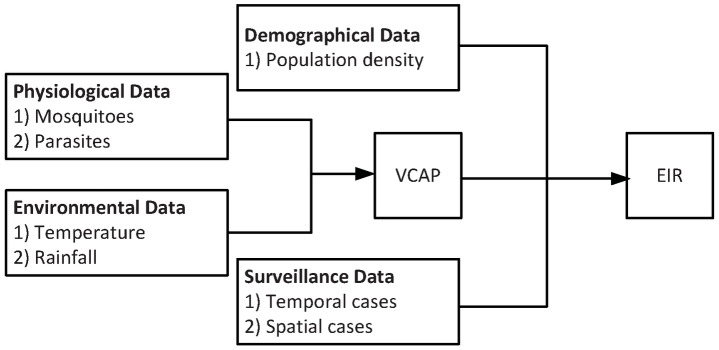
We first define a spatial transmission model, which involves representing both the heterogeneous transmission potential of P. vivax at individual locations and the mobility of infected populations among different locations. Based on the proposed transmission model, we further introduce a recurrent neural network model to infer the transmission networks from surveillance data. Specifically, in this model, we take into account multiple real-world factors, including the length of P. vivax incubation period, the impact of malaria control at different locations, and the total number of imported cases.
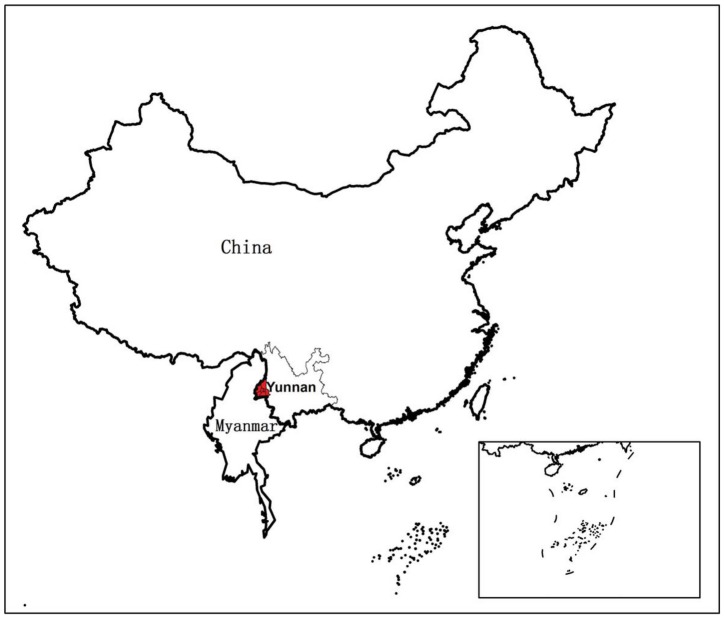
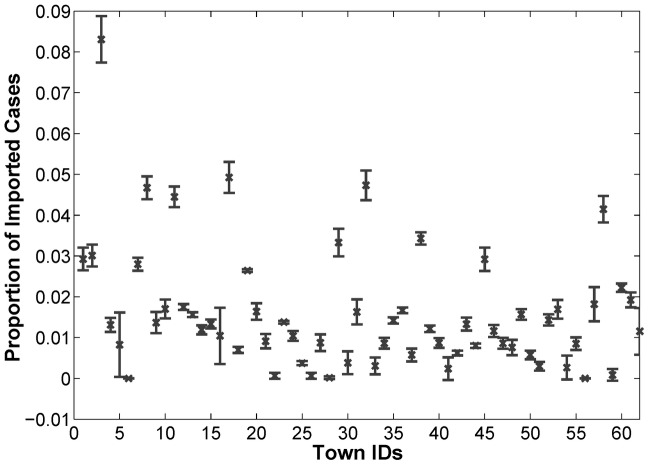
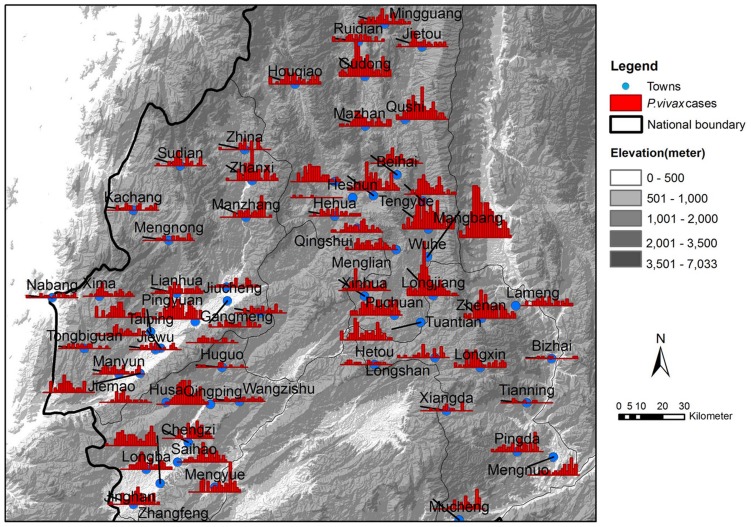
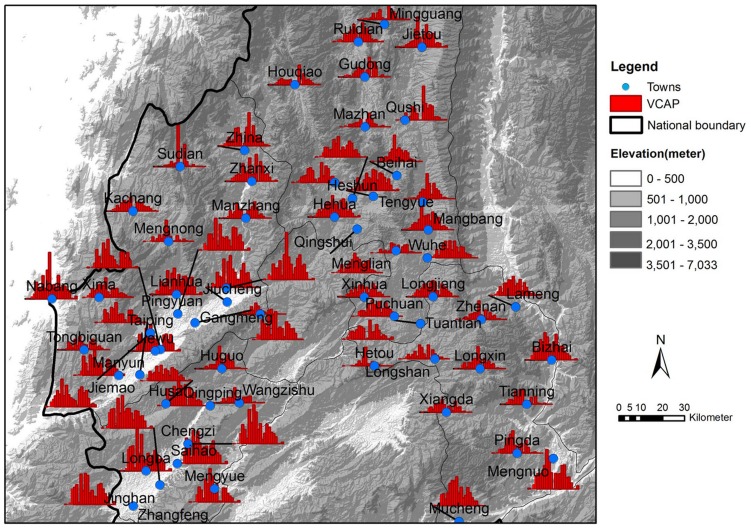
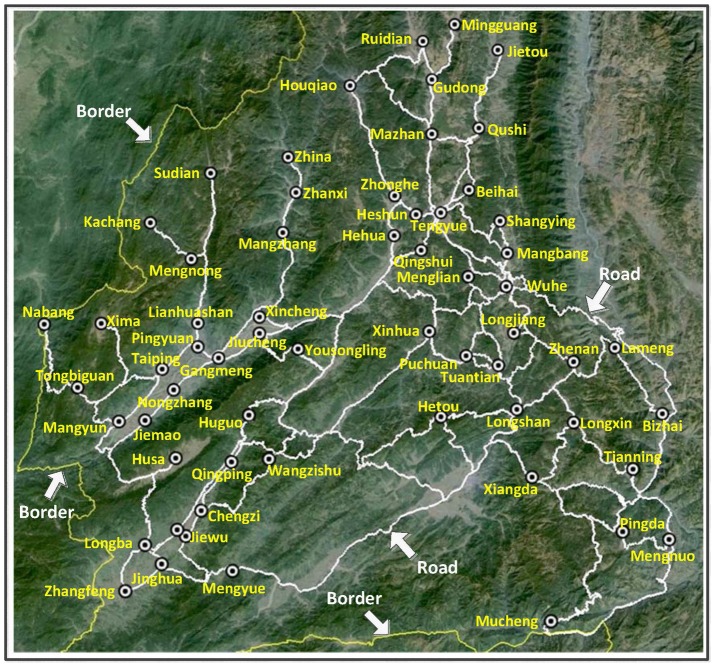
We implement our proposed models by focusing on the P. vivax transmission among 62 towns in Yunnan province, People's Republic China, which have been experiencing high malaria transmission in the past years. By conducting scenario analysis with respect to different numbers of imported cases, we can (i) infer the underlying P. vivax transmission networks, (ii) estimate the number of imported cases for each individual town, and (iii) quantify the roles of individual towns in the geographical spread of P. vivax.
The demonstrated models have presented a general means for inferring the underlying transmission networks from surveillance data. The inferred networks will offer new insights into how to improve the predictability of P. vivax transmission.
间日疟原虫的传播网络描述了寄生虫从一个地点传播到另一个地点的方式,这对于公共卫生政策制定者来说是有帮助的,可以准确预测其地理传播模式。然而,由于间日疟原虫的传播可能受到许多因素的影响,如蚊子的生物学特征和人类的流动性,因此从监测数据中无法明显看出这种网络。在这里,我们特别关注如何根据现有的报告病例的时空模式推断间日疟原虫的潜在传播网络的问题。
我们首先定义了一个空间传播模型,该模型涉及到代表个体位置上间日疟原虫的不均匀传播潜力以及不同位置之间受感染人群的流动性。基于所提出的传播模型,我们进一步引入了一个递归神经网络模型,从监测数据中推断传播网络。具体来说,在这个模型中,我们考虑了多个现实世界的因素,包括间日疟原虫潜伏期的长度、不同地点的疟疾控制效果以及输入病例的总数。
我们通过关注中国云南省 62 个城镇的间日疟原虫传播来实现我们提出的模型,这些城镇在过去几年中经历了高疟疾传播。通过对不同输入病例数量的情景分析,我们可以(i)推断出潜在的间日疟原虫传播网络,(ii)估计每个城镇的输入病例数量,以及(iii)量化各个城镇在间日疟原虫地理传播中的作用。
所展示的模型为从监测数据中推断潜在传播网络提供了一种通用方法。推断出的网络将为如何提高间日疟原虫传播的可预测性提供新的见解。