Jung Chang Hee, Lee Min Jung, Kang Yu Mi, Lee Yoo La, Yoon Hae Kyeong, Kang Sang-Wook, Lee Woo Je, Park Joong-Yeol
Department of Internal Medicine, University of Ulsan College of Medicine, Poongnap-dong, Songpa-gu, Seoul 138-736, Korea.
Cardiovasc Diabetol. 2014 Feb 12;13:41. doi: 10.1186/1475-2840-13-41.
Vaspin is an adipocytokine that was recently identified in the visceral adipose tissue of diabetic rats and has anti-diabetic and anti-atherogenic effects. We hypothesized that vaspin prevents inflammatory cytokine-induced nuclear factor-kappa B (NF-κB) activation by activating AMP-activated protein kinase (AMPK) in vascular endothelial cells.
We examined the effects of vaspin on NF-κB activation and the expression of the NF-κB-mediated genes intercellular adhesion molecule-1 (ICAM-1), vascular cell adhesion molecule-1 (VCAM-1), E-selectin, and monocyte chemoattractant protein-1 (MCP-1). Human aortic endothelial cells (HAECS) were used. Tumor necrosis factor alpha (TNFα) was used as a representative proinflammatory cytokine.
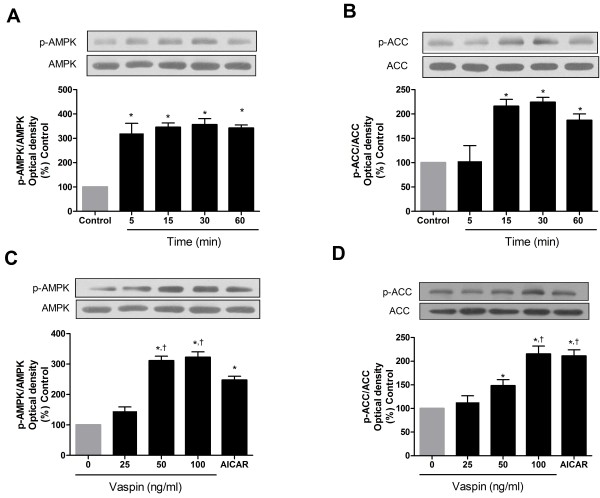
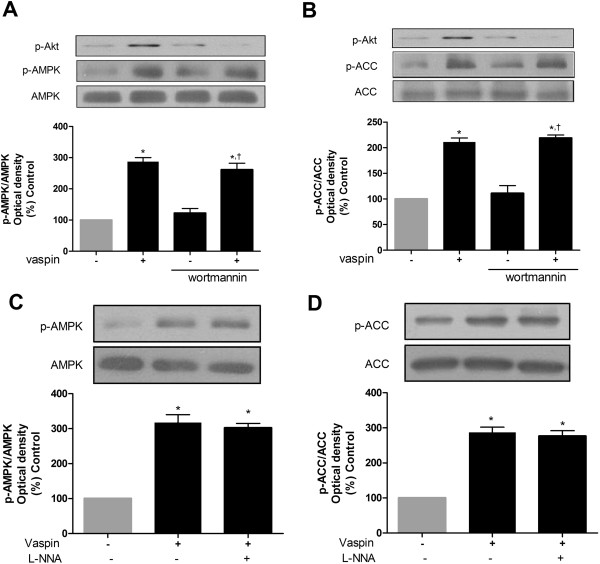
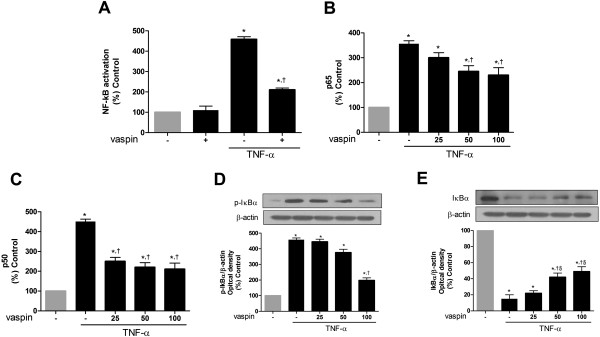
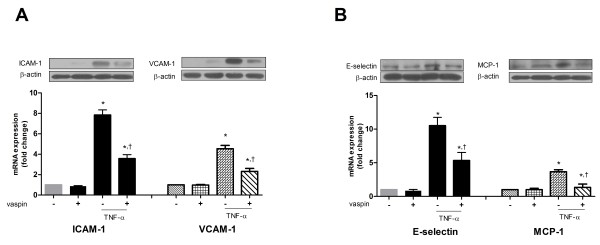
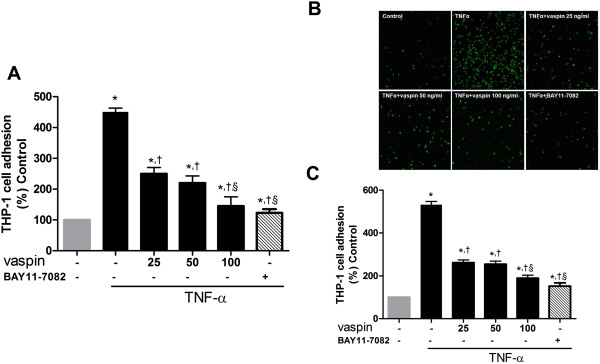
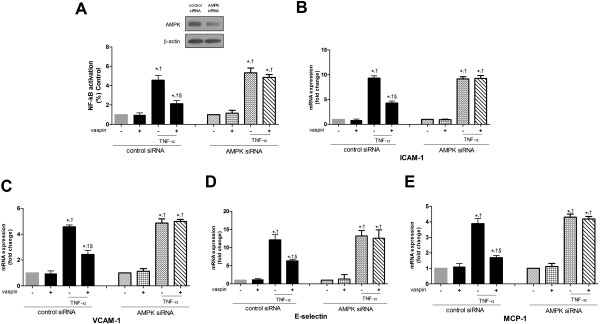
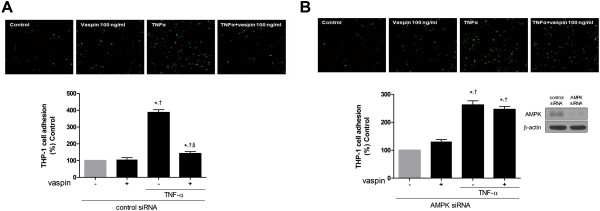
Treatment with vaspin significantly increased the phosphorylation of AMPK and acetyl-CoA carboxylase, the down-stream target of AMPK. Furthermore, treatment with vaspin significantly decreased TNFα-induced activation of NF-κB, as well as the expression of the adhesion molecules ICAM-1, VCAM-1, E-selectin, and MCP-1. These effects were abolished following transfection of AMPKα1-specific small interfering RNA. In an adhesion assay using THP-1 cells, vaspin reduced TNFα-induced adhesion of monocytes to HAECS in an AMPK-dependent manner.
Vaspin might attenuate the cytokine-induced expression of adhesion molecule genes by inhibiting NF-κB following AMPK activation.
内脏脂肪素是一种脂肪细胞因子,最近在糖尿病大鼠的内脏脂肪组织中被发现,具有抗糖尿病和抗动脉粥样硬化作用。我们推测内脏脂肪素通过激活血管内皮细胞中的AMP激活蛋白激酶(AMPK)来阻止炎性细胞因子诱导的核因子-κB(NF-κB)激活。
我们研究了内脏脂肪素对NF-κB激活以及NF-κB介导的细胞间黏附分子-1(ICAM-1)、血管细胞黏附分子-1(VCAM-1)、E-选择素和单核细胞趋化蛋白-1(MCP-1)基因表达的影响。使用人主动脉内皮细胞(HAECs)。肿瘤坏死因子α(TNFα)用作代表性促炎细胞因子。
用内脏脂肪素处理显著增加了AMPK及其下游靶点乙酰辅酶A羧化酶的磷酸化。此外,用内脏脂肪素处理显著降低了TNFα诱导的NF-κB激活以及黏附分子ICAM-1、VCAM-1、E-选择素和MCP-1的表达。在转染AMPKα1特异性小干扰RNA后,这些作用被消除。在使用THP-1细胞的黏附试验中,内脏脂肪素以AMPK依赖的方式减少了TNFα诱导的单核细胞与HAECs的黏附。
内脏脂肪素可能通过在AMPK激活后抑制NF-κB来减弱细胞因子诱导的黏附分子基因表达。