
感恩、希望、正念与个人成长主动性:是问题赌博的缓冲因素还是风险因素?
Gratitude, hope, mindfulness and personal-growth initiative: buffers or risk factors for problem gambling?
作者信息
Loo Jasmine M Y, Tsai Jung-Shun, Raylu Namrata, Oei Tian P S
机构信息
Jeffrey Cheah School of Medicine and Health Sciences, Monash University Malaysia, Sunway, Selangor Darul Ehsan, Malaysia.
Yuhing Junior College of Health Care and Management, Kaohsiung, Taiwan.
出版信息
PLoS One. 2014 Feb 11;9(2):e83889. doi: 10.1371/journal.pone.0083889. eCollection 2014.
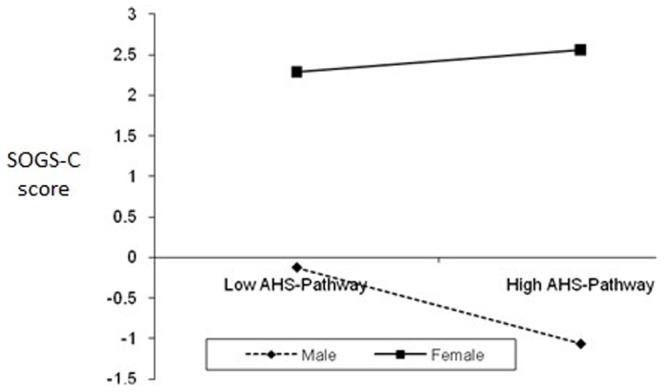
The majority of prevention and intervention research in problem gambling (PG) has focused on identifying negative risk factors. However, not all at-risk individuals go on to develop anticipated disorders and many thrive in spite of them. In healthcare settings, PG and other disorders are typically conceptualized from the biomedical perspective that frame disorders as something negative residing within the individual and reduction in negativity is seen as success. Indeed, this problem-focused conceptualization may be adequate in many cases as reducing PG behaviour is undoubtedly an important outcome, but the focus on negativity alone is too narrow to capture the complexity of human behaviour. Hence, this study attempts to bridge the gap in literature by providing an evaluation of the predictive ability of the positive dispositions on problem gambling severity, gambling-related cognitions, and gambling urges. The positive psychological dispositions examined were curiosity, gratitude, hope, personal growth initiative, and mindfulness. Participants consisted of 801 Taiwanese Chinese students and community individuals (Mean age = 25.36 years). Higher levels of gratitude and hope have been found to predict lower PG, gambling-related cognitions, or gambling urges. Meanwhile, higher mindfulness predicted lower PG, but only among Chinese males. However, lower personal growth initiative predicted lower PG, gambling-related cognitions, and gambling urges. These analyses have small to medium effect sizes with significant predictions. Findings of this study have essential implications in understanding and treating Chinese problem gamblers. These positive dispositions should be addressed by mental health professionals in preventative and treatment programs among Chinese individuals. Further implications and suggestions for future research are discussed.
大多数针对问题赌博(PG)的预防和干预研究都集中在识别负面风险因素上。然而,并非所有有风险的个体都会发展出预期的障碍,许多人尽管存在这些风险因素却仍能茁壮成长。在医疗环境中,PG和其他障碍通常从生物医学角度进行概念化,即将障碍视为个体内部存在的负面事物,减少负面因素被视为成功。事实上,这种以问题为中心的概念化在许多情况下可能是足够的,因为减少PG行为无疑是一个重要的结果,但仅关注负面因素过于狭隘,无法捕捉人类行为的复杂性。因此,本研究试图通过评估积极特质对问题赌博严重程度、与赌博相关的认知以及赌博冲动的预测能力来弥合文献中的差距。所考察的积极心理特质包括好奇心、感恩、希望、个人成长主动性和正念。参与者包括801名台湾华裔学生和社区个体(平均年龄 = 25.36岁)。研究发现,更高水平的感恩和希望能够预测更低的PG、与赌博相关的认知或赌博冲动。同时,更高水平的正念能够预测更低的PG,但仅在中国男性中如此。然而,更低的个人成长主动性能够预测更低的PG、与赌博相关的认知以及赌博冲动。这些分析的效应大小为小到中等,且具有显著的预测性。本研究的结果对于理解和治疗中国问题赌徒具有重要意义。心理健康专业人员在针对中国人的预防和治疗项目中应关注这些积极特质。文中还讨论了对未来研究的进一步启示和建议。



 Zotero 插件