Elmore Stacey A, Lalonde Laura F, Samelius Gustaf, Alisauskas Ray T, Gajadhar Alvin A, Jenkins Emily J
Department of Veterinary Microbiology, University of Saskatchewan, 52 Campus Drive, Saskatoon, Saskatchewan, Canada S7N 5B4.
Centre for Food-Borne and Animal Parasitology, Canadian Food Inspection Agency, 116 Veterinary Road, Saskatoon, Saskatchewan, Canada S7N 2R3.
Int J Parasitol Parasites Wildl. 2013 Mar 14;2:90-6. doi: 10.1016/j.ijppaw.2013.02.005. eCollection 2013 Dec.
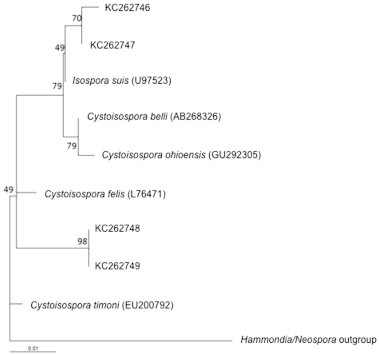
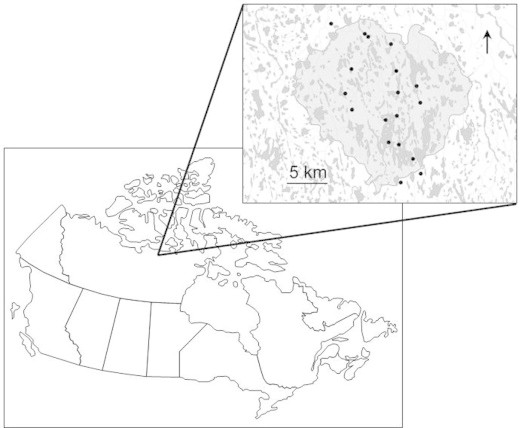
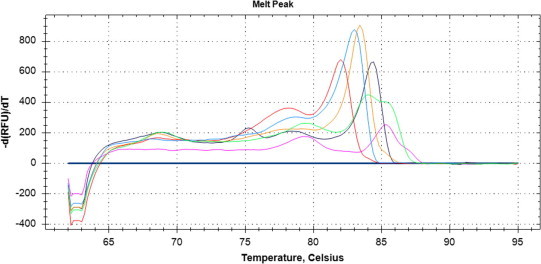
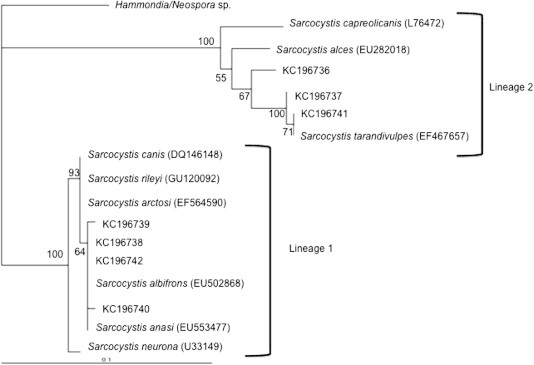
The parasites of arctic foxes in the central Canadian Arctic have not been well described. Canada's central Arctic is undergoing dramatic environmental change, which is predicted to cause shifts in parasite and wildlife species distributions, and trophic interactions, requiring that baselines be established to monitor future alterations. This study used conventional, immunological, and molecular fecal analysis techniques to survey the current gastrointestinal endoparasite fauna currently present in arctic foxes in central Nunavut, Canada. Ninety-five arctic fox fecal samples were collected from the terrestrial Karrak Lake ecosystem within the Queen Maud Gulf Migratory Bird Sanctuary. Samples were examined by fecal flotation to detect helminths and protozoa, immunofluorescent assay (IFA) to detect Cryptosporidium and Giardia, and quantitative PCR with melt-curve analysis (qPCR-MCA) to detect coccidia. Positive qPCR-MCA products were sequenced and analyzed phylogenetically. Arctic foxes from Karrak Lake were routinely shedding eggs from Toxascaris leonina (63%). Taeniid (15%), Capillarid (1%), and hookworm eggs (2%), Sarcocystis sp. sporocysts 3%), and Eimeria sp. (6%), and Cystoisospora sp. (5%) oocysts were present at a lower prevalence on fecal flotation. Cryptosporidium sp. (9%) and Giardia sp. (16%) were detected by IFA. PCR analysis detected Sarcocystis (15%), Cystoisospora (5%), Eimeria sp., and either Neospora sp. or Hammondia sp. (1%). Through molecular techniques and phylogenetic analysis, we identified two distinct lineages of Sarcocystis sp. present in arctic foxes, which probably derived from cervid and avian intermediate hosts. Additionally, we detected previously undescribed genotypes of Cystoisospora. Our survey of gastrointestinal endoparasites in arctic foxes from the central Canadian Arctic provides a unique record against which future comparisons can be made.
加拿大北极地区中部北极狐的寄生虫尚未得到充分描述。加拿大北极中部正在经历剧烈的环境变化,预计这将导致寄生虫和野生动物物种分布以及营养相互作用的变化,因此需要建立基线来监测未来的变化。本研究使用传统、免疫和分子粪便分析技术,对加拿大努纳武特中部北极狐目前存在的胃肠道内寄生虫动物群进行了调查。从毛德皇后湾候鸟保护区内的陆地卡拉格湖生态系统中收集了95份北极狐粪便样本。通过粪便浮选检测蠕虫和原生动物,通过免疫荧光测定(IFA)检测隐孢子虫和贾第虫,通过定量聚合酶链反应和熔解曲线分析(qPCR-MCA)检测球虫。对qPCR-MCA阳性产物进行测序并进行系统发育分析。来自卡拉格湖的北极狐经常排出狮弓蛔虫卵(63%)。带绦虫卵(15%)、毛细线虫卵(1%)和钩虫卵(2%)、肉孢子虫孢子囊(3%)、艾美耳球虫卵(6%)和等孢球虫卵囊(5%)在粪便浮选中的检出率较低。通过IFA检测到隐孢子虫(9%)和贾第虫(16%)。PCR分析检测到肉孢子虫(15%)、等孢球虫(5%)、艾美耳球虫以及新孢子虫或哈蒙德球虫(1%)。通过分子技术和系统发育分析,我们在北极狐中鉴定出了两种不同的肉孢子虫谱系,它们可能来源于鹿类和禽类中间宿主。此外,我们还检测到了以前未描述的等孢球虫基因型。我们对加拿大北极中部北极狐胃肠道内寄生虫的调查提供了一个独特的记录,可供未来进行比较。