Nisbet Matthew, Markowitz Ezra M
American University, School of Communication, Washington, DC, United States of America.
Earth Institute and Center for Research on Environmental Decisions, Columbia University, New York, New York, United States of America ; Princeton Institute for International and Regional Studies, Princeton University, Princeton, New Jersey, United States of America.
PLoS One. 2014 Feb 18;9(2):e88473. doi: 10.1371/journal.pone.0088473. eCollection 2014.
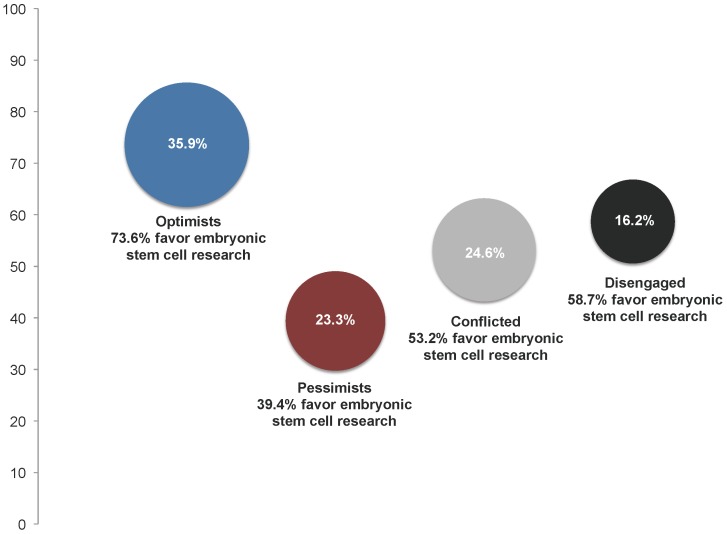
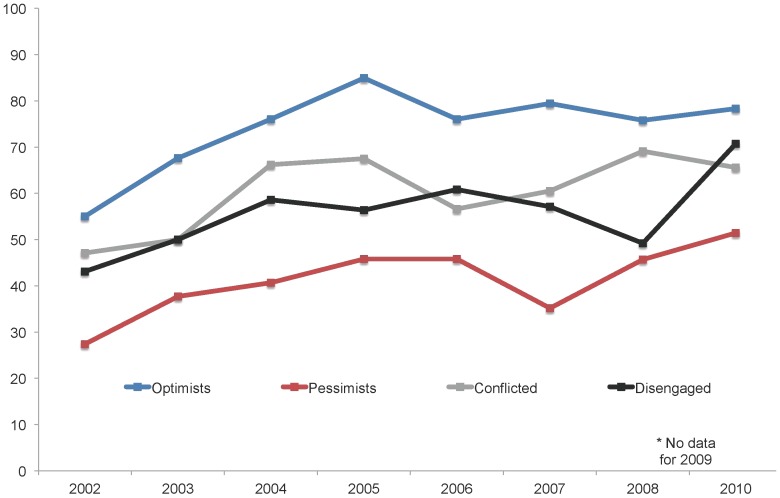
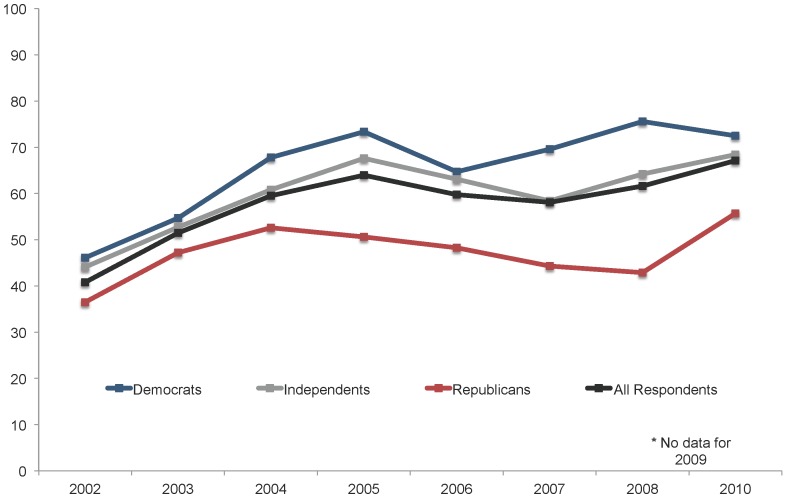
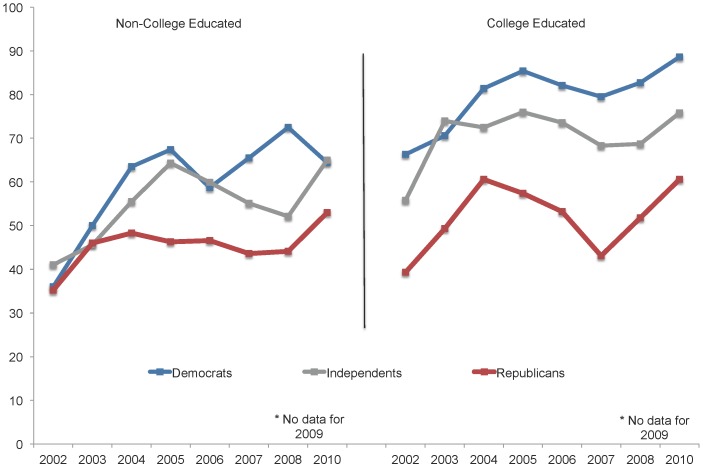
As social scientists have investigated the political and social factors influencing public opinion in science-related policy debates, there has been growing interest in the implications of this research for public communication and outreach. Given the level of political polarization in the United States, much of the focus has been on partisan differences in public opinion, the strategies employed by political leaders and advocates that promote those differences, and the counter-strategies for overcoming them. Yet this focus on partisan differences tends to overlook the processes by which core beliefs about science and society impact public opinion and how these schema are often activated by specific frames of reference embedded in media coverage and popular discourse. In this study, analyzing cross-sectional, nationally representative survey data collected between 2002 and 2010, we investigate the relative influence of political partisanship and science-related schema on Americans' support for embryonic stem cell research. In comparison to the influence of partisan identity, our findings suggest that generalized beliefs about science and society were more chronically accessible, less volatile in relation to media attention and focusing events, and an overall stronger influence on public opinion. Classifying respondents into four unique audience groups based on their beliefs about science and society, we additionally find that individuals within each of these groups split relatively evenly by partisanship but differ on other important dimensions. The implications for public engagement and future research on controversies related to biomedical science are discussed.
随着社会科学家们对科学相关政策辩论中影响公众舆论的政治和社会因素进行调查,这项研究对公众传播和宣传的影响也越来越受到关注。鉴于美国政治两极分化的程度,大部分焦点都集中在公众舆论中的党派差异、政治领导人及倡导者为加剧这些差异所采用的策略,以及克服这些差异的应对策略上。然而,这种对党派差异的关注往往忽视了关于科学和社会的核心信念影响公众舆论的过程,以及这些模式通常是如何被媒体报道和大众话语中嵌入的特定参照框架所激活的。在本研究中,我们分析了2002年至2010年期间收集的全国代表性横断面调查数据,以调查政治党派性和与科学相关的模式对美国人支持胚胎干细胞研究的相对影响。与党派身份的影响相比,我们的研究结果表明,关于科学和社会的普遍信念更长期存在,相对于媒体关注和焦点事件更不易波动,并且对公众舆论的总体影响更强。根据受访者对科学和社会的信念将他们分为四个独特的受众群体,我们还发现这些群体中的每个人在党派性上相对平均地划分,但在其他重要维度上存在差异。我们还讨论了对公众参与以及与生物医学科学相关争议的未来研究的启示。