Zhao Yanli, Zhang Ji, Yuan Tianjun, Shen Tao, Li Wei, Yang Shihua, Hou Ying, Wang Yuanzhong, Jin Hang
Institute of Medicinal Plants, Yunnan Academy of Agricultural Sciences, Kunming, Yunnan, the People's Republic of China.
Yunnan Reascend Tobacco Technology (Group) Co., Ltd., Kunming, Yunnan, the People's Republic of China.
PLoS One. 2014 Feb 18;9(2):e89100. doi: 10.1371/journal.pone.0089100. eCollection 2014.
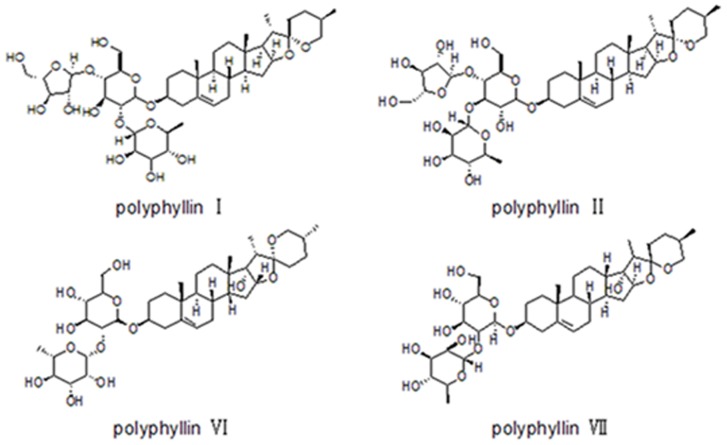
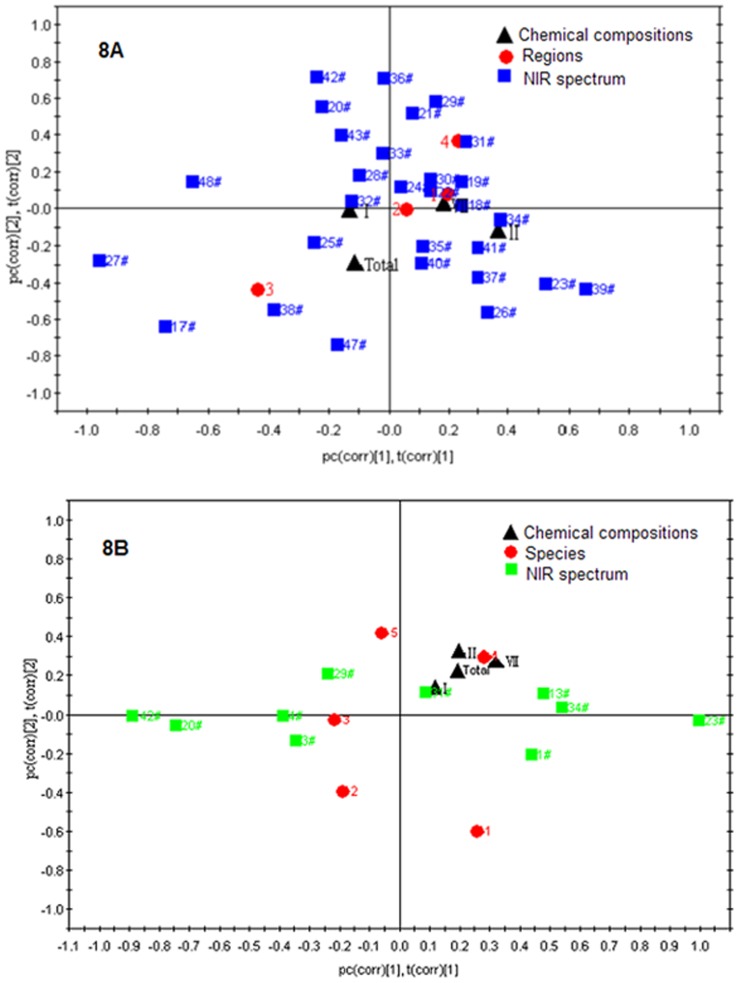
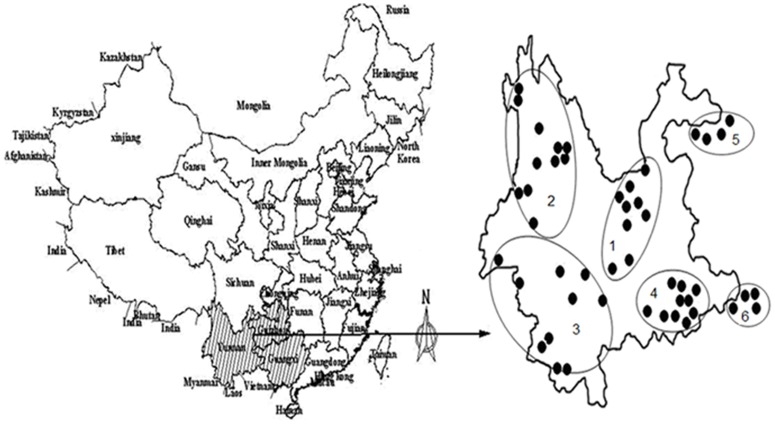
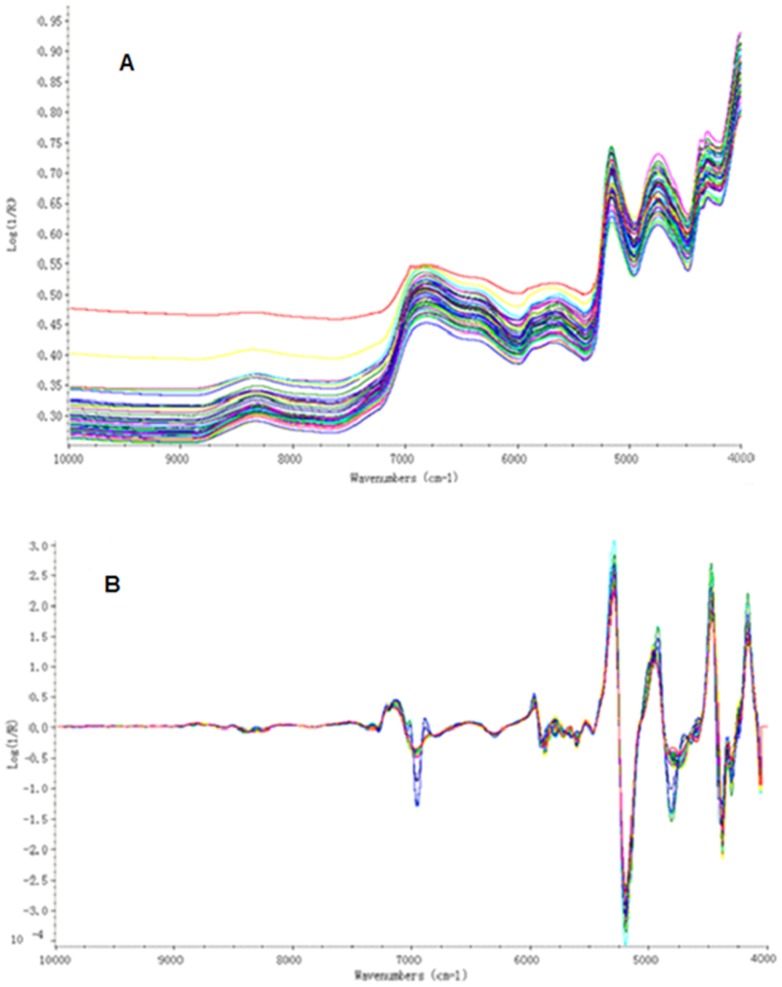
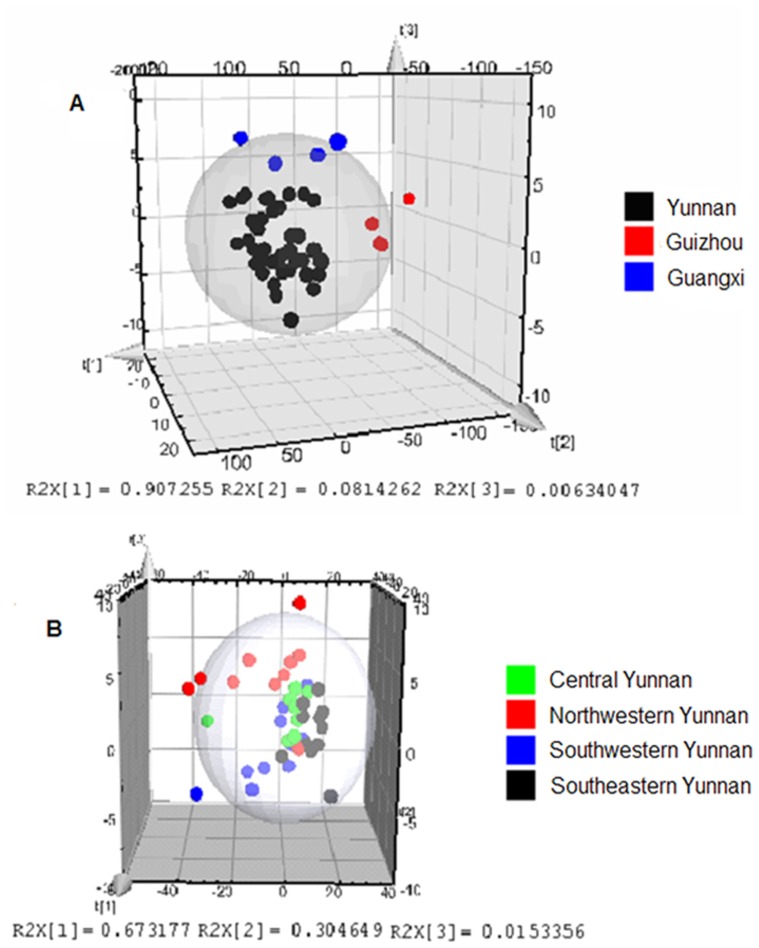
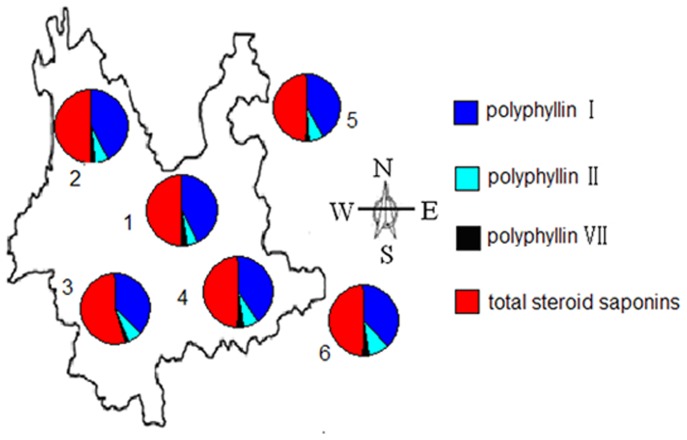
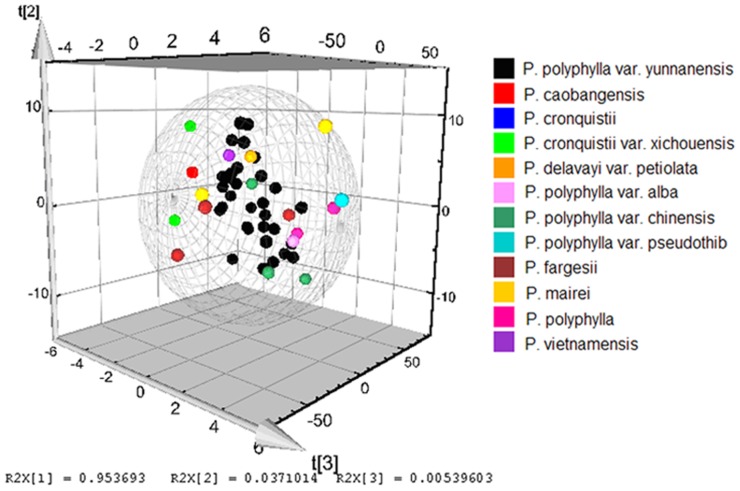
Different geographical origins and species of Paris obtained from southwestern China were discriminated by near infrared (NIR) spectroscopy and high performance liquid chromatography (HPLC) combined with multivariate analysis. The NIR parameter settings were scanning (64 times), resolution (4 cm(-1)), scanning range (10,000 cm(-1)∼4000 cm(-1)) and parallel collection (3 times). NIR spectrum was optimized by TQ 8.6 software, and the ranges 7455∼6852 cm(-1) and 5973∼4007 cm(-1) were selected according to the spectrum standard deviation. The contents of polyphyllin I, polyphyllin II, polyphyllin VI, and polyphyllin VII and total steroid saponins were detected by HPLC. The contents of chemical components data matrix and spectrum data matrix were integrated and analyzed by partial least squares discriminant analysis (PLS-DA). From the PLS-DA model of NIR spectrum, Paris samples were separated into three groups according to the different geographical origins. The R(2)X and Q(2)Y described accumulative contribution rates were 99.50% and 94.03% of the total variance, respectively. The PLS-DA model according to 12 species of Paris described 99.62% of the variation in X and predicted 95.23% in Y. The results of the contents of chemical components described differences among collections quantitatively. A multivariate statistical model of PLS-DA showed geographical origins of Paris had a much greater influence on Paris compared with species. NIR and HPLC combined with multivariate analysis could discriminate different geographical origins and different species. The quality of Paris showed regional dependence.
采用近红外光谱(NIR)和高效液相色谱(HPLC)结合多变量分析的方法,对采自中国西南部的不同地理来源及品种的重楼进行了鉴别。近红外参数设置为扫描(64次)、分辨率(4 cm⁻¹)、扫描范围(10000 cm⁻¹~4000 cm⁻¹)和平行采集(3次)。利用TQ 8.6软件对近红外光谱进行优化,并根据光谱标准偏差选择7455~6852 cm⁻¹和5973~4007 cm⁻¹范围。采用HPLC测定重楼皂苷I、重楼皂苷II、重楼皂苷VI、重楼皂苷VII及总甾体皂苷的含量。通过偏最小二乘判别分析(PLS - DA)对化学成分数据矩阵和光谱数据矩阵进行整合分析。从近红外光谱的PLS - DA模型来看,重楼样品根据不同地理来源被分为三组。描述累积贡献率的R²X和Q²Y分别占总方差的99.50%和94.03%。根据12种重楼建立的PLS - DA模型描述了X中99.62%的变异,并在Y中预测了95.23%。化学成分含量结果定量描述了不同采集品之间的差异。PLS - DA多变量统计模型表明,与品种相比,地理来源对重楼的影响更大。近红外光谱和高效液相色谱结合多变量分析能够鉴别不同的地理来源和不同的品种。重楼的质量表现出区域依赖性。