Stem Cell Res Ther. 2013;4 Suppl 1(Suppl 1):S5. doi: 10.1186/scrt366. Epub 2013 Dec 20.
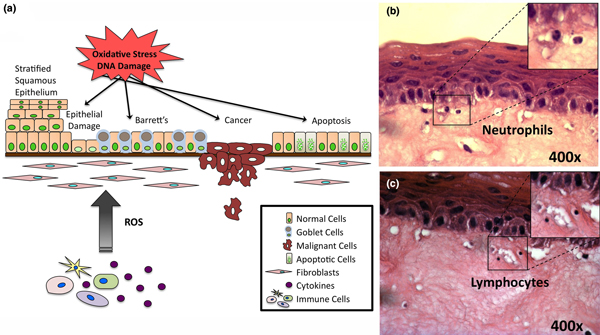
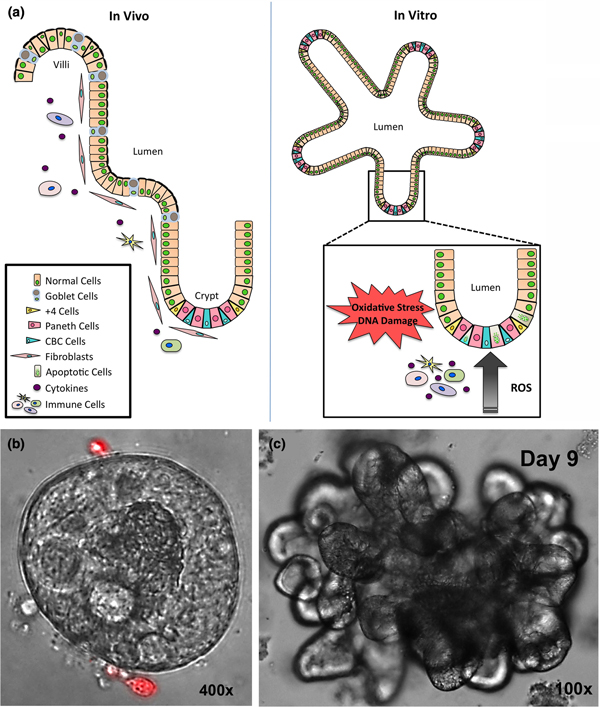
Gastroesophageal reflux disease (GERD), Barrett's esophagus (BE), graft-versus-host disease (GVHD), and inflammatory bowel diseases such as ulcerative colitis and Crohn's disease are common human gastrointestinal diseases that share inflammation as a key driver for their development. A general outcome resulting from these chronic inflammatory conditions is increased oxidative stress. Oxidative stress is caused by the generation of reactive oxygen and nitrogen species that are part of the normal inflammatory response, but are also capable of damaging cellular DNA, protein, and organelles. Damage to DNA can include DNA strand breaks, point mutations due to DNA adducts, as well as alterations in methylation patterns leading to activation of oncogenes or inactivation of tumor suppressors. There are a number of significant long-term consequences associated with chronic oxidative stress, most notably cancer. Infiltrating immune cells and stromal components of tissue including fibroblasts contribute to dynamic changes occurring in tissue related to disease development. Immune cells can potentiate oxidative stress, and fibroblasts have the capacity to contribute to advanced growth and proliferation of the epithelium and any resultant cancers. Disease models for GERD, BE, GVHD, and ulcerative colitis based on three-dimensional human cell and tissue culture systems that recapitulate in vivo growth and differentiation in inflammatory-associated microphysiological environments would enhance our understanding of disease progression and improve our ability to test for disease-prevention strategies. The development of physiologically relevant, human cell-based culture systems is therefore a major focus of our research. These novel models will be of enormous value, allowing us to test hypotheses and advance our understanding of these disorders, and will have a translational impact allowing us to more rapidly develop therapeutic and chemopreventive agents. In summary, this work to develop advanced human cell-based models of inflammatory conditions will greatly improve our ability to study, prevent, and treat GERD, BE, GVHD, and inflammatory bowel disease. The work will also foster the development of novel therapeutic and preventive strategies that will improve patient care for these important clinical conditions.
胃食管反流病(GERD)、巴雷特食管(BE)、移植物抗宿主病(GVHD)和炎症性肠病,如溃疡性结肠炎和克罗恩病,是常见的人类胃肠道疾病,它们的发展都以炎症为关键驱动因素。这些慢性炎症状态的一般结果是氧化应激增加。氧化应激是由活性氧和氮物种的产生引起的,这些物质是正常炎症反应的一部分,但也能够破坏细胞的 DNA、蛋白质和细胞器。DNA 的损伤包括 DNA 链断裂、由于 DNA 加合物导致的点突变,以及导致癌基因激活或肿瘤抑制基因失活的甲基化模式改变。与慢性氧化应激相关的有许多重要的长期后果,最显著的是癌症。浸润性免疫细胞和组织的基质成分,包括成纤维细胞,促进与疾病发展相关的组织中发生的动态变化。免疫细胞可以增强氧化应激,而成纤维细胞有能力促进上皮细胞的高级生长和增殖以及任何由此产生的癌症。基于三维人体细胞和组织培养系统的 GERD、BE、GVHD 和溃疡性结肠炎疾病模型,该系统可重现与炎症相关的微生理环境中的体内生长和分化,将增强我们对疾病进展的理解,并提高我们测试疾病预防策略的能力。因此,开发与生理相关的基于人类细胞的培养系统是我们研究的主要重点。这些新型模型将具有巨大的价值,使我们能够测试假设并深入了解这些疾病,并具有转化意义,使我们能够更快速地开发治疗和化学预防药物。总之,这项开发炎症条件下先进的基于人类细胞的模型的工作将极大地提高我们研究、预防和治疗 GERD、BE、GVHD 和炎症性肠病的能力。这项工作还将促进新的治疗和预防策略的发展,从而改善这些重要临床疾病患者的治疗效果。