Gilbert Catherine E, Zuckerman David M, Currier Pamela L, Machamer Carolyn E
Department of Cell Biology, Johns Hopkins University School of Medicine, 725 N. Wolfe St., Baltimore, MD 21205, USA.
Department of Molecular Microbiology and Immunology, Johns Hopkins Bloomberg School of Public Health, 615 N. Wolfe St., Baltimore, MD 21205, USA.
Int J Mol Sci. 2014 Feb 20;15(2):2929-45. doi: 10.3390/ijms15022929.
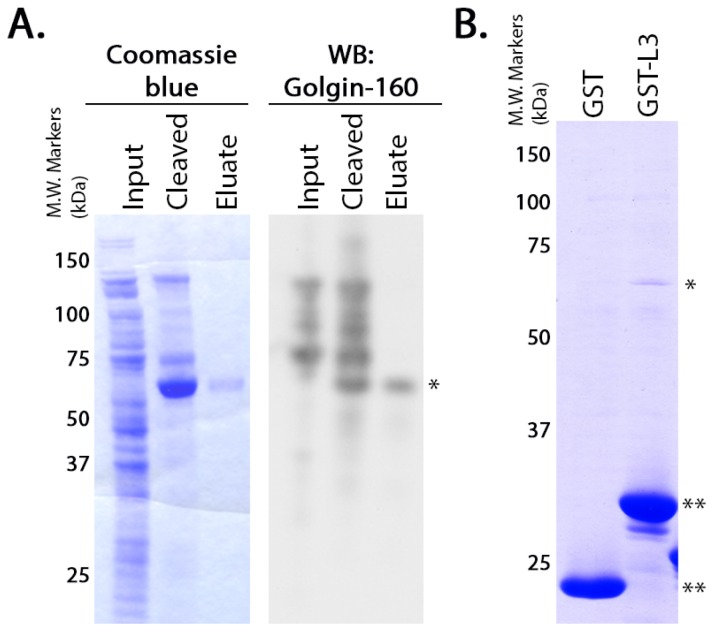
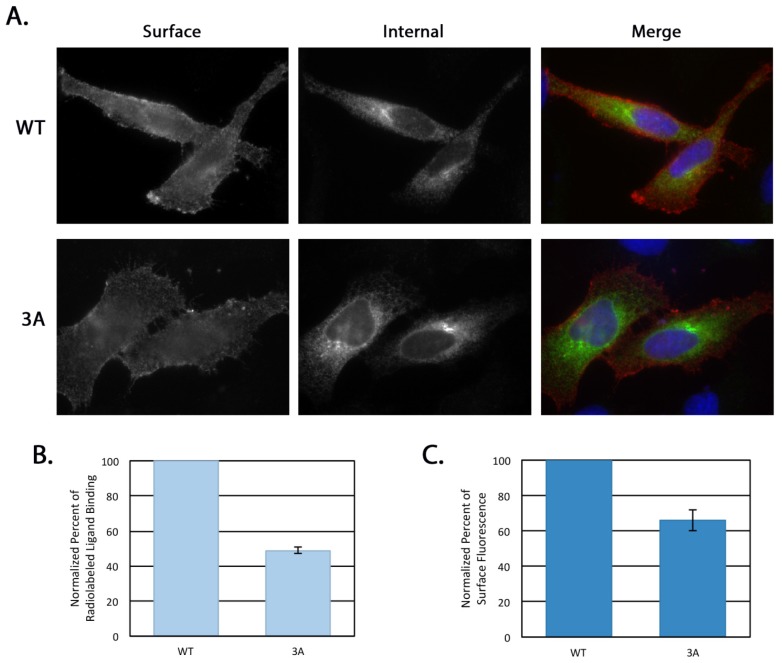
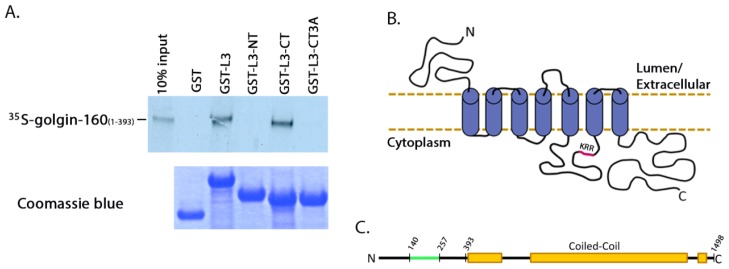
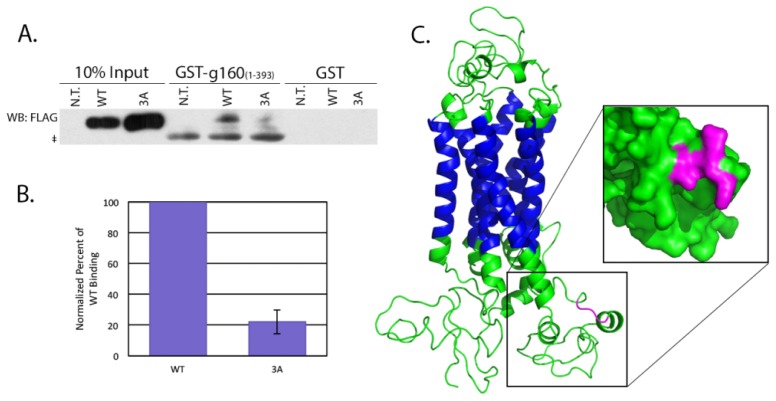
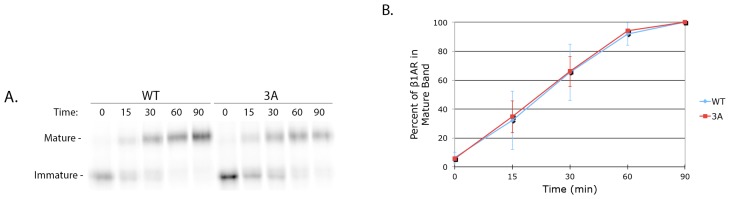
Golgin-160 is a member of the golgin family of proteins, which have been implicated in the maintenance of Golgi structure and in vesicle tethering. Golgin-160 is atypical; it promotes post-Golgi trafficking of specific cargo proteins, including the β-1 adrenergic receptor (β1AR), a G protein-coupled receptor. Here we show that golgin-160 binds directly to the third intracellular loop of β1AR and that this binding depends on three basic residues in this loop. Mutation of the basic residues does not affect trafficking of β1AR from the endoplasmic reticulum through the Golgi complex, but results in reduced steady-state levels at the plasma membrane. We hypothesize that golgin-160 promotes incorporation of β1AR into specific transport carriers at the trans-Golgi network to ensure efficient delivery to the cell surface. These results add to our understanding of the biogenesis of β1AR, and suggest a novel point of regulation for its delivery to the plasma membrane.
高尔基体蛋白160(Golgin-160)是高尔基体蛋白家族的成员之一,该家族蛋白与高尔基体结构的维持以及囊泡拴系有关。Golgin-160并不典型;它促进特定货物蛋白的高尔基体后运输,包括β-1肾上腺素能受体(β1AR),一种G蛋白偶联受体。我们在此表明,Golgin-160直接与β1AR的第三个细胞内环结合,且这种结合依赖于该环中的三个碱性残基。碱性残基的突变并不影响β1AR从内质网通过高尔基体复合体的运输,但会导致其在质膜上的稳态水平降低。我们推测,Golgin-160促进β1AR在反式高尔基体网络中并入特定的运输载体,以确保其有效递送至细胞表面。这些结果增进了我们对β1AR生物发生的理解,并提示了其向质膜递送的一个新的调控点。