Delaine-Smith Robin M, Green Nicola H, Matcher Stephen J, MacNeil Sheila, Reilly Gwendolen C
Kroto Research Institute, Department of Materials Science and Engineering, University of Sheffield, Sheffield, United Kingdom.
Kroto Research Institute, Department of Materials Science and Engineering, University of Sheffield, Sheffield, United Kingdom ; INSIGNEO Institute for in silico Medicine, Department of Materials Science and Engineering, University of Sheffield, Sheffield, United Kingdom.
PLoS One. 2014 Feb 28;9(2):e89761. doi: 10.1371/journal.pone.0089761. eCollection 2014.
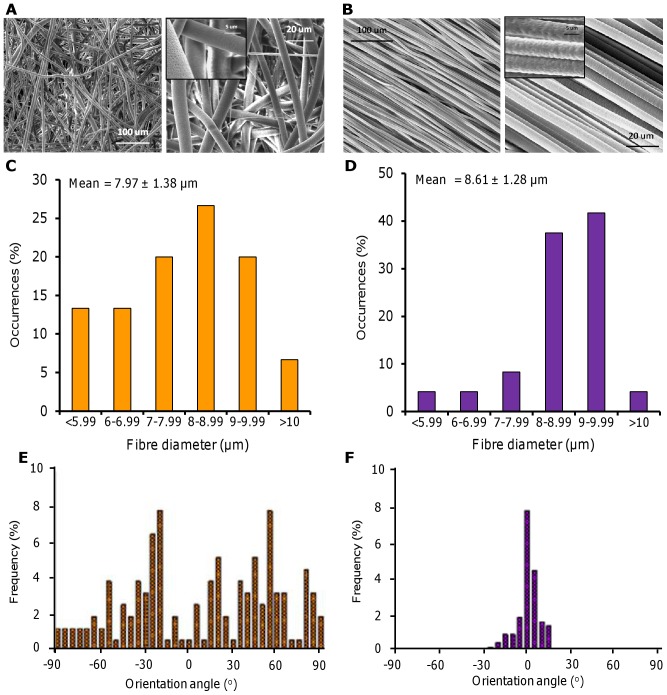
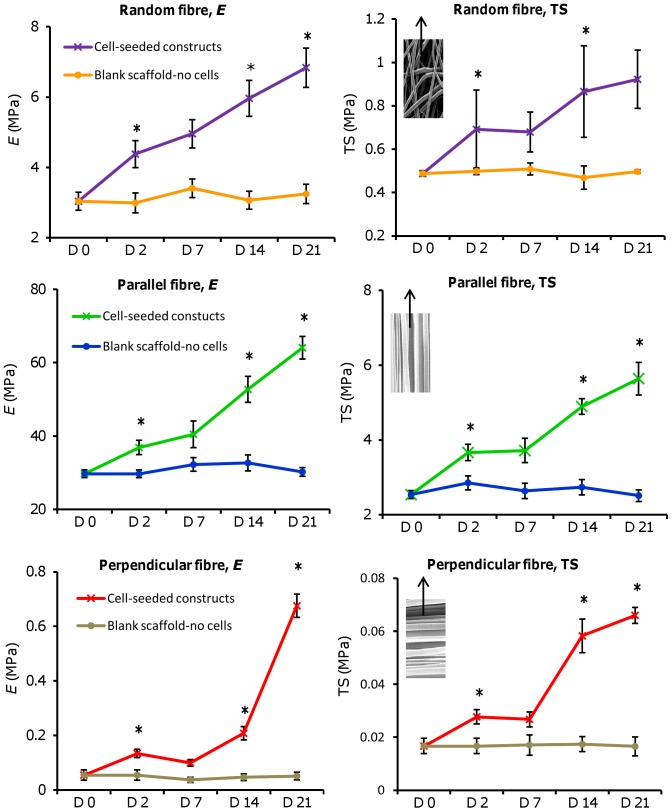
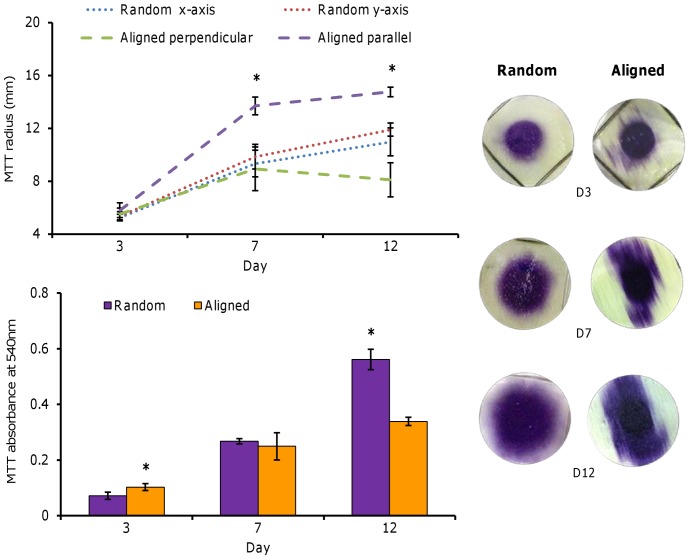
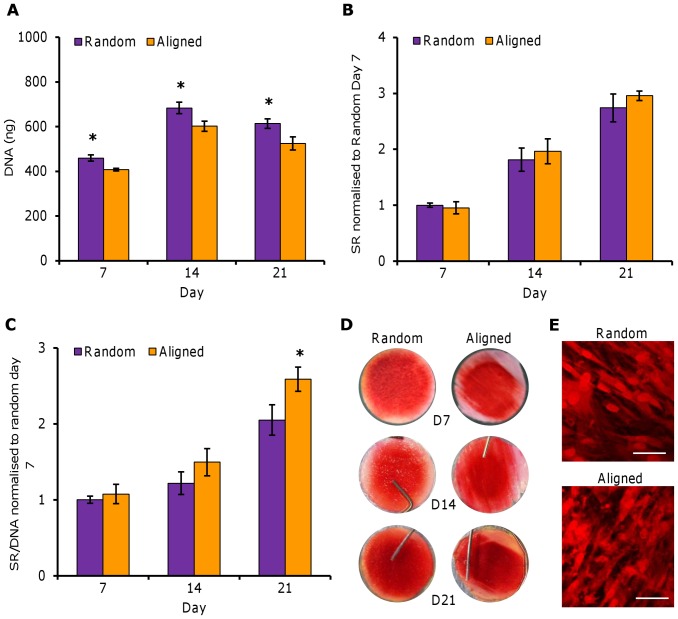
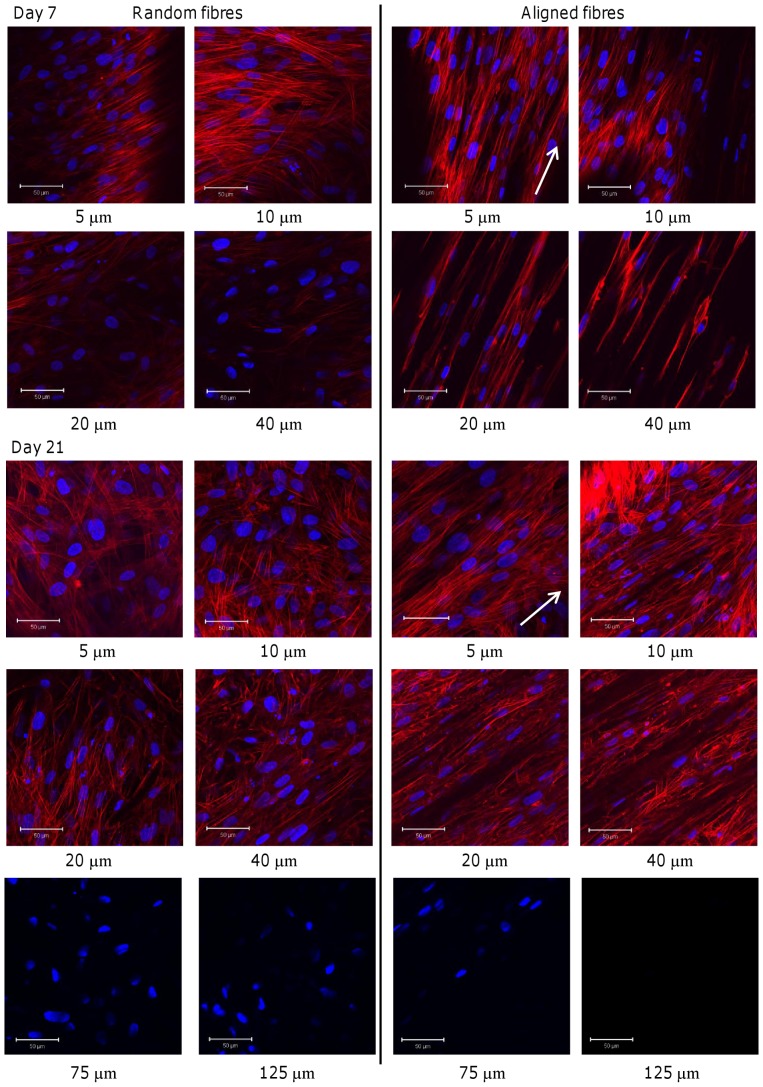
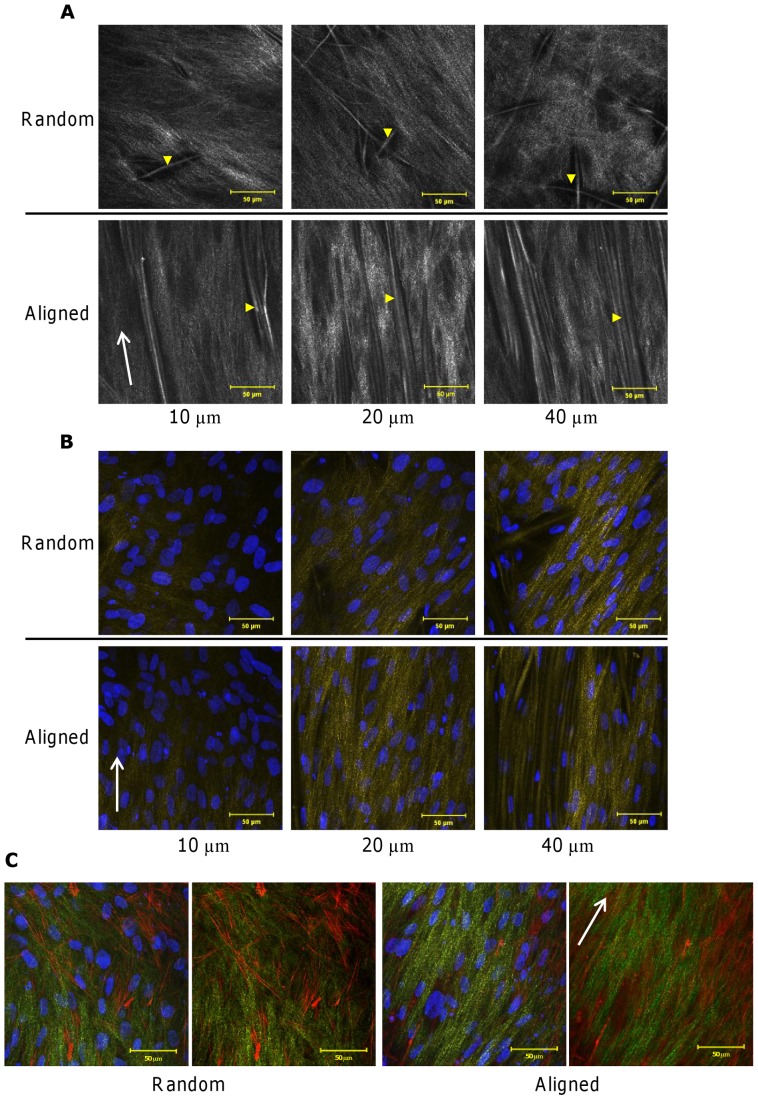
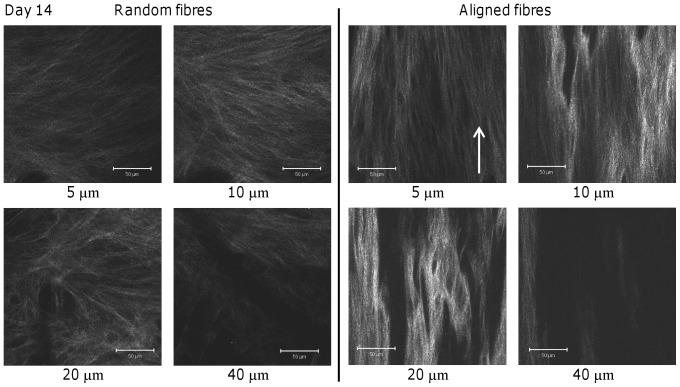
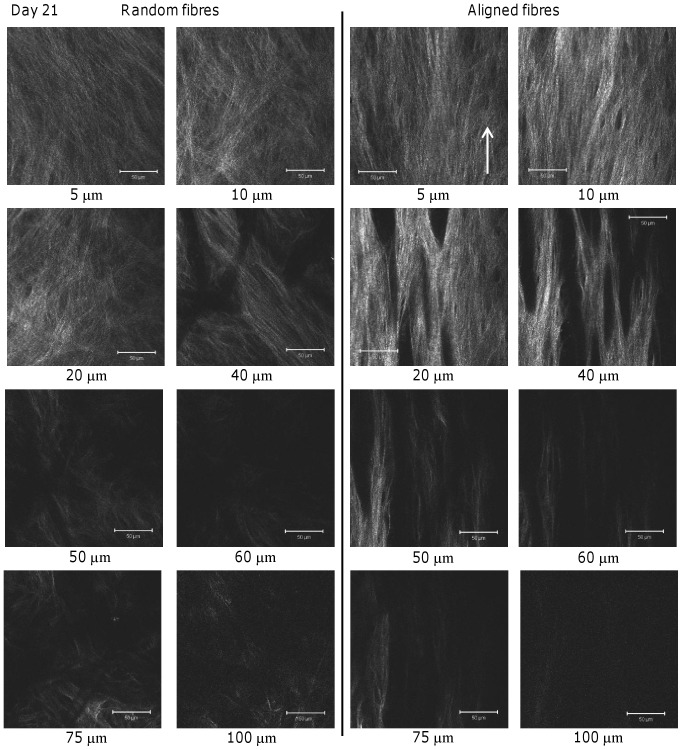
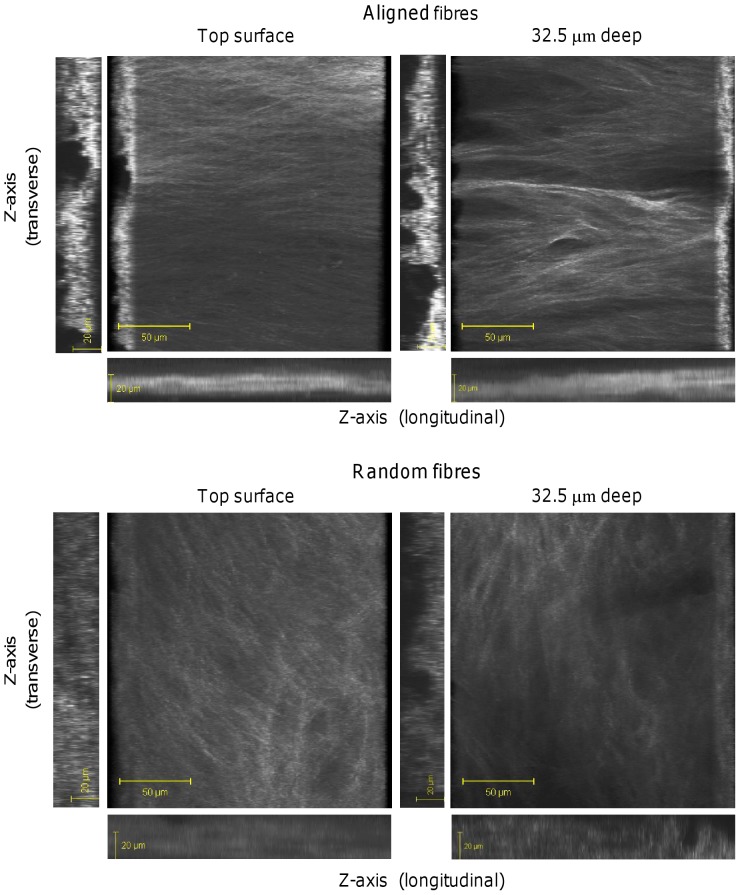
The biological and mechanical function of connective tissues is largely determined by controlled cellular alignment and therefore it seems appropriate that tissue-engineered constructs should be architecturally similar to the in vivo tissue targeted for repair or replacement. Collagen organisation dictates the tensile properties of most tissues and so monitoring the deposition of cell-secreted collagen as the construct develops is essential for understanding tissue formation. In this study, electrospun fibres with a random or high degree of orientation, mimicking two types of tissue architecture found in the body, were used to culture human fibroblasts for controlling cell alignment. The minimally-invasive technique of second harmonic generation was used with the aim of monitoring and profiling the deposition and organisation of collagen at different construct depths over time while construct mechanical properties were also determined over the culture period. It was seen that scaffold fibre organisation affected cell migration and orientation up to 21 days which in turn had an effect on collagen organisation. Collagen in random fibrous constructs was deposited in alternating configurations at different depths however a high degree of organisation was observed throughout aligned fibrous constructs orientated in the scaffold fibre direction. Three-dimensional second harmonic generation images showed that deposited collagen was more uniformly distributed in random constructs but aligned constructs were more organised and had higher intensities. The tensile properties of all constructs increased with increasing collagen deposition and were ultimately dictated by collagen organisation. This study highlights the importance of scaffold architecture for controlling the development of well-organised tissue engineered constructs and the usefulness of second harmonic generation imaging for monitoring collagen maturation in a minimally invasive manner.
结缔组织的生物学和力学功能在很大程度上取决于可控的细胞排列,因此,组织工程构建体在结构上应与目标修复或替换的体内组织相似,这似乎是合理的。胶原蛋白的组织方式决定了大多数组织的拉伸特性,因此,在构建体发育过程中监测细胞分泌胶原蛋白的沉积情况对于理解组织形成至关重要。在本研究中,模仿体内发现的两种组织结构,使用具有随机或高度取向的电纺纤维来培养人成纤维细胞,以控制细胞排列。使用二次谐波产生这种微创技术,目的是监测和描绘随着时间推移胶原蛋白在不同构建体深度处的沉积和组织情况,同时在培养期间还测定了构建体的力学性能。可以看出,支架纤维组织在长达21天的时间内影响细胞迁移和取向,这反过来又对胶原蛋白组织产生影响。随机纤维构建体中的胶原蛋白在不同深度处以交替构型沉积,然而,在沿支架纤维方向取向的对齐纤维构建体中观察到高度的组织性。三维二次谐波产生图像显示,沉积的胶原蛋白在随机构建体中分布更均匀,但对齐构建体更有组织性且强度更高。所有构建体的拉伸性能随着胶原蛋白沉积的增加而增加,并最终由胶原蛋白组织决定。本研究强调了支架结构对于控制组织良好的组织工程构建体发育的重要性,以及二次谐波产生成像以微创方式监测胶原蛋白成熟的有用性。