Department of Cancer Stem Cell Biology, Osaka University Graduate School of Medicine, Osaka, Japan.
Department of Functional Diagnostic Science, Osaka University Graduate School of Medicine, Osaka, Japan.
Int J Oncol. 2014 May;44(5):1461-9. doi: 10.3892/ijo.2014.2318. Epub 2014 Mar 4.
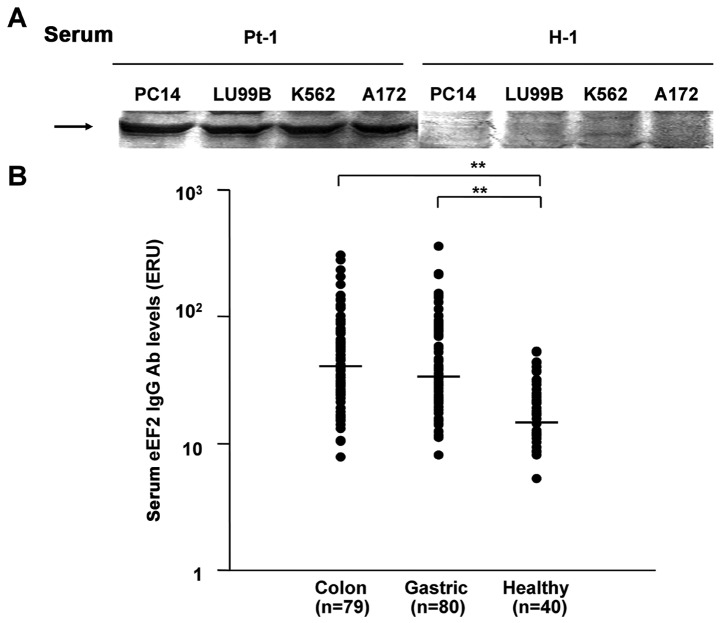
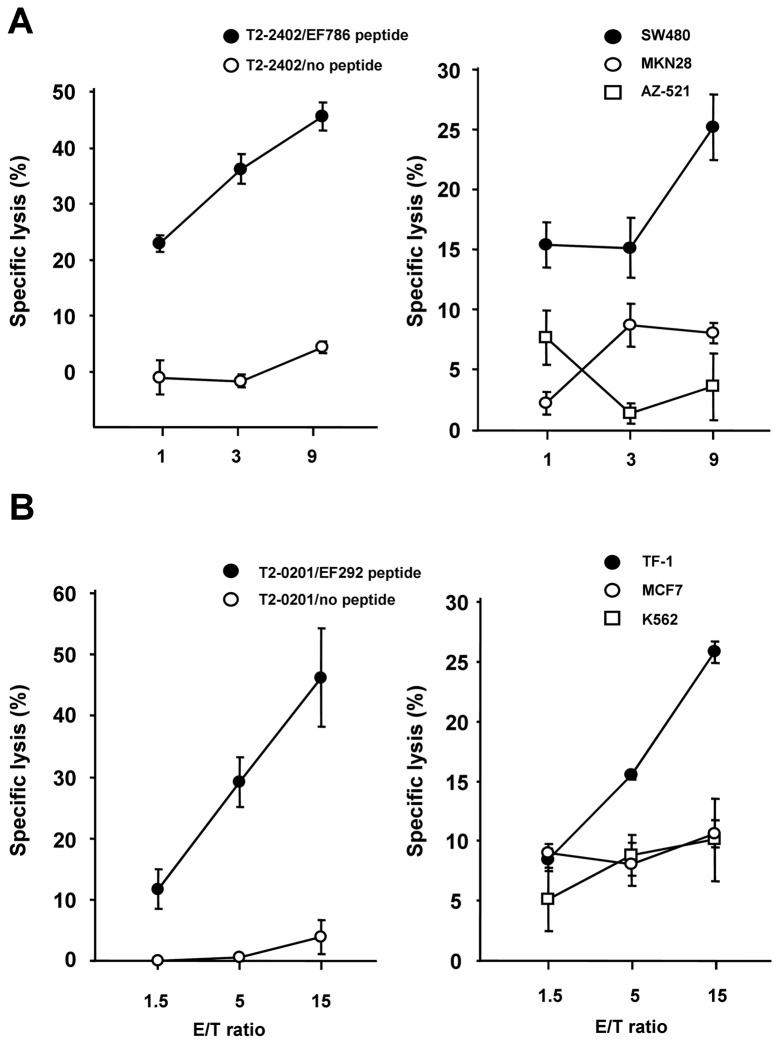
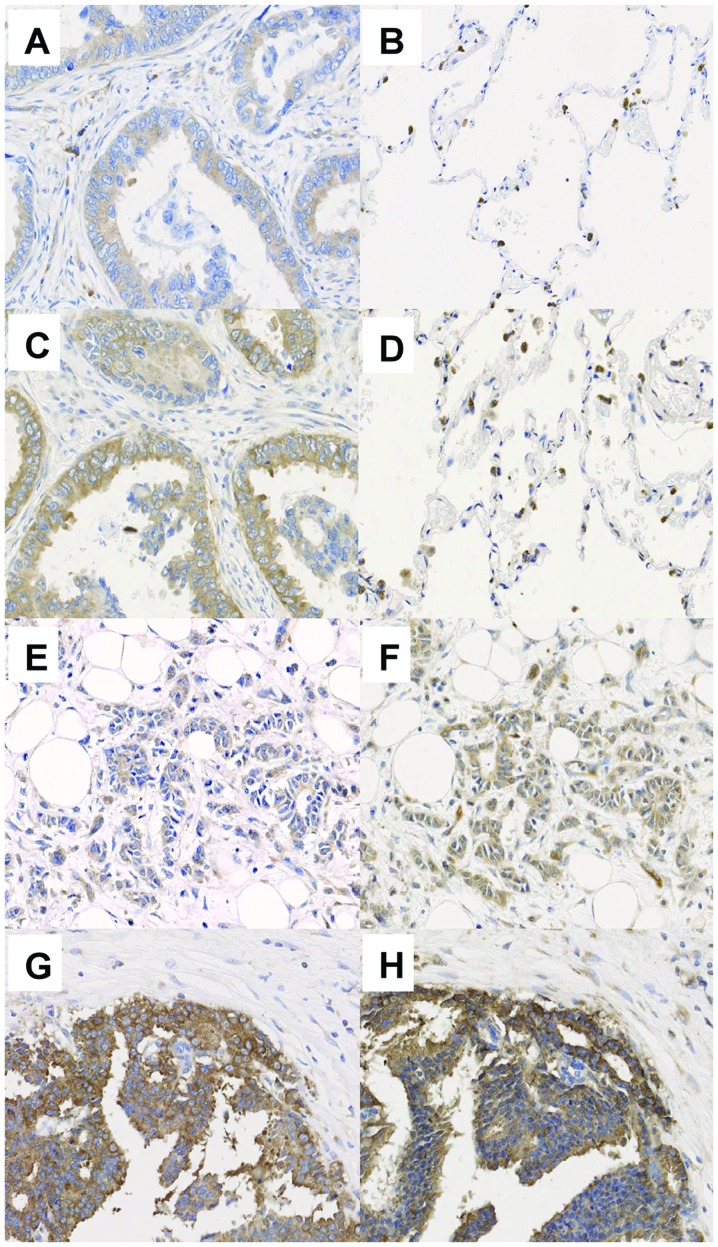
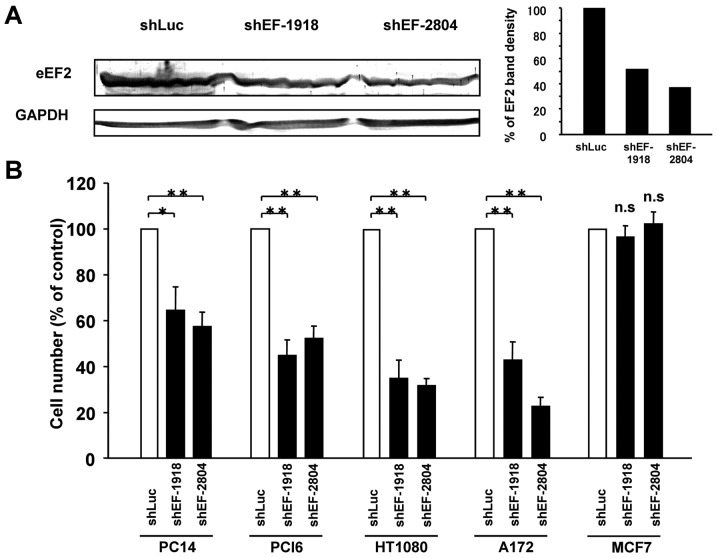
Recent studies have shown that cancer immunotherapy could be a promising therapeutic approach for the treatment of cancer. In the present study, to identify novel tumor-associated antigens (TAAs), the proteins expressed in a panel of cancer cells were serologically screened by immunoblot analysis and the eukaryotic elongation factor 2 (eEF2) was identified as an antigen that was recognized by IgG autoantibody in sera from a group of patients with head and neck squamous cell carcinoma (HNSCC) or colon cancer. Enzyme-linked immunosorbent assay showed that serum eEF2 IgG Ab levels were significantly higher in colorectal and gastric cancer patients compared to healthy individuals. Immunohistochemistry experiments showed that the eEF2 protein was overexpressed in the majority of lung, esophageal, pancreatic, breast and prostate cancers, HNSCC, glioblastoma multiforme and non-Hodgkin's lymphoma (NHL). Knockdown of eEF2 by short hairpin RNA (shRNA) significantly inhibited the growth in four eEF2-expressing cell lines, PC14 lung cancer, PCI6 pancreatic cancer, HT1080 fibrosarcoma and A172 glioblastoma cells, but not in eEF2-undetectable MCF7 cells. Furthermore, eEF2-derived 9-mer peptides, EF786 (eEF2 786-794 aa) and EF292 (eEF2 292-300 aa), elicited cytotoxic T lymphocyte (CTL) responses in peripheral blood mononuclear cells (PBMCs) from an HLA-A24:02- and an HLA-A02:01-positive healthy donor, respectively, in an HLA-A-restricted manner. These results indicated that the eEF2 gene is overexpressed in the majority of several types of cancers and plays an oncogenic role in cancer cell growth. Moreover, the eEF2 gene product is immunogenic and a promising target molecule of cancer immunotherapy for several types of cancers.
最近的研究表明,癌症免疫疗法可能是治疗癌症的一种有前途的治疗方法。在本研究中,为了鉴定新的肿瘤相关抗原(TAA),通过免疫印迹分析对一组癌症细胞中的表达蛋白进行了血清学筛选,鉴定出真核延伸因子 2(eEF2)是一组头颈部鳞状细胞癌(HNSCC)或结肠癌患者血清 IgG 自身抗体识别的抗原。酶联免疫吸附试验显示,结直肠癌和胃癌患者血清 eEF2 IgG Ab 水平明显高于健康个体。免疫组织化学实验表明,eEF2 蛋白在大多数肺癌、食管癌、胰腺癌、乳腺癌和前列腺癌、HNSCC、胶质母细胞瘤和非霍奇金淋巴瘤(NHL)中过度表达。短发夹 RNA(shRNA)敲低 eEF2 显著抑制了四种 eEF2 表达细胞系(PC14 肺癌、PCI6 胰腺癌、HT1080 纤维肉瘤和 A172 胶质母细胞瘤)的生长,但对 eEF2 不可检测的 MCF7 细胞没有影响。此外,eEF2 衍生的 9 肽 EF786(eEF2 786-794 aa)和 EF292(eEF2 292-300 aa)分别在 HLA-A24:02-和 HLA-A02:01 阳性的健康供体的外周血单核细胞(PBMC)中引发细胞毒性 T 淋巴细胞(CTL)反应,呈 HLA-A 限制性。这些结果表明,eEF2 基因在多种类型的癌症中过度表达,并且在癌细胞生长中发挥致癌作用。此外,eEF2 基因产物是免疫原性的,是多种类型癌症免疫治疗的有前途的靶分子。