Devault Alison M, McLoughlin Kevin, Jaing Crystal, Gardner Shea, Porter Teresita M, Enk Jacob M, Thissen James, Allen Jonathan, Borucki Monica, DeWitte Sharon N, Dhody Anna N, Poinar Hendrik N
McMaster Ancient DNA Centre, Department of Anthropology, McMaster University, 1280 Main St W, Hamilton, Ontario L8S4L9, Canada.
Lawrence Livermore National Laboratory, Livermore, CA 94551, USA.
Sci Rep. 2014 Mar 6;4:4245. doi: 10.1038/srep04245.
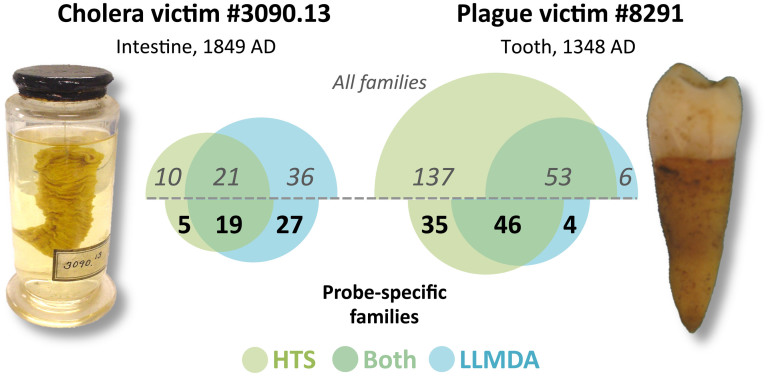
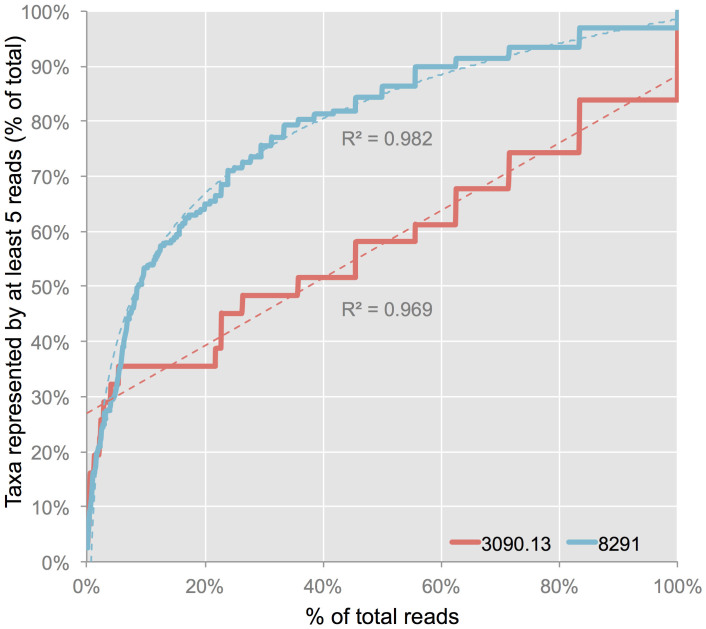
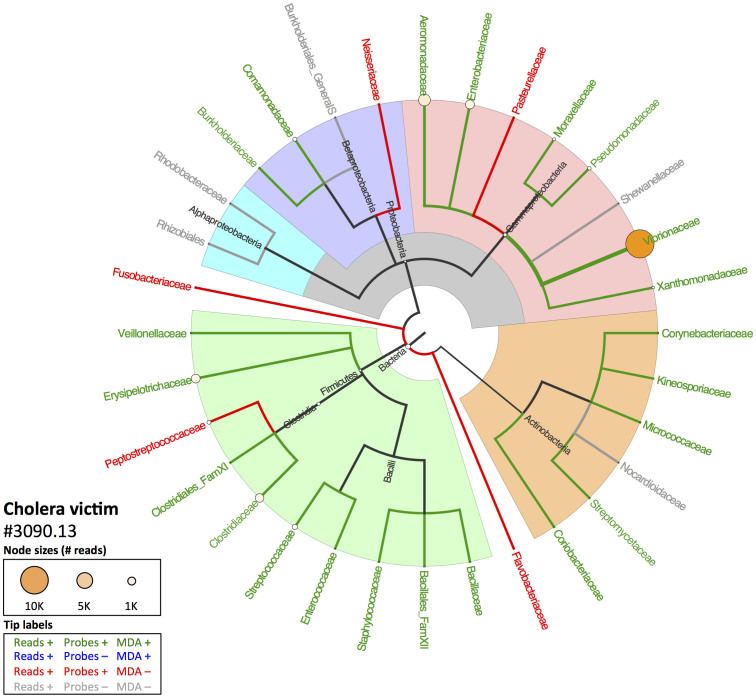
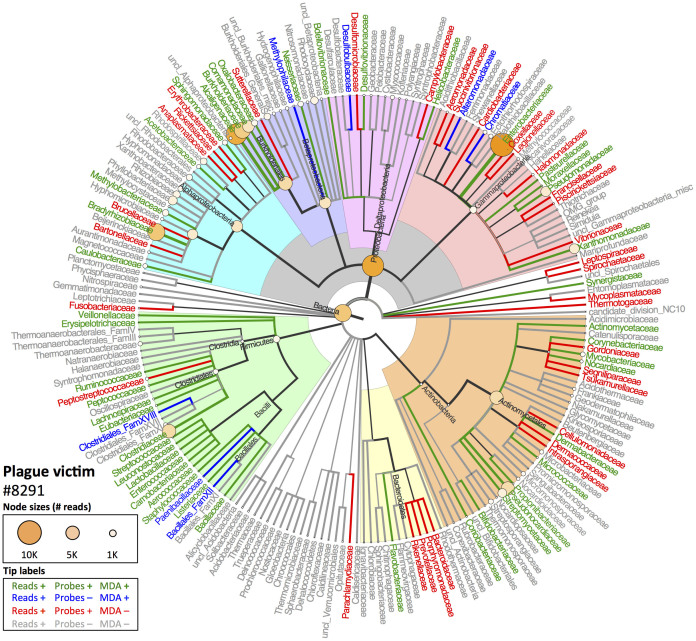
Ancient human remains of paleopathological interest typically contain highly degraded DNA in which pathogenic taxa are often minority components, making sequence-based metagenomic characterization costly. Microarrays may hold a potential solution to these challenges, offering a rapid, affordable, and highly informative snapshot of microbial diversity in complex samples without the lengthy analysis and/or high cost associated with high-throughput sequencing. Their versatility is well established for modern clinical specimens, but they have yet to be applied to ancient remains. Here we report bacterial profiles of archaeological and historical human remains using the Lawrence Livermore Microbial Detection Array (LLMDA). The array successfully identified previously-verified bacterial human pathogens, including Vibrio cholerae (cholera) in a 19th century intestinal specimen and Yersinia pestis ("Black Death" plague) in a medieval tooth, which represented only minute fractions (0.03% and 0.08% alignable high-throughput shotgun sequencing reads) of their respective DNA content. This demonstrates that the LLMDA can identify primary and/or co-infecting bacterial pathogens in ancient samples, thereby serving as a rapid and inexpensive paleopathological screening tool to study health across both space and time.
具有古病理学研究价值的古代人类遗骸通常含有高度降解的DNA,其中致病类群往往是少数成分,这使得基于序列的宏基因组表征成本高昂。微阵列可能为这些挑战提供一个潜在的解决方案,它能在不进行与高通量测序相关的冗长分析和/或高成本的情况下,对复杂样本中的微生物多样性提供快速、经济且信息丰富的概况。微阵列在现代临床样本中的通用性已得到充分证实,但尚未应用于古代遗骸。在此,我们使用劳伦斯利弗莫尔微生物检测阵列(LLMDA)报告了考古和历史时期人类遗骸的细菌概况。该阵列成功鉴定出先前已证实的人类细菌病原体,包括19世纪一份肠道标本中的霍乱弧菌(霍乱)和一颗中世纪牙齿中的鼠疫耶尔森菌(“黑死病”鼠疫),它们在各自的DNA含量中仅占极小比例(分别为0.03%和0.08%可比对的高通量鸟枪法测序读数)。这表明LLMDA能够识别古代样本中的主要和/或共同感染的细菌病原体,从而成为一种快速且廉价的古病理学筛查工具,用于研究跨越时空的健康状况。