Khan Raffay S, Martinez Mario D, Sy Jay C, Pendergrass Karl D, Che Pao-lin, Brown Milton E, Cabigas E Bernadette, Dasari Madhuri, Murthy Niren, Davis Michael E
Division of Cardiology, Emory University, Atlanta, Georgia 30322, USA.
Wallace H. Coulter Department of Biomedical Engineering, Emory University and Georgia Institute of Technology, Atlanta, Georgia 30322, USA.
Sci Rep. 2014 Mar 7;4:4257. doi: 10.1038/srep04257.
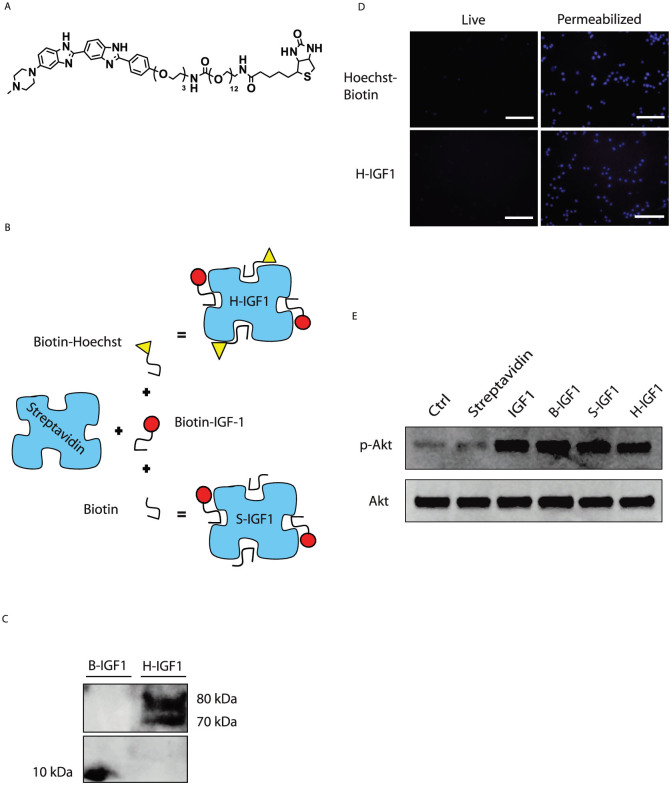
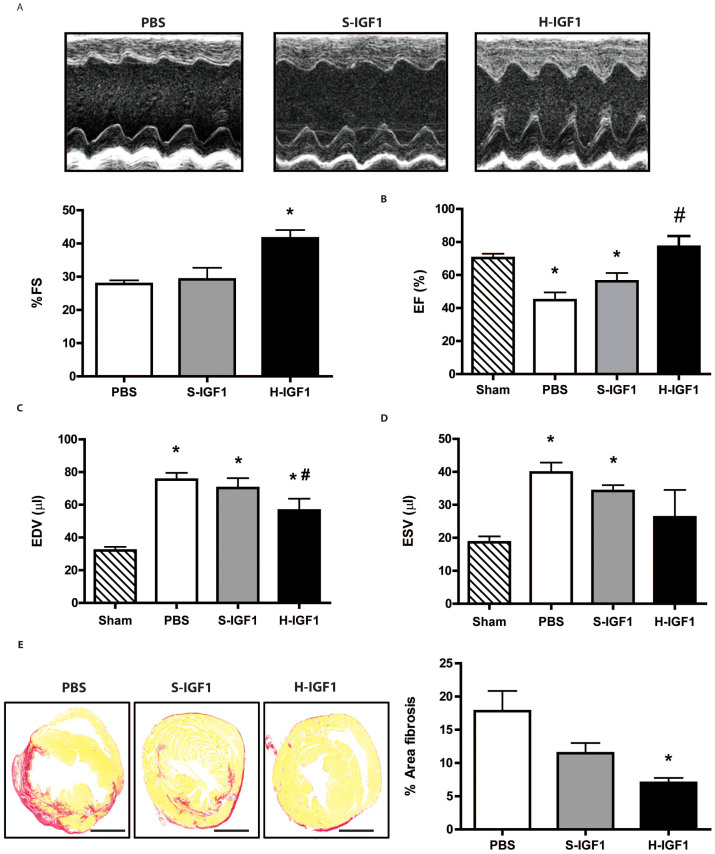
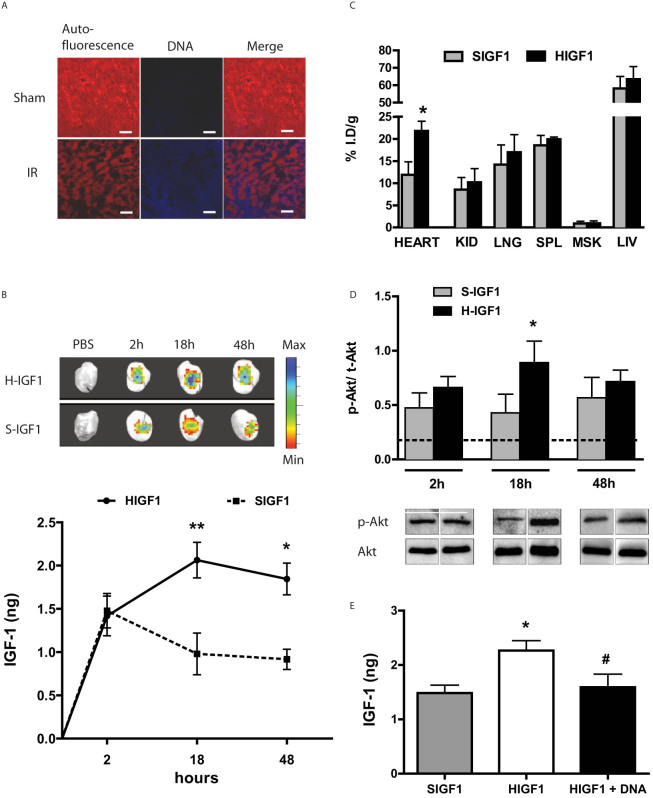
There is a great need for the development of therapeutic strategies that can target biomolecules to damaged myocardium. Necrosis of myocardium during a myocardial infarction (MI) is characterized by extracellular release of DNA, which can serve as a potential target for ischemic tissue. Hoechst, a histological stain that binds to double-stranded DNA can be conjugated to a variety of molecules. Insulin-like growth factor-1 (IGF-1), a small protein/polypeptide with a short circulating-half life is cardioprotective following MI but its clinical use is limited by poor delivery, as intra-myocardial injections have poor retention and chronic systemic presence has adverse side effects. Here, we present a novel delivery vehicle for IGF-1, via its conjugation to Hoechst for targeting infarcted tissue. Using a mouse model of ischemia-reperfusion, we demonstrate that intravenous delivery of Hoechst-IGF-1 results in activation of Akt, a downstream target of IGF-1 and protects from cardiac fibrosis and dysfunction following MI.
迫切需要开发能够将生物分子靶向受损心肌的治疗策略。心肌梗死(MI)期间心肌坏死的特征是DNA的细胞外释放,这可作为缺血组织的潜在靶点。Hoechst是一种与双链DNA结合的组织学染色剂,可与多种分子偶联。胰岛素样生长因子-1(IGF-1)是一种循环半衰期短的小蛋白质/多肽,在心肌梗死后具有心脏保护作用,但其临床应用受到递送不佳的限制,因为心肌内注射保留性差,而长期全身存在会产生不良副作用。在这里,我们提出了一种用于IGF-1的新型递送载体,通过将其与Hoechst偶联以靶向梗死组织。使用缺血再灌注小鼠模型,我们证明静脉内递送Hoechst-IGF-1可导致IGF-1的下游靶点Akt激活,并在心肌梗死后保护心脏免受纤维化和功能障碍。