School of Basic Medical Science, Shanghai University of Traditional Chinese Medicine, Shanghai, 201203, China.
Shanghai Engineering Research Center of Organ Repair, School of Medicine, Shanghai University, Shanghai, 200444, China.
Signal Transduct Target Ther. 2022 Sep 1;7(1):306. doi: 10.1038/s41392-022-01153-1.
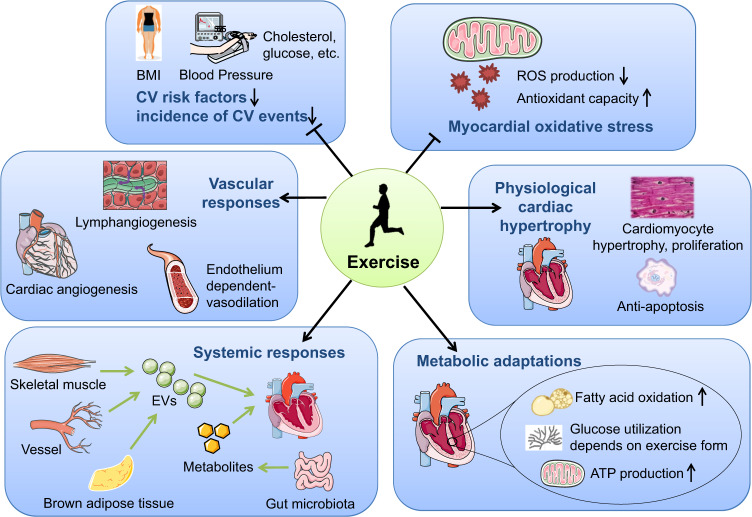
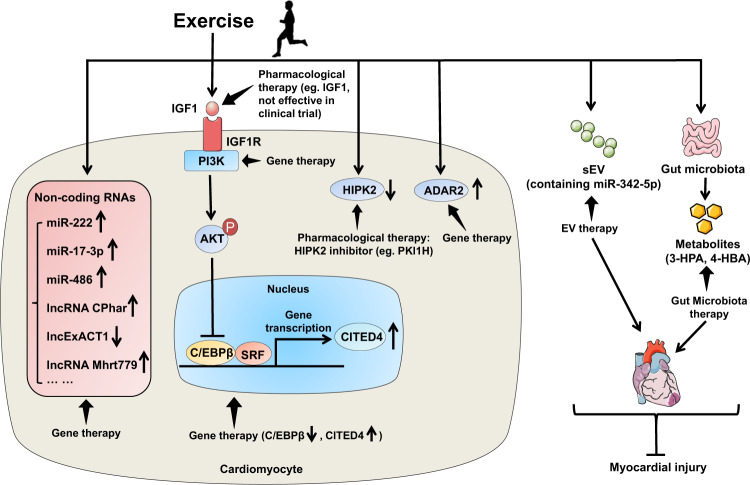
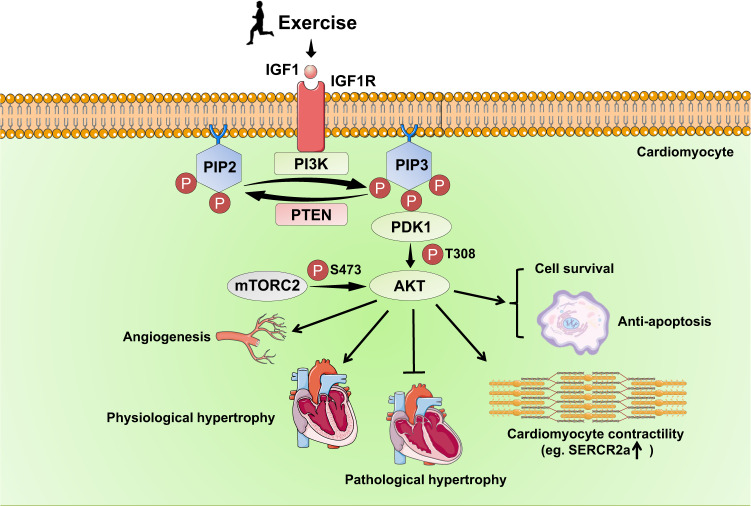
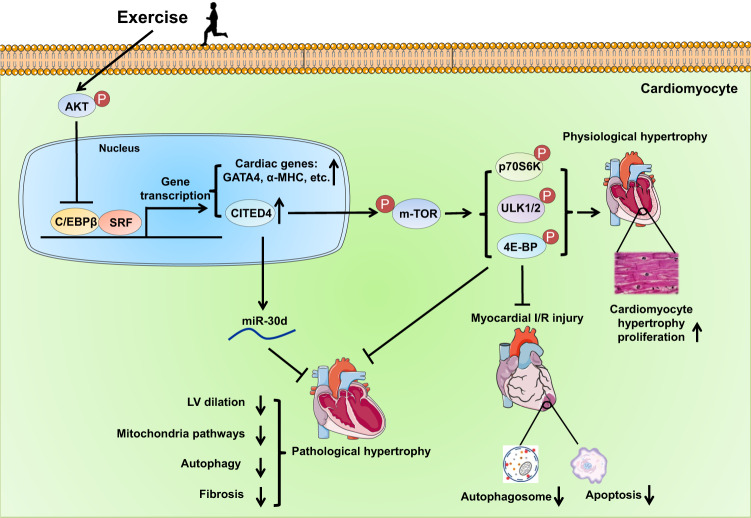
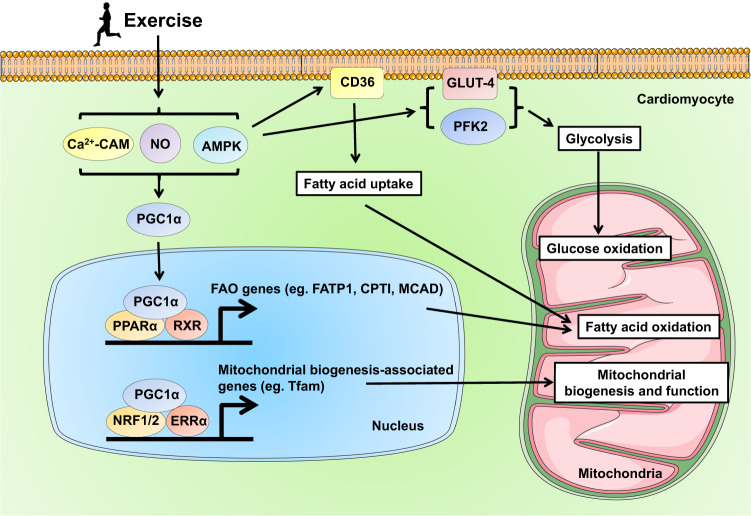
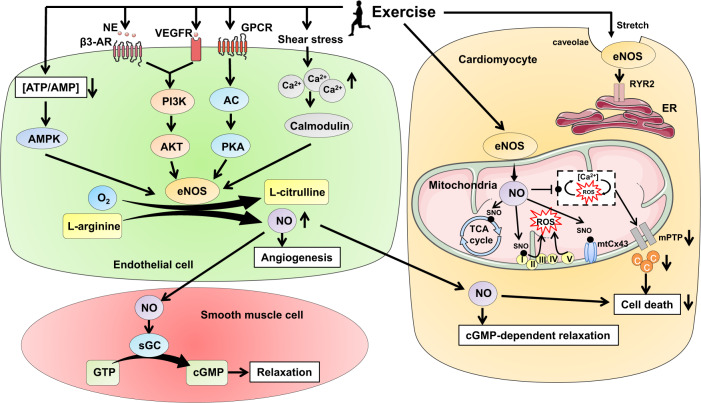
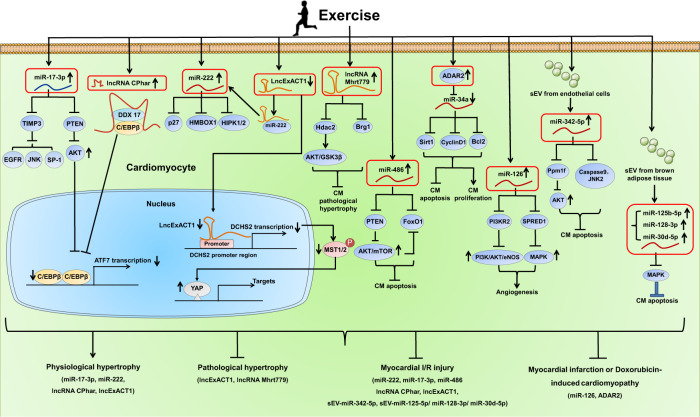
Exercise training has been widely recognized as a healthy lifestyle as well as an effective non-drug therapeutic strategy for cardiovascular diseases (CVD). Functional and mechanistic studies that employ animal exercise models as well as observational and interventional cohort studies with human participants, have contributed considerably in delineating the essential signaling pathways by which exercise promotes cardiovascular fitness and health. First, this review summarizes the beneficial impact of exercise on multiple aspects of cardiovascular health. We then discuss in detail the signaling pathways mediating exercise's benefits for cardiovascular health. The exercise-regulated signaling cascades have been shown to confer myocardial protection and drive systemic adaptations. The signaling molecules that are necessary for exercise-induced physiological cardiac hypertrophy have the potential to attenuate myocardial injury and reverse cardiac remodeling. Exercise-regulated noncoding RNAs and their associated signaling pathways are also discussed in detail for their roles and mechanisms in exercise-induced cardioprotective effects. Moreover, we address the exercise-mediated signaling pathways and molecules that can serve as potential therapeutic targets ranging from pharmacological approaches to gene therapies in CVD. We also discuss multiple factors that influence exercise's effect and highlight the importance and need for further investigations regarding the exercise-regulated molecules as therapeutic targets and biomarkers for CVD as well as the cross talk between the heart and other tissues or organs during exercise. We conclude that a deep understanding of the signaling pathways involved in exercise's benefits for cardiovascular health will undoubtedly contribute to the identification and development of novel therapeutic targets and strategies for CVD.
运动训练已被广泛认为是一种健康的生活方式,也是心血管疾病(CVD)的一种有效非药物治疗策略。运用动物运动模型的功能和机制研究以及具有人类参与者的观察性和干预性队列研究,极大地阐明了运动促进心血管健康和健康的基本信号通路。首先,本文综述了运动对心血管健康多个方面的有益影响。然后,我们详细讨论了介导运动对心血管健康益处的信号通路。已经表明,运动调节的信号级联反应可提供心肌保护并驱动全身适应。对于运动引起的生理性心肌肥大所必需的信号分子,有可能减轻心肌损伤并逆转心脏重构。本文还详细讨论了运动调节的非编码 RNA 及其相关信号通路,以了解它们在运动诱导的心脏保护作用中的作用和机制。此外,我们探讨了可作为 CVD 中从药物方法到基因治疗等潜在治疗靶点的运动介导的信号通路和分子。我们还讨论了影响运动效果的多种因素,并强调了进一步研究运动调节分子作为 CVD 的治疗靶点和生物标志物以及运动期间心脏和其他组织或器官之间的串扰的重要性和必要性。我们的结论是,深入了解运动对心血管健康益处的信号通路无疑将有助于确定和开发 CVD 的新型治疗靶点和策略。