Yoo-Warren H, Pachnis V, Ingram R S, Tilghman S M
Department of Molecular Biology, Princeton University, New Jersey 08544.
Mol Cell Biol. 1988 Nov;8(11):4707-15. doi: 10.1128/mcb.8.11.4707-4715.1988.
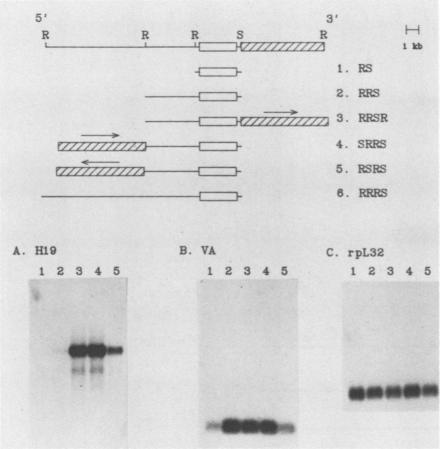
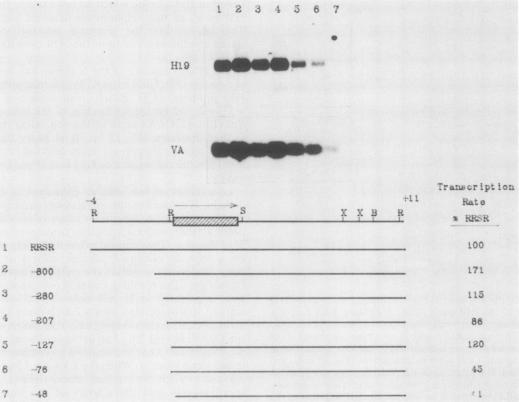
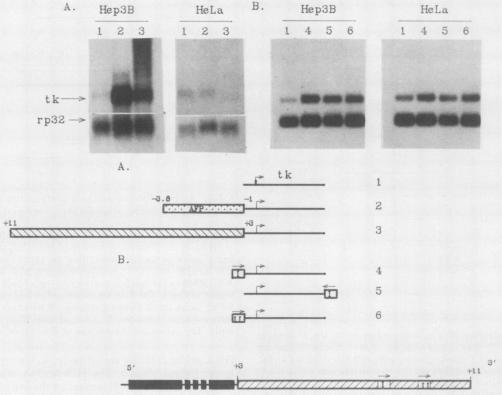
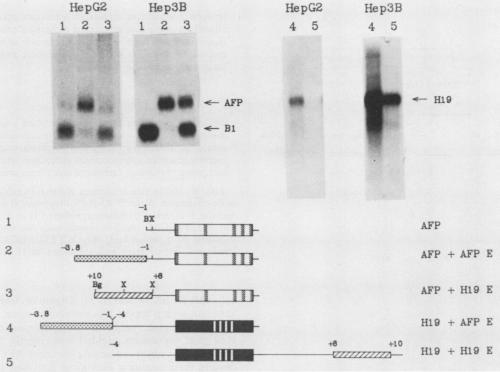
The mouse H19 gene was identified by virtue of its coordinate regulation with the mouse alpha-fetoprotein gene. Both genes are expressed in the fetal liver, gut, and visceral endoderm of the yolk sac and are repressed shortly after birth in the liver and gut. They are both under the control of two trans-acting loci: raf, which affects the adult basal levels of the two mRNAs, and Rif, which affects their inducibility during liver regeneration. One crucial difference between the two genes is the activation of the H19 gene in mesoderm derivatives, skeletal and cardiac muscle. As a strategy for explaining both the similarities and differences in their modes of expression, the regulatory domains responsible for the expression of the H19 gene in liver were identified by transiently introducing the gene into a human hepatoma cell line. Two regions necessary for high-level expression of the gene could be identified, a promoter-proximal domain immediately preceding the start of transcription and an enhancer domain which lies between 5 and 6.5 kilobases 3' of the polyadenylation site. The 3' domain consists of two separable enhancer elements, each of which exhibits the properties of tissue-specific enhancers. Nucleotide sequence comparisons between the two H19 and three alpha-fetoprotein enhancers revealed limited similarities which are candidates for binding of common regulatory factors. Sequences which lie 3' of the gene are also required for the expression of the H19 gene following differentiation of teratocarcinoma cells into visceral endoderm.
小鼠H19基因是因其与小鼠甲胎蛋白基因的协同调控而被鉴定出来的。这两个基因都在胎儿肝脏、肠道以及卵黄囊的脏内胚层中表达,并且在出生后不久在肝脏和肠道中被抑制。它们都受两个反式作用位点的控制:raf,影响这两种mRNA在成体中的基础水平;Rif,影响它们在肝脏再生过程中的可诱导性。这两个基因之间一个关键的差异在于H19基因在中胚层衍生物、骨骼肌和心肌中的激活。作为解释它们表达模式异同的一种策略,通过将该基因瞬时导入人肝癌细胞系来鉴定负责H19基因在肝脏中表达的调控结构域。可以鉴定出该基因高水平表达所必需的两个区域,一个是紧接转录起始位点之前的启动子近端结构域,另一个是位于多聚腺苷酸化位点下游5至6.5千碱基之间的增强子结构域。3'结构域由两个可分离的增强子元件组成,每个元件都具有组织特异性增强子的特性。对两个H19增强子和三个甲胎蛋白增强子的核苷酸序列比较显示出有限的相似性,这些相似性是共同调控因子结合的候选位点。在畸胎瘤细胞分化为脏内胚层后,H19基因的表达也需要该基因下游的序列。