Pollard Suzanne L, Williams D'Ann L, Breysse Patrick N, Baron Patrick A, Grajeda Laura M, Gilman Robert H, Miranda J Jaime, Checkley William
Division of Pulmonary and Critical Care, School of Medicine, Johns Hopkins University, 1800 Orleans Ave, Suite 9121, Baltimore, MD, USA.
Environ Health. 2014 Mar 24;13(1):21. doi: 10.1186/1476-069X-13-21.
Burning biomass fuels indoors for cooking is associated with high concentrations of particulate matter (PM) and carbon monoxide (CO). More efficient biomass-burning stoves and chimneys for ventilation have been proposed as solutions to reduce indoor pollution. We sought to quantify indoor PM and CO exposures in urban and rural households and determine factors associated with higher exposures. A secondary objective was to identify chronic vs. acute changes in cardiopulmonary biomarkers associated with exposure to biomass smoke.
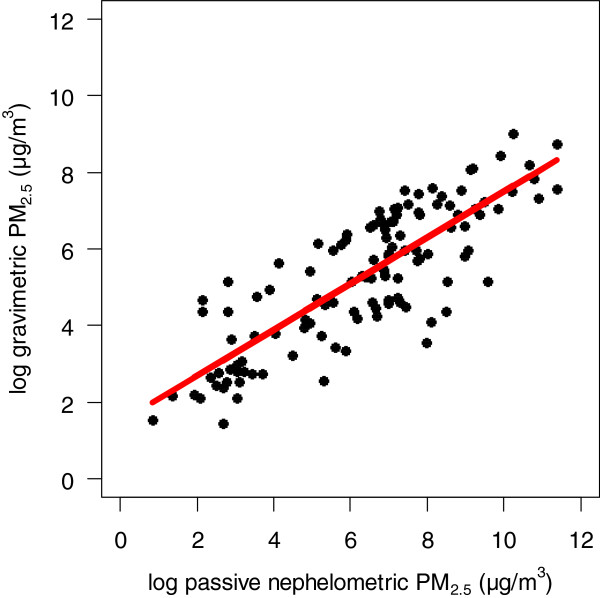
We conducted a census survey followed by a cross-sectional study of indoor environmental exposures and cardiopulmonary biomarkers in the main household cook in Puno, Peru. We measured 24-hour indoor PM and CO concentrations in 86 households. We also measured PM2.5 and PM10 concentrations gravimetrically for 24 hours in urban households and during cook times in rural households, and generated a calibration equation using PM2.5 measurements.
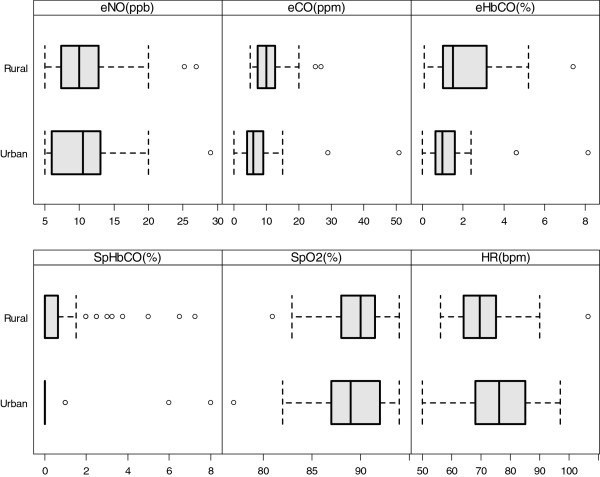
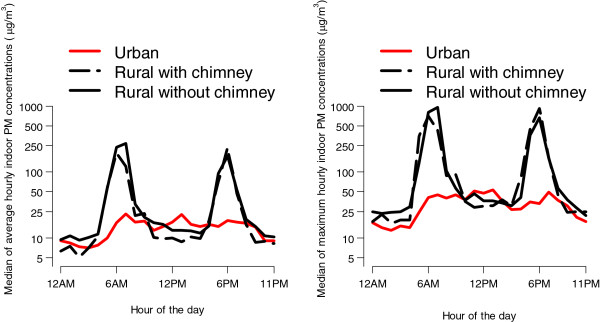
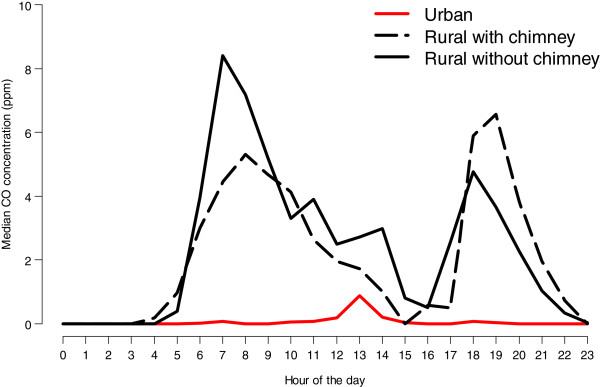
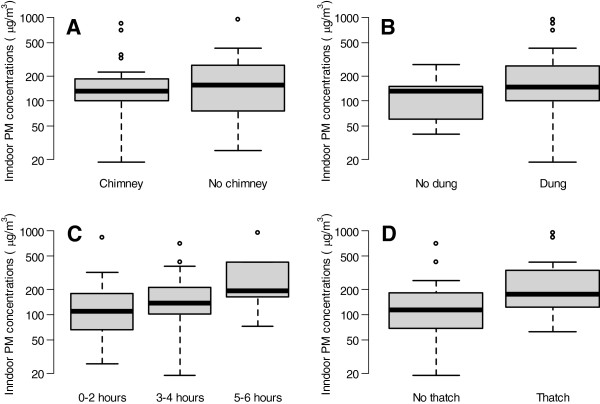
In a census of 4903 households, 93% vs. 16% of rural vs. urban households used an open-fire stove; 22% of rural households had a homemade chimney; and <3% of rural households participated in a national program encouraging installation of a chimney. Median 24-hour indoor PM2.5 and CO concentrations were 130 vs. 22 μg/m3 and 5.8 vs. 0.4 ppm (all p<0.001) in rural vs. urban households. Having a chimney did not significantly reduce median concentrations in 24-hour indoor PM2.5 (119 vs. 137 μg/m3; p=0.40) or CO (4.6 vs. 7.2 ppm; p=0.23) among rural households with and without chimneys. Having a chimney did not significantly reduce median cook-time PM2.5 (360 vs. 298 μg/m3, p=0.45) or cook-time CO concentrations (15.2 vs. 9.4 ppm, p=0.23). Having a thatched roof (p=0.007) and hours spent cooking (p=0.02) were associated with higher 24-hour average PM concentrations. Rural participants had higher median exhaled CO (10 vs. 6 ppm; p=0.01) and exhaled carboxyhemoglobin (1.6% vs. 1.0%; p=0.04) than urban participants.
Indoor air concentrations associated with biomass smoke were six-fold greater in rural vs. urban households. Having a homemade chimney did not reduce environmental exposures significantly. Measures of exhaled CO provide useful cardiopulmonary biomarkers for chronic exposure to biomass smoke.
在室内燃烧生物质燃料做饭会产生高浓度的颗粒物(PM)和一氧化碳(CO)。人们提出使用更高效的生物质燃烧炉灶和通风烟囱来减少室内污染。我们试图量化城乡家庭室内PM和CO的暴露情况,并确定与更高暴露相关的因素。第二个目标是确定与接触生物质烟雾相关的心肺生物标志物的慢性和急性变化。
我们在秘鲁普诺对主要家庭烹饪者进行了一次普查,随后开展了一项关于室内环境暴露和心肺生物标志物的横断面研究。我们测量了86户家庭24小时的室内PM和CO浓度。我们还对城市家庭进行了24小时、对农村家庭在烹饪期间进行了PM2.5和PM10重量法浓度测量,并利用PM2.5测量值生成了一个校准方程。
在对4903户家庭的普查中,农村家庭与城市家庭中分别有93%和16%使用明火炉灶;22%的农村家庭有自制烟囱;参与一项鼓励安装烟囱的国家项目的农村家庭不到3%。农村家庭与城市家庭24小时室内PM2.5和CO浓度中位数分别为130 vs. 22 μg/m3和5.8 vs. 0.4 ppm(所有p<0.001)。在有烟囱和没有烟囱的农村家庭中,有烟囱并没有显著降低24小时室内PM2.5(119 vs. 137 μg/m3;p=0.40)或CO(4.6 vs. 7.2 ppm;p=0.23)的中位数浓度。有烟囱并没有显著降低烹饪期间PM2.5(360 vs. 298 μg/m3,p=0.45)或烹饪期间CO浓度(15.2 vs. 9.4 ppm,p=0.23)。有茅草屋顶(p=0.007)和烹饪时长(p=0.02)与24小时平均PM浓度较高有关。农村参与者呼出的CO中位数(10 vs. 6 ppm;p=0.01)和呼出的碳氧血红蛋白(1.6% vs. 1.0%;p=0.04)高于城市参与者。
农村家庭中与生物质烟雾相关的室内空气浓度比城市家庭高六倍。有自制烟囱并没有显著降低环境暴露。呼出CO的测量为慢性接触生物质烟雾提供了有用的心肺生物标志物。