mBio. 2014 Mar 25;5(2):e00003-14. doi: 10.1128/mBio.00003-14.
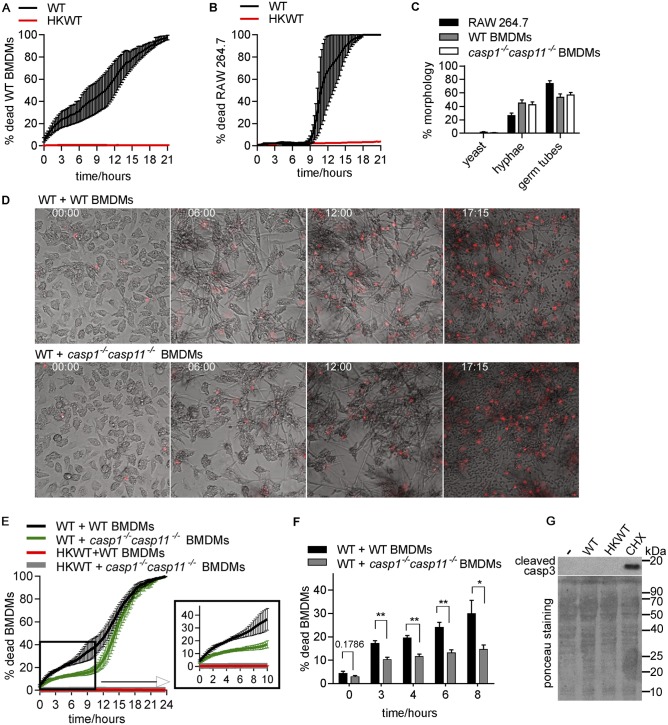
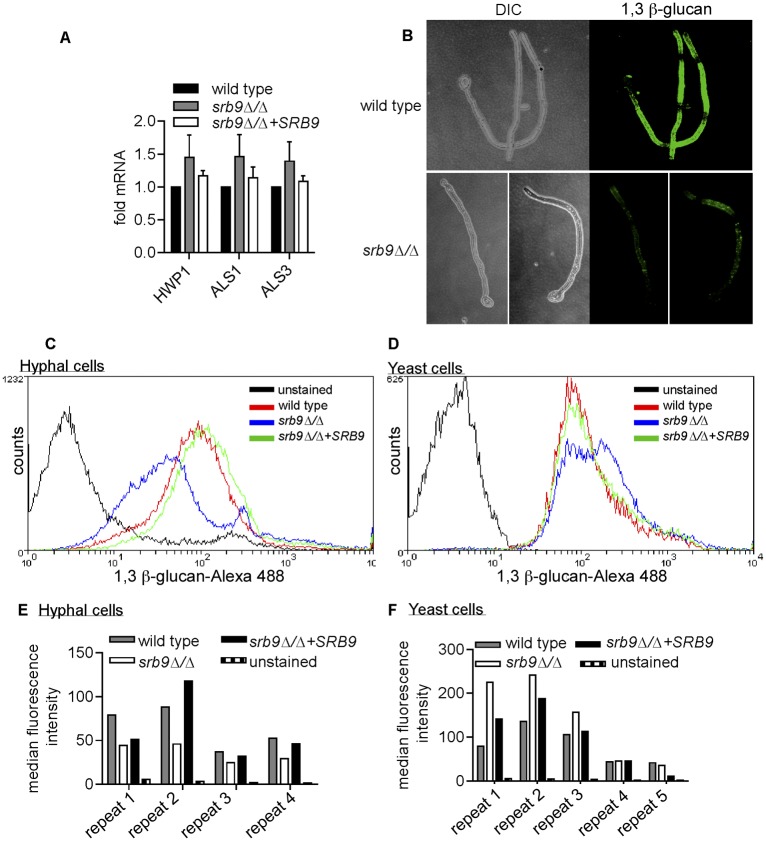
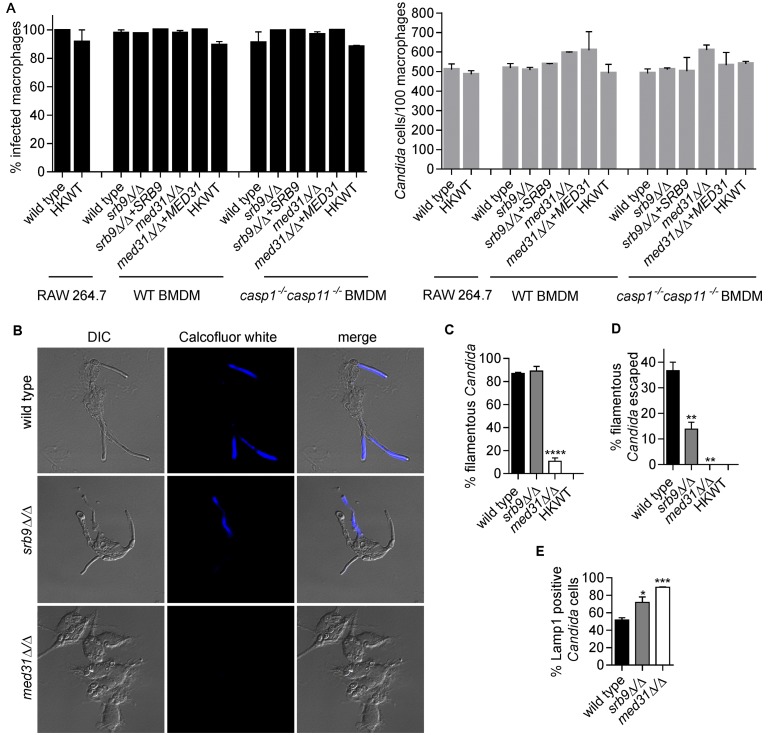
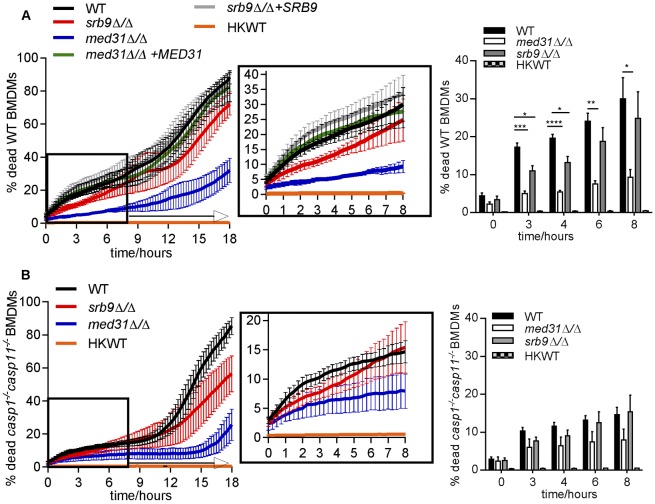
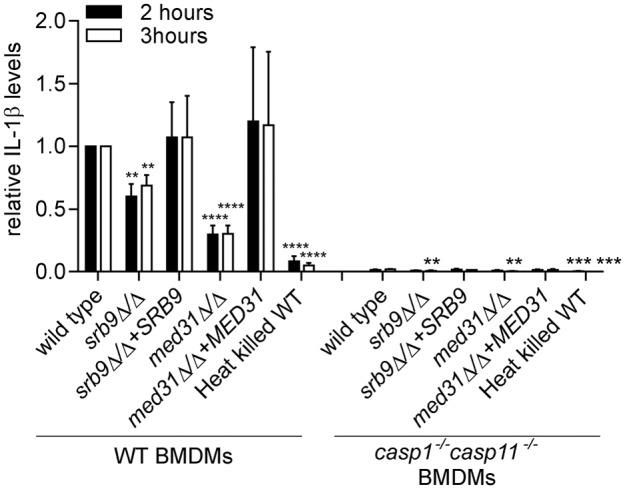
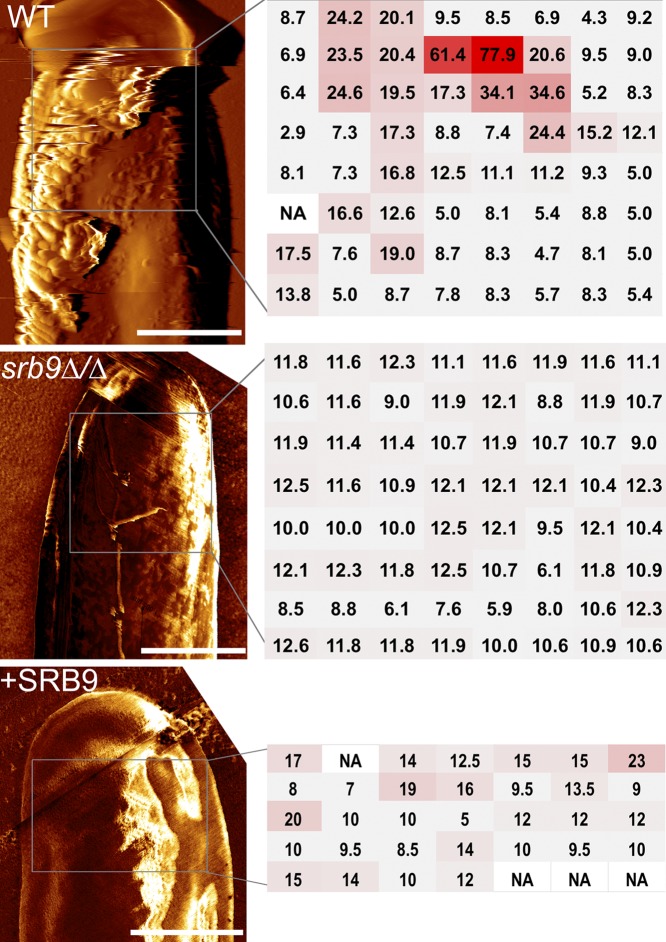
The fungal pathogen Candida albicans causes macrophage death and escapes, but the molecular mechanisms remained unknown. Here we used live-cell imaging to monitor the interaction of C. albicans with macrophages and show that C. albicans kills macrophages in two temporally and mechanistically distinct phases. Early upon phagocytosis, C. albicans triggers pyroptosis, a proinflammatory macrophage death. Pyroptosis is controlled by the developmental yeast-to-hypha transition of Candida. When pyroptosis is inactivated, wild-type C. albicans hyphae cause significantly less macrophage killing for up to 8 h postphagocytosis. After the first 8 h, a second macrophage-killing phase is initiated. This second phase depends on robust hyphal formation but is mechanistically distinct from pyroptosis. The transcriptional regulator Mediator is necessary for morphogenesis of C. albicans in macrophages and the establishment of the wild-type surface architecture of hyphae that together mediate activation of macrophage cell death. Our data suggest that the defects of the Mediator mutants in causing macrophage death are caused, at least in part, by reduced activation of pyroptosis. A Mediator mutant that forms hyphae of apparently wild-type morphology but is defective in triggering early macrophage death shows a breakdown of cell surface architecture and reduced exposed 1,3 β-glucan in hyphae. Our report shows how Candida uses host and pathogen pathways for macrophage killing. The current model of mechanical piercing of macrophages by C. albicans hyphae should be revised to include activation of pyroptosis by hyphae as an important mechanism mediating macrophage cell death upon C. albicans infection. IMPORTANCE Upon phagocytosis by macrophages, Candida albicans can transition to the hyphal form, which causes macrophage death and enables fungal escape. The current model is that the highly polarized growth of hyphae results in macrophage piercing. This model is challenged by recent reports of C. albicans mutants that form hyphae of wild-type morphology but are defective in killing macrophages. We show that C. albicans causes macrophage cell death by at least two mechanisms. Phase 1 killing (first 6 to 8 h) depends on the activation of the pyroptotic programmed host cell death by fungal hyphae. Phase 2 (up to 24 h) is rapid and depends on robust hyphal formation but is independent of pyroptosis. Our data provide a new model for how the interplay between fungal morphogenesis and activation of a host cell death pathway mediates macrophage killing by C. albicans hyphae.
真菌病原体白色念珠菌可导致巨噬细胞死亡并逃脱,但其中的分子机制尚不清楚。本研究使用活细胞成像技术来监测白色念珠菌与巨噬细胞的相互作用,并表明白色念珠菌通过两个具有时间和机制差异的阶段来杀死巨噬细胞。在吞噬作用早期,白色念珠菌触发细胞焦亡,这是一种促炎的巨噬细胞死亡。细胞焦亡受白色念珠菌从酵母相到菌丝相转变的调控。当细胞焦亡被抑制时,野生型白色念珠菌菌丝在吞噬后长达 8 小时内导致的巨噬细胞杀伤显著减少。8 小时后,启动第二阶段的巨噬细胞杀伤。第二阶段依赖于菌丝的强烈形成,但与细胞焦亡在机制上不同。转录调节因子 Mediator 对于白色念珠菌在巨噬细胞中的形态发生和菌丝野生型表面结构的建立是必要的,这些结构共同介导巨噬细胞细胞死亡的激活。我们的数据表明,Mediator 突变体在引起巨噬细胞死亡方面的缺陷至少部分是由于细胞焦亡的激活减少所致。尽管 Mediator 突变体形成的菌丝形态似乎正常,但在早期诱导巨噬细胞死亡方面存在缺陷,表现为细胞表面结构破坏和菌丝中暴露的 1,3 β-葡聚糖减少。本研究报告了白色念珠菌如何利用宿主和病原体途径来杀死巨噬细胞。目前关于白色念珠菌菌丝刺穿巨噬细胞的模型应进行修订,将菌丝激活细胞焦亡作为白色念珠菌感染时介导巨噬细胞死亡的重要机制纳入其中。意义 白色念珠菌被巨噬细胞吞噬后,可以转变为菌丝形式,导致巨噬细胞死亡并使真菌逃脱。目前的模型是菌丝的高度极化生长导致巨噬细胞穿孔。最近的一些报告表明,一些白色念珠菌突变体形成了与野生型形态相似的菌丝,但在杀死巨噬细胞方面存在缺陷,这对该模型提出了挑战。我们发现,白色念珠菌至少通过两种机制导致巨噬细胞死亡。第一阶段的杀伤(最初 6 到 8 小时)取决于真菌菌丝激活细胞焦亡程序性的宿主细胞死亡。第二阶段(长达 24 小时)快速发生,依赖于稳健的菌丝形成,但不依赖于细胞焦亡。我们的数据为真菌形态发生和宿主细胞死亡途径的激活之间的相互作用如何介导白色念珠菌菌丝对巨噬细胞的杀伤提供了一个新模型。