1. Regenerative Dentistry Research Group (ReDReG), Faculty of Dentistry, University of Malaya, Kuala Lumpur, Malaysia.
2. Hygieia Innovation Sdn. Bhd, Lot 1G-2G, Lanai Complex No.2, Persiaran Seri Perdana, Persint 10, Federal Territory of Putrajaya, Malaysia.
Int J Med Sci. 2014 Mar 6;11(4):391-403. doi: 10.7150/ijms.7697. eCollection 2014.
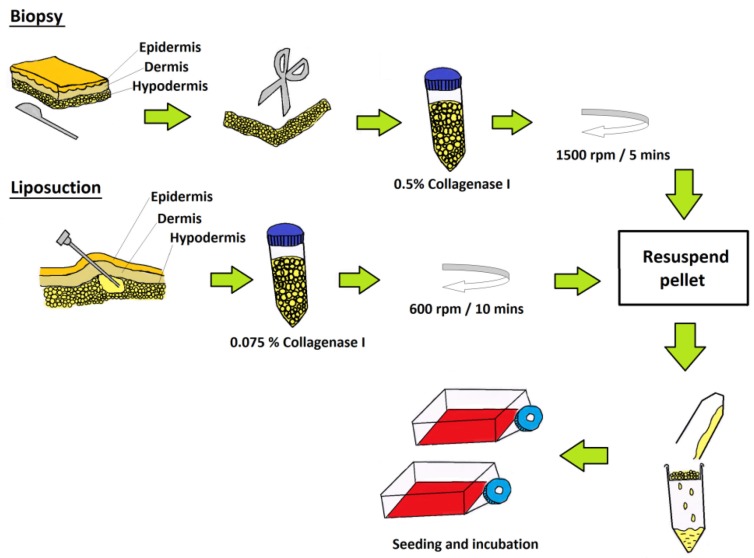
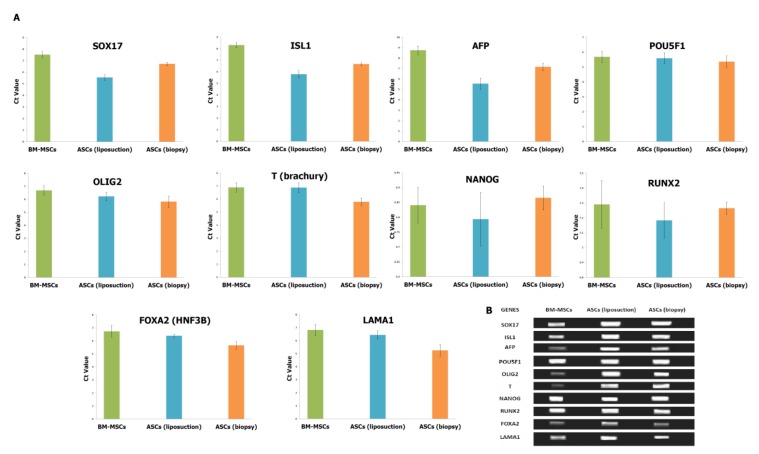
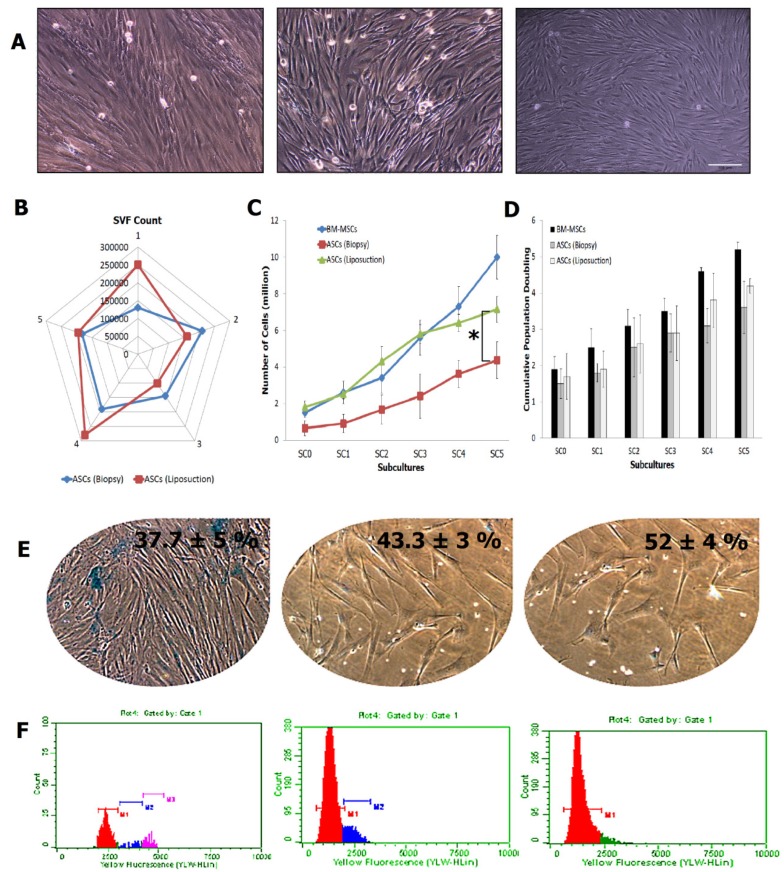
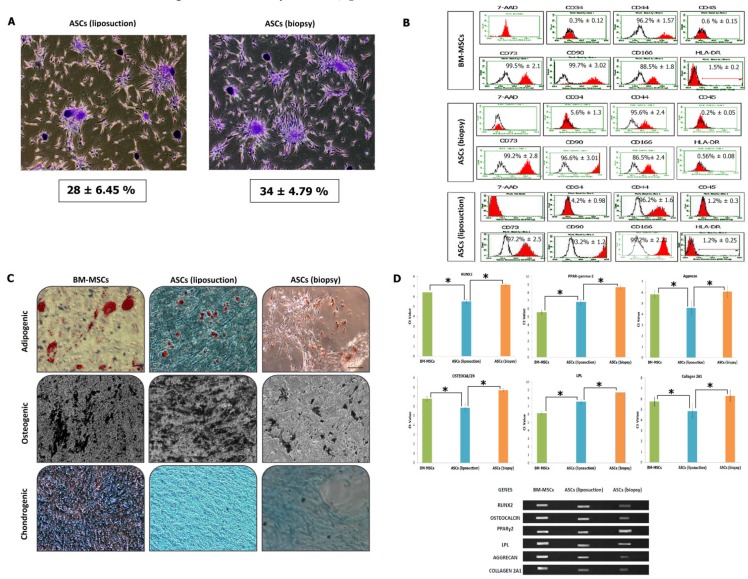
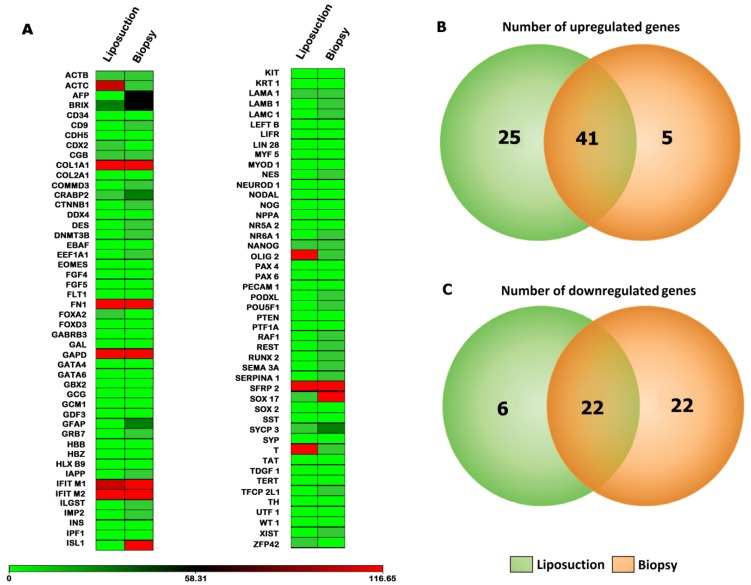
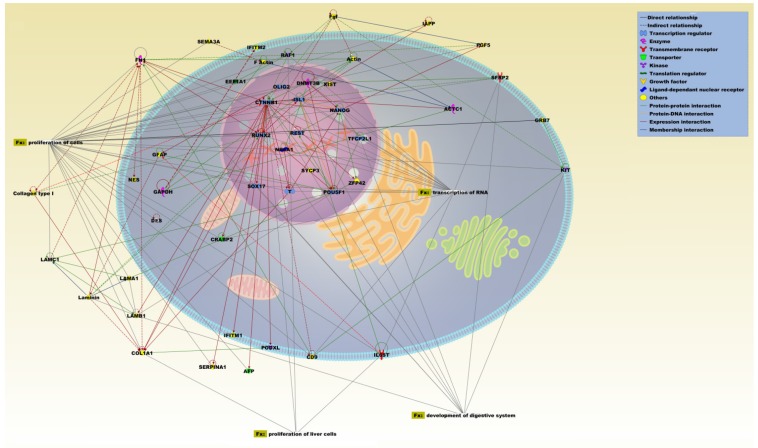
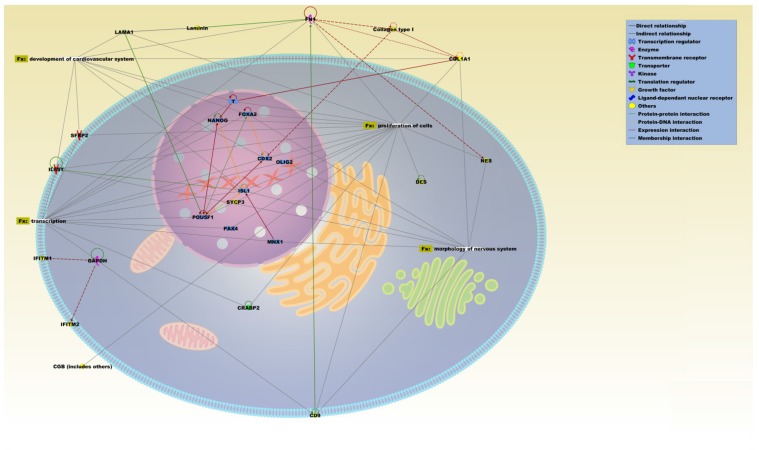
Human adipose stem cells (ASCs) has been in the limelight since its discovery as a suitable source of mesenchymal stem cells (MSCs) in regenerative medicine. Currently, two major techniques are used to isolate ASCs, namely liposuction and tissue biopsy. These two methods are relatively risk-free but the question as to which method could give a more efficient output remains unclear. Thus, this study was carried out to compare and contrast the output generated in regards to growth kinetics, differentiation capabilities in vitro, and gene expression profiling. It was found that ASCs from both isolation methods were comparable in terms of growth kinetics and tri-lineage differentiation. Furthermore, ASCs from both populations were reported as CD44(+), CD73(+), CD90(+), CD166(+), CD34(-), CD45(-) and HLA-DR(-). However, in regards to gene expression, a group of overlapping genes as well as distinct genes were observed. Distinct gene expressions indicated that ASCs (liposuction) has endoderm lineage propensity whereas ASCs (biopsy) has a tendency towards mesoderm/ectoderm lineage. This information suggests involvement in different functional activity in accordance to isolation method. In conclusion, future studies to better understand these gene functions should be carried out in order to contribute in the applicability of each respective cells in regenerative therapy.
人类脂肪干细胞 (ASCs) 自被发现可作为再生医学中间充质干细胞 (MSCs) 的合适来源以来,一直备受关注。目前,有两种主要的技术可用于分离 ASCs,即吸脂术和组织活检。这两种方法相对风险较小,但哪种方法能产生更有效的效果仍不清楚。因此,本研究旨在比较和对比在生长动力学、体外分化能力和基因表达谱方面的差异。结果发现,两种分离方法分离的 ASC 在生长动力学和三系分化方面具有可比性。此外,两种细胞群体均表达 CD44(+)、CD73(+)、CD90(+)、CD166(+)、CD34(-)、CD45(-) 和 HLA-DR(-)。然而,在基因表达方面,观察到一组重叠基因和独特基因。独特的基因表达表明,ASCs(吸脂术)具有内胚层谱系倾向,而 ASCs(活检)具有中胚层/外胚层谱系倾向。这些信息表明,根据分离方法的不同,它们涉及不同的功能活动。总之,应该进行进一步的研究以更好地了解这些基因功能,从而为每种细胞在再生治疗中的适用性做出贡献。