Shahbazi-Gahrouei Daryoush, Abdolahi Mohammad
Department of Medical Physics and Medical Engineering, School of Medicine, Isfahan University of Medical Sciences, Isfahan, Iran.
Department of Medical Physics and Radiation Technology, School of Paramedical Sciences, Bushehr University of Medical Sciences, Bushehr, Iran.
J Med Phys. 2013 Oct;38(4):198-204. doi: 10.4103/0971-6203.121198.
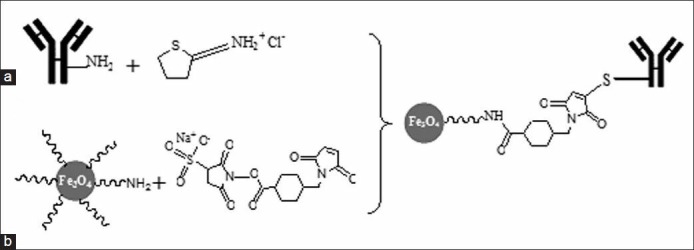
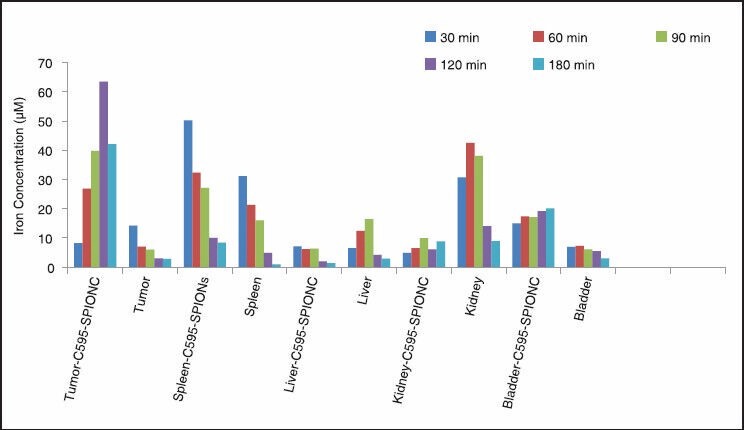
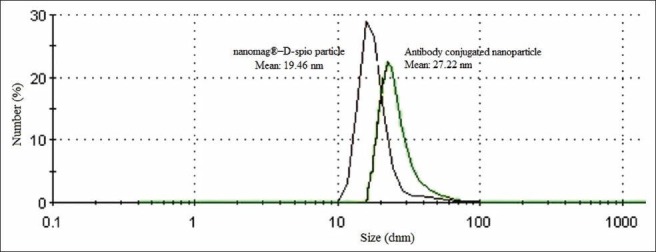
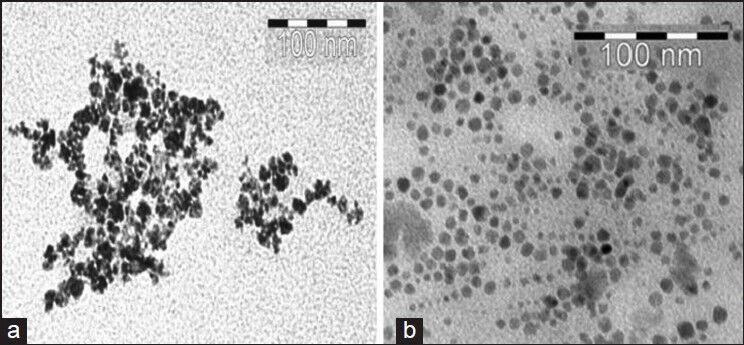
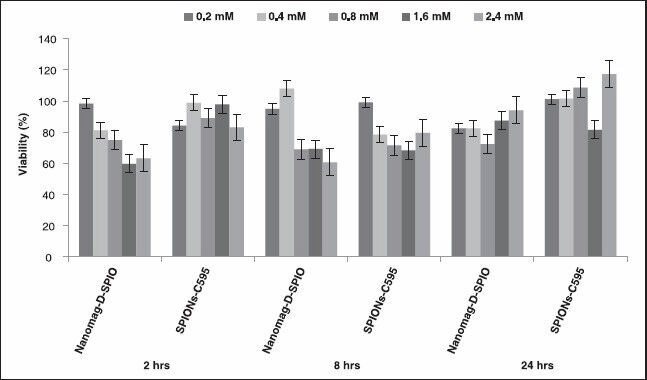
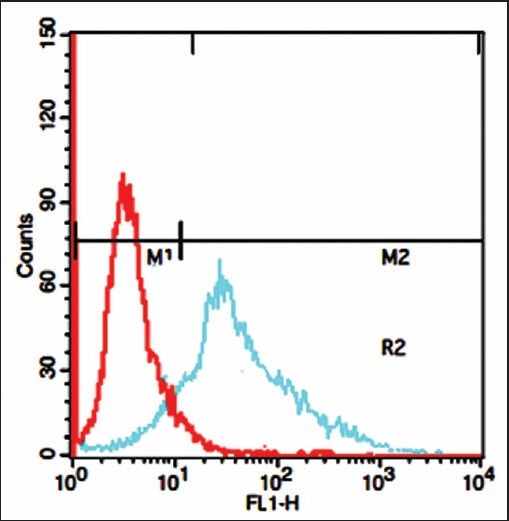
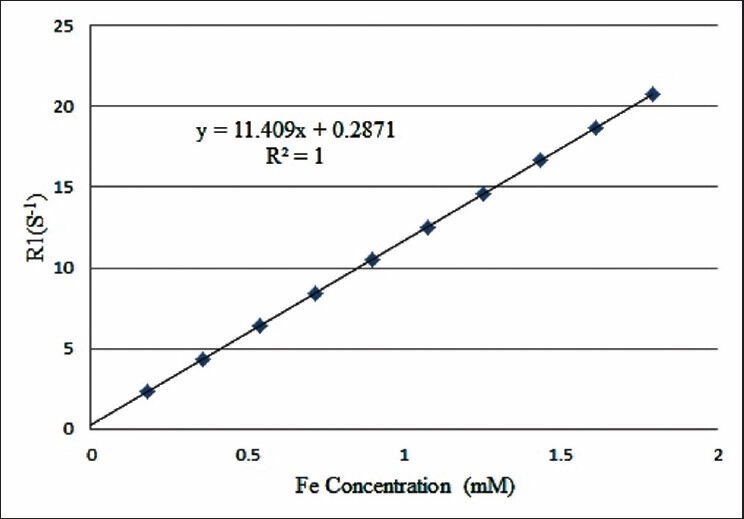
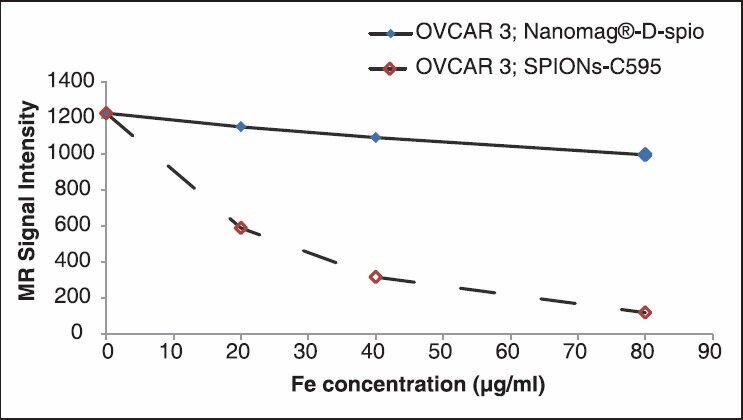
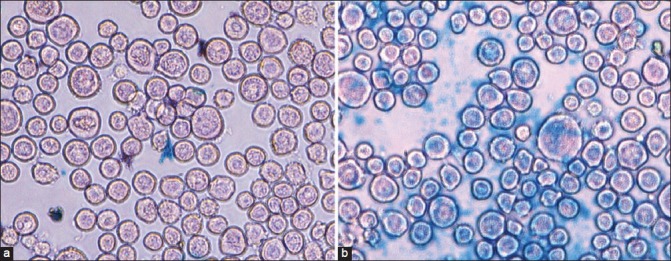
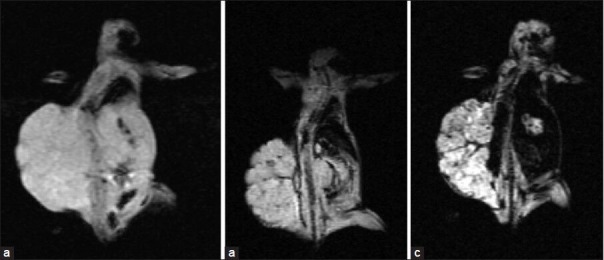
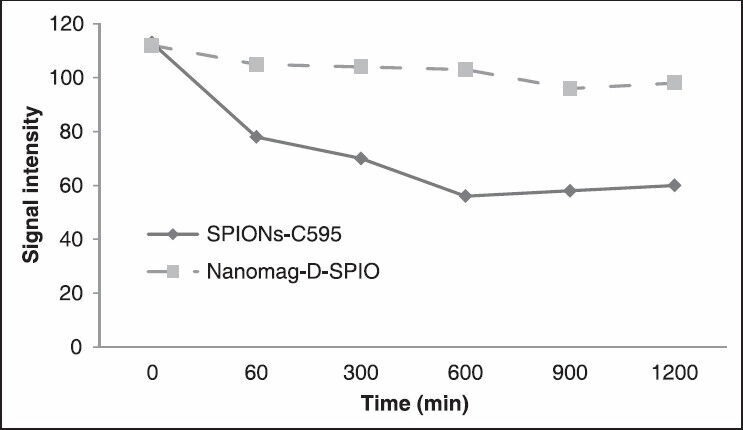
Superparamagnetic iron oxide nanoparticles (SPIONs), have played an important role in the promotion of image contrast in magnetic resonance imaging modality. The objective of present study is describing SPIONs conjugated with C595 monoclonal antibody (mAb) against MUC1-expressing ovarian cancer (OVCAR3) cell. Magnetic resonance imaging parameters of the prepared nanoconjugate was investigated in vitro: characterization, cell toxicity, flow cytometry, Prussian blue staining, and cellular uptake as well as biodistribution and magnetic resonance signal intensities under in vivo conditions were also investigated. Magnetic resonance imaging and biodistribution results showed good tumor accumulation and detection, no cytotoxicity, and potential selective as anti-ovarian cancer. In conclusion, based on the findings SPIONs-C595 nanosized-probe is potentially, a selective ovarian molecular imaging tool. Further subsequent in vivo studies and clinical trials are warranted.
超顺磁性氧化铁纳米颗粒(SPIONs)在磁共振成像模式下提高图像对比度方面发挥了重要作用。本研究的目的是描述与针对表达MUC1的卵巢癌(OVCAR3)细胞的C595单克隆抗体(mAb)偶联的SPIONs。对制备的纳米偶联物的磁共振成像参数进行了体外研究:表征、细胞毒性、流式细胞术、普鲁士蓝染色、细胞摄取以及体内条件下的生物分布和磁共振信号强度也进行了研究。磁共振成像和生物分布结果显示肿瘤积累和检测良好,无细胞毒性,且具有作为抗卵巢癌的潜在选择性。总之,基于这些发现,SPIONs-C595纳米探针有潜力成为一种选择性卵巢分子成像工具。有必要进行进一步的后续体内研究和临床试验。