Department of Experimental Clinical and Health Psychology, Ghent University Ghent, Belgium.
Front Hum Neurosci. 2014 Mar 18;8:131. doi: 10.3389/fnhum.2014.00131. eCollection 2014.
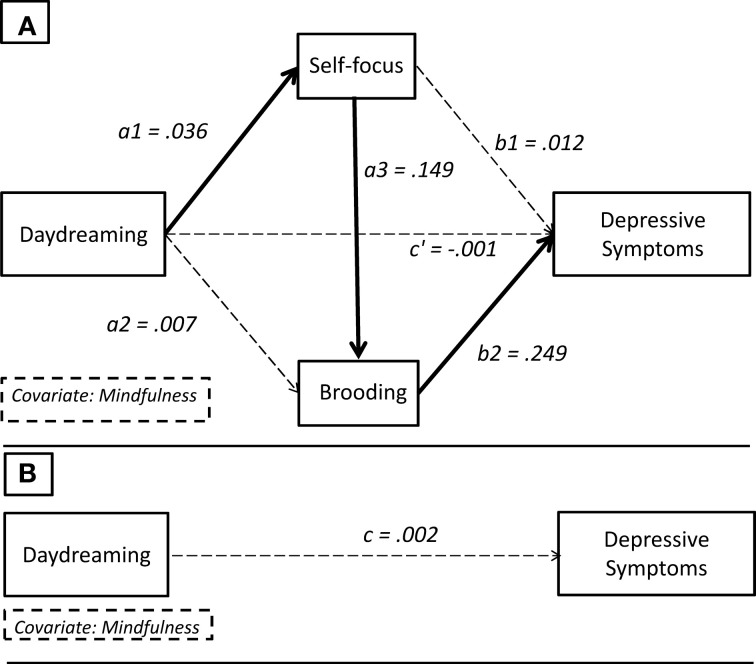
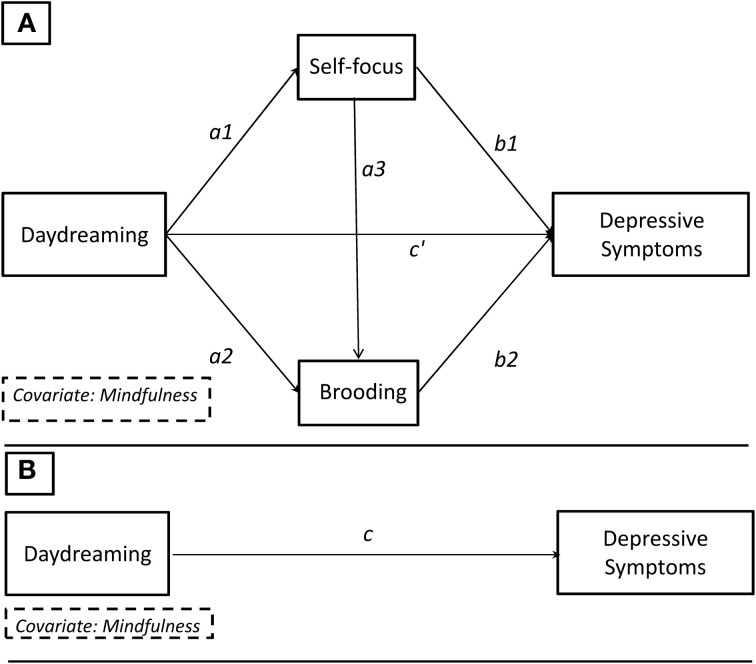
Human minds often engage in thoughts and feelings that are self-generated rather than stimulus-dependent, such as daydreaming. Recent research suggests that under certain circumstances, daydreaming is associated with adverse effects on cognition and affect. Based on recent literature about the influence of resting mind in relation to rumination and depression, this questionnaire study investigated mechanisms linking daydreaming to depressive symptoms. Specifically, an indirect effect model was tested in which daydreaming influences depressive symptoms through enhancing self-focus and ruminative thought. Results were in line with the hypothesis and several alternative pathways were ruled out. The results provide initial supportive evidence that daydreaming can influence depressive symptoms through influences on self-focus and rumination. Further research should use prospective or experimental designs to further validate and strengthen these conclusions.
人类的思维常常会产生自发的想法和感受,而不是依赖于外界刺激,比如白日梦。最近的研究表明,在某些情况下,白日梦会对认知和情绪产生负面影响。基于最近关于静息思维与反刍和抑郁关系的文献,这项问卷调查研究调查了将白日梦与抑郁症状联系起来的机制。具体来说,测试了一个间接效应模型,其中白日梦通过增强自我关注和沉思性思维来影响抑郁症状。结果与假设一致,并排除了几种替代途径。结果提供了初步的支持性证据,表明白日梦可以通过影响自我关注和反刍来影响抑郁症状。进一步的研究应该使用前瞻性或实验设计来进一步验证和加强这些结论。