Department of Bioengineering, Tokyo Institute of Technology Yokohama, Japan.
Department of Biology, Nippon Medical School Kawasaki, Japan.
Front Microbiol. 2014 Mar 17;5:100. doi: 10.3389/fmicb.2014.00100. eCollection 2014.
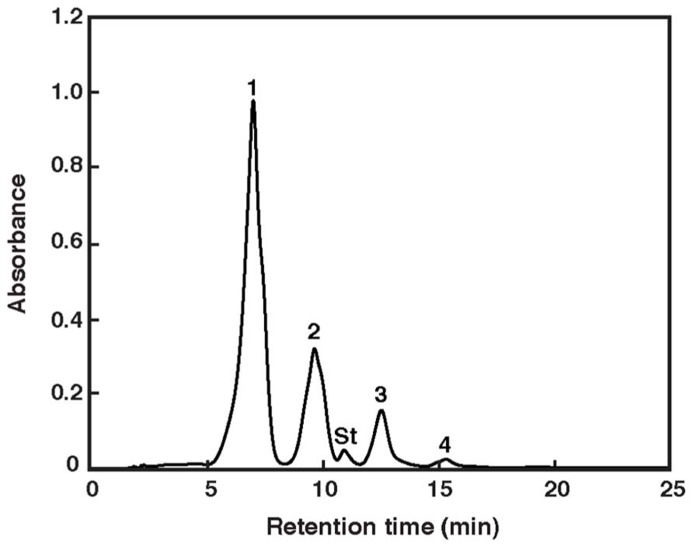
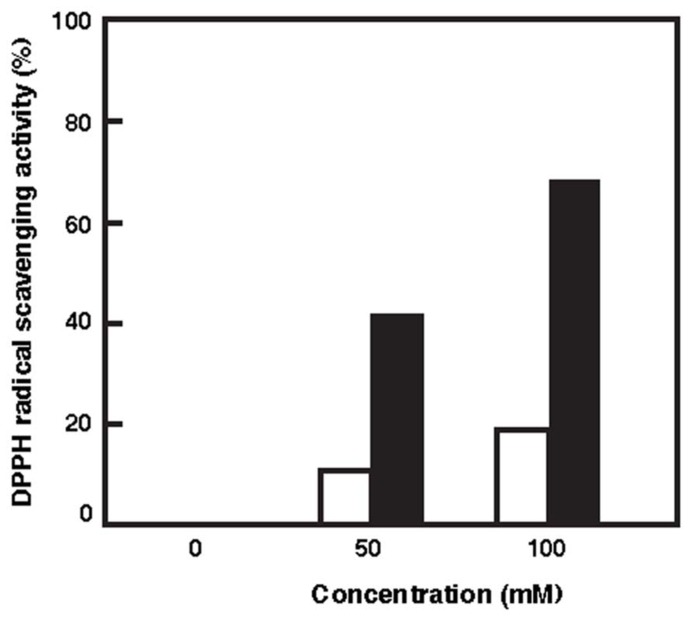
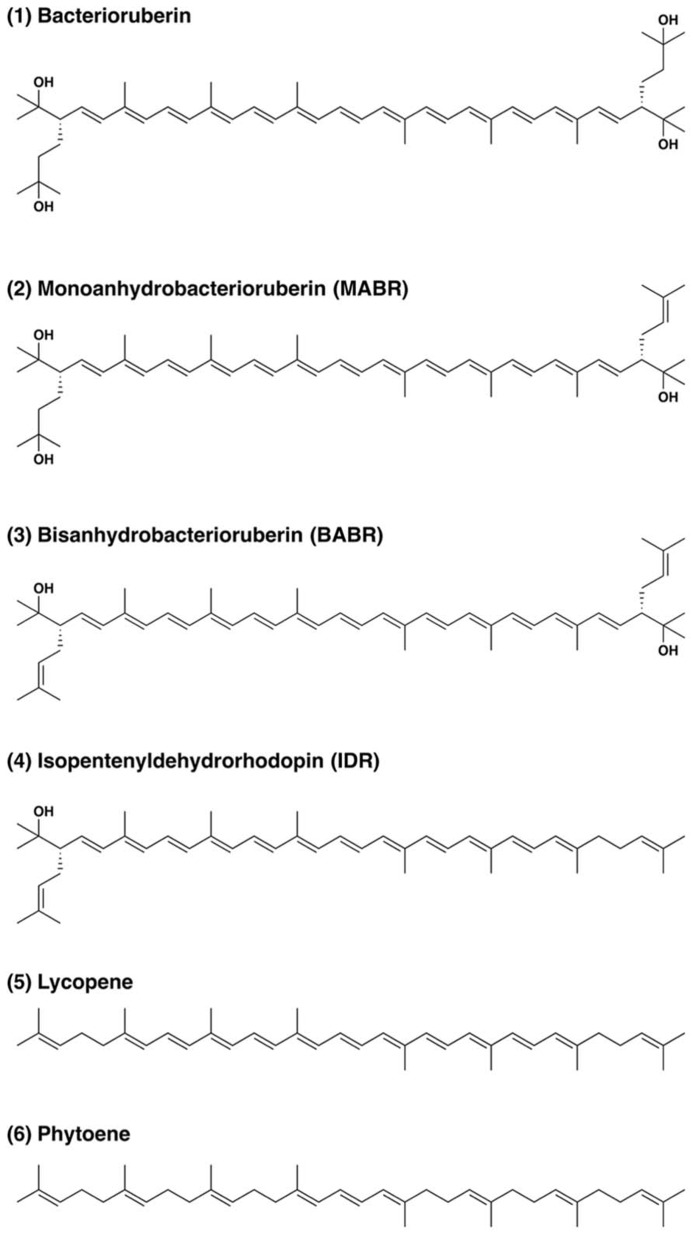
The carotenoids produced by extremely halophilic archaeon Haloarcula japonica were extracted and identified by their chemical, chromatographic, and spectroscopic characteristics (UV-Vis and mass spectrometry). The composition (mol%) was 68.1% bacterioruberin, 22.5% monoanhydrobacterioruberin, 9.3% bisanhydrobacterioruberin, <0.1% isopentenyldehydrorhodopin, and trace amounts of lycopene and phytoene. The in vitro scavenging capacity of a carotenoid, bacterioruberin, extracted from Haloarcula japonica cells against 1,1-diphenyl-2-picrylhydrazyl (DPPH) radicals was evaluated. The antioxidant capacity of bacterioruberin was much higher than that of β -carotene.
通过化学、色谱和光谱特征(紫外可见和质谱)对来自极端嗜盐古菌 Haloarcula japonica 的类胡萝卜素进行了提取和鉴定。组成(摩尔%)为 68.1%菌红菌素、22.5%单脱水菌红菌素、9.3%双脱水菌红菌素、<0.1%异戊烯基脱水番茄红素和痕量的番茄红素和叶黄素。评估了从 Haloarcula japonica 细胞中提取的类胡萝卜素菌红菌素对 1,1-二苯基-2-苦基肼(DPPH)自由基的体外清除能力。菌红菌素的抗氧化能力远高于 β-胡萝卜素。