Zhang Haiyuan, Pokhrel Suman, Ji Zhaoxia, Meng Huan, Wang Xiang, Lin Sijie, Chang Chong Hyun, Li Linjiang, Li Ruibin, Sun Bingbing, Wang Meiying, Liao Yu-Pei, Liu Rong, Xia Tian, Mädler Lutz, Nel André E
Laboratory of Chemical Biology, Changchun Institute of Applied Chemistry, Chinese Academy of Sciences , Changchun, Jilin, China.
J Am Chem Soc. 2014 Apr 30;136(17):6406-20. doi: 10.1021/ja501699e. Epub 2014 Apr 15.
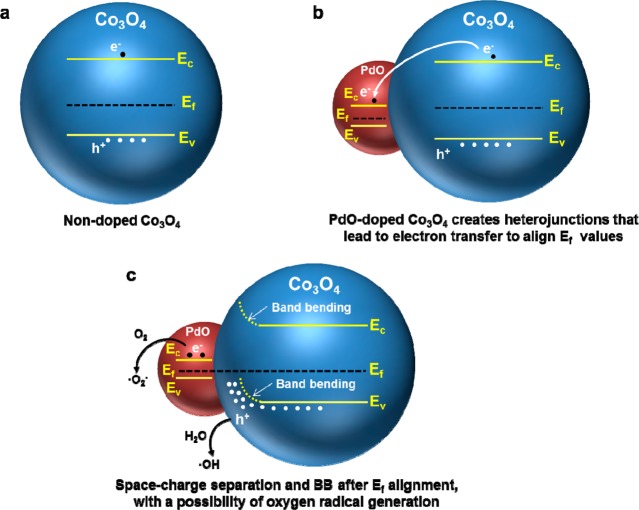
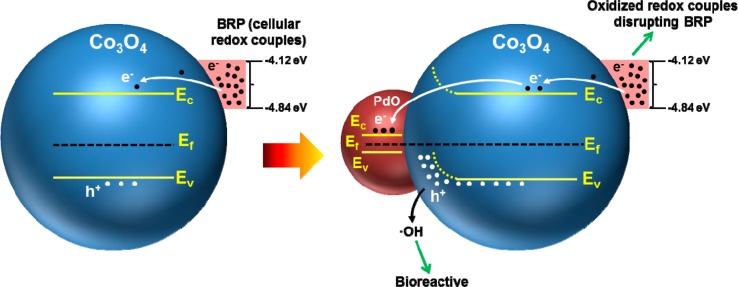
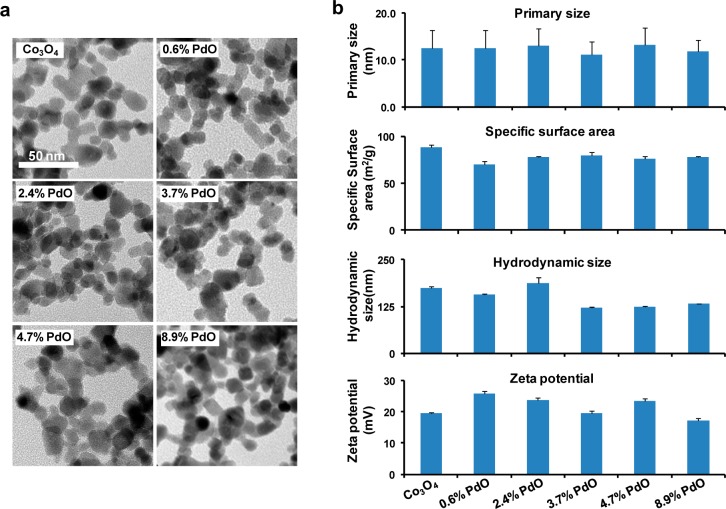
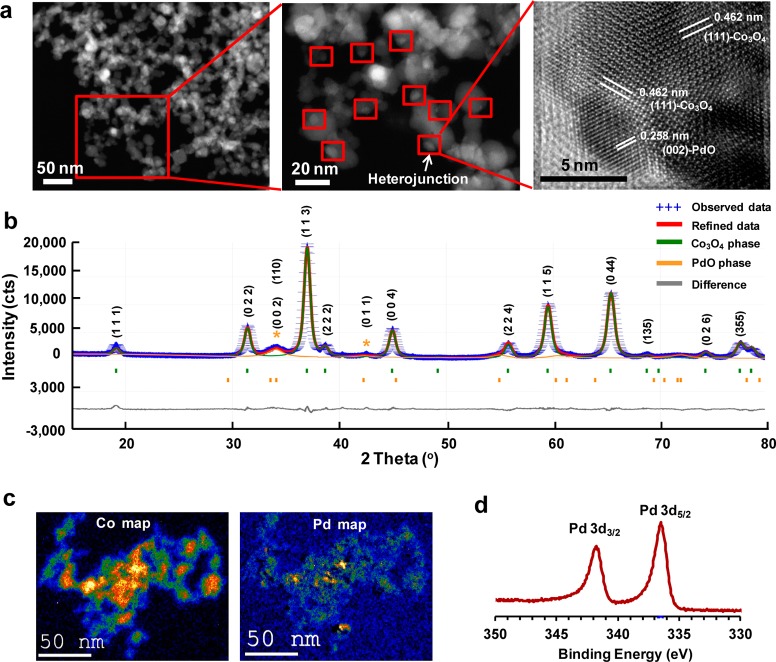
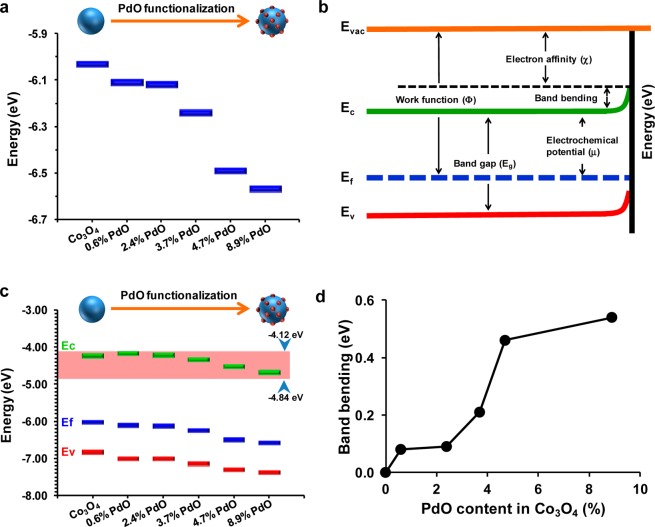
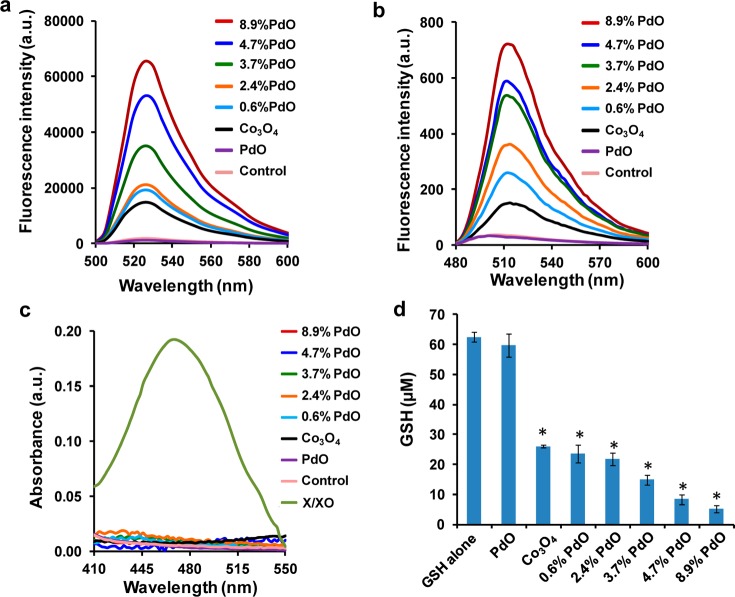
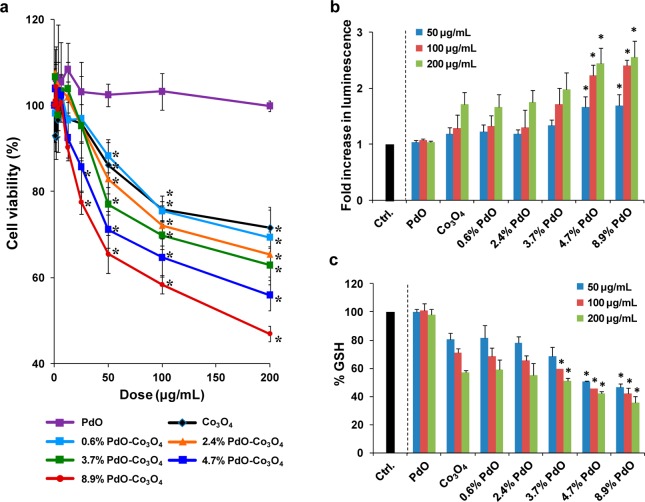
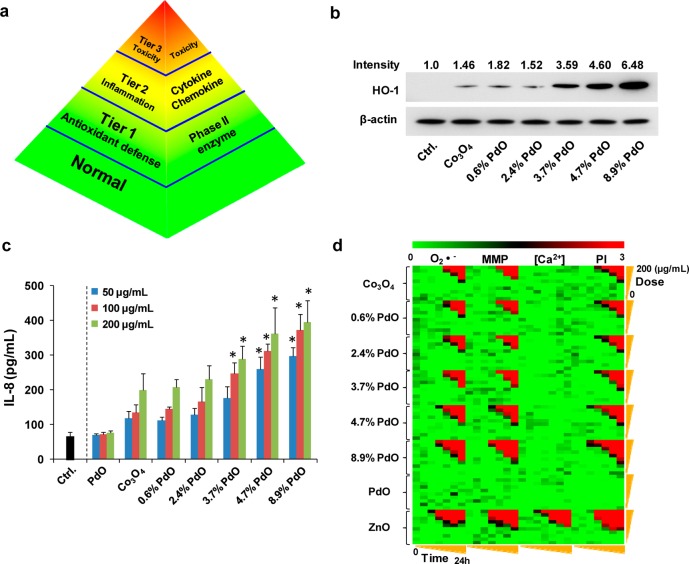
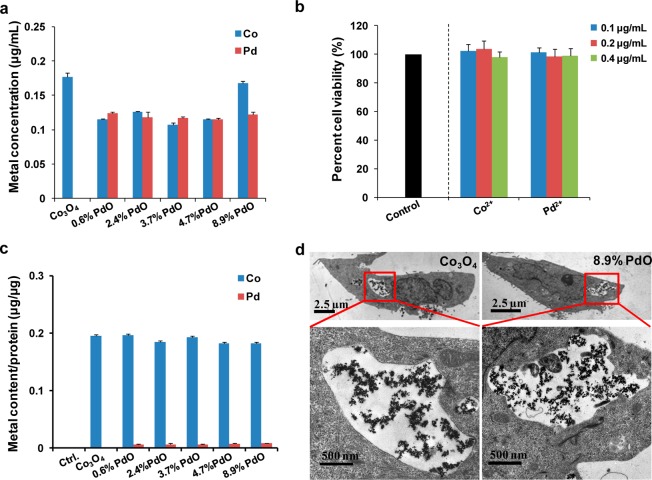
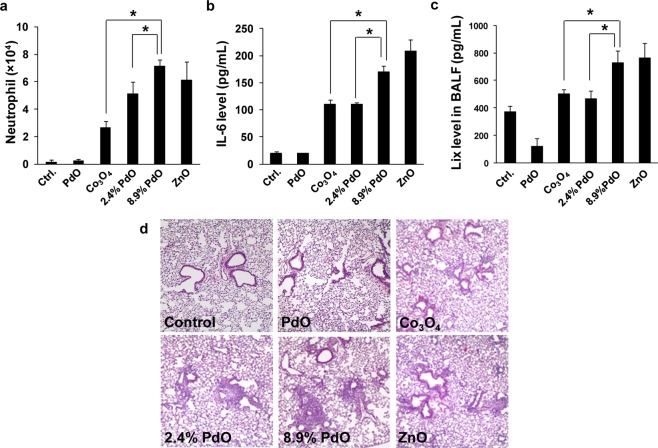
We demonstrate through PdO doping that creation of heterojunctions on Co3O4 nanoparticles can quantitatively adjust band-gap and Fermi energy levels to study the impact of metal oxide nanoparticle semiconductor properties on cellular redox homeostasis and hazard potential. Flame spray pyrolysis (FSP) was used to synthesize a nanoparticle library in which the gradual increase in the PdO content (0-8.9%) allowed electron transfer from Co3O4 to PdO to align Fermi energy levels across the heterojunctions. This alignment was accompanied by free hole accumulation at the Co3O4 interface and production of hydroxyl radicals. Interestingly, there was no concomitant superoxide generation, which could reflect the hole dominance of a p-type semiconductor. Although the electron flux across the heterojunctions induced upward band bending, the E(c) levels of the doped particles showed energy overlap with the biological redox potential (BRP). This allows electron capture from the redox couples that maintain the BRP from -4.12 to -4.84 eV, causing disruption of cellular redox homeostasis and induction of oxidative stress. PdO/Co3O4 nanoparticles showed significant increases in cytotoxicity at 25, 50, 100, and 200 μg/mL, which was enhanced incrementally by PdO doping in BEAS-2B and RAW 264.7 cells. Oxidative stress presented as a tiered cellular response involving superoxide generation, glutathione depletion, cytokine production, and cytotoxicity in epithelial and macrophage cell lines. A progressive series of acute pro-inflammatory effects could also be seen in the lungs of animals exposed to incremental PdO-doped particles. All considered, generation of a combinatorial PdO/Co3O4 nanoparticle library with incremental heterojunction density allowed us to demonstrate the integrated role of E(v), E(c), and E(f) levels in the generation of oxidant injury and inflammation by the p-type semiconductor, Co3O4.
我们通过PdO掺杂证明,在Co3O4纳米颗粒上形成异质结可以定量调节带隙和费米能级,以研究金属氧化物纳米颗粒半导体特性对细胞氧化还原稳态和潜在危害的影响。采用火焰喷雾热解(FSP)合成了一个纳米颗粒库,其中PdO含量(0-8.9%)逐渐增加,使得电子从Co3O4转移到PdO,从而使异质结间的费米能级对齐。这种对齐伴随着Co3O4界面处自由空穴的积累和羟基自由基的产生。有趣的是,并没有伴随超氧化物的生成,这可能反映了p型半导体的空穴主导性。尽管穿过异质结的电子通量导致能带向上弯曲,但掺杂颗粒的E(c)能级与生物氧化还原电位(BRP)存在能量重叠。这使得能够从维持BRP在-4.12至-4.84 eV的氧化还原对中捕获电子,从而破坏细胞氧化还原稳态并诱导氧化应激。PdO/Co3O4纳米颗粒在25、50、100和200 μg/mL时细胞毒性显著增加,在BEAS-2B和RAW 264.7细胞中,PdO掺杂使其细胞毒性逐渐增强。氧化应激表现为一种分层的细胞反应,涉及超氧化物生成、谷胱甘肽消耗、细胞因子产生以及上皮和巨噬细胞系中的细胞毒性。在暴露于逐渐增加的PdO掺杂颗粒的动物肺部,也可以看到一系列渐进的急性促炎效应。综合考虑,生成具有递增异质结密度的组合式PdO/Co3O4纳米颗粒库,使我们能够证明E(v)、E(c)和E(f)能级在p型半导体Co3O4产生氧化损伤和炎症中的综合作用。