Fancello Laura, Monteil Sonia, Popgeorgiev Nikolay, Rivet Romain, Gouriet Frédérique, Fournier Pierre-Edouard, Raoult Didier, Desnues Christelle
Unité de recherche sur les maladies infectieuses et tropicales émergentes, URMITE CNRS-IRD UMR 7278, Aix-Marseille Université, Marseille, France.
PLoS One. 2014 Apr 1;9(4):e93367. doi: 10.1371/journal.pone.0093367. eCollection 2014.
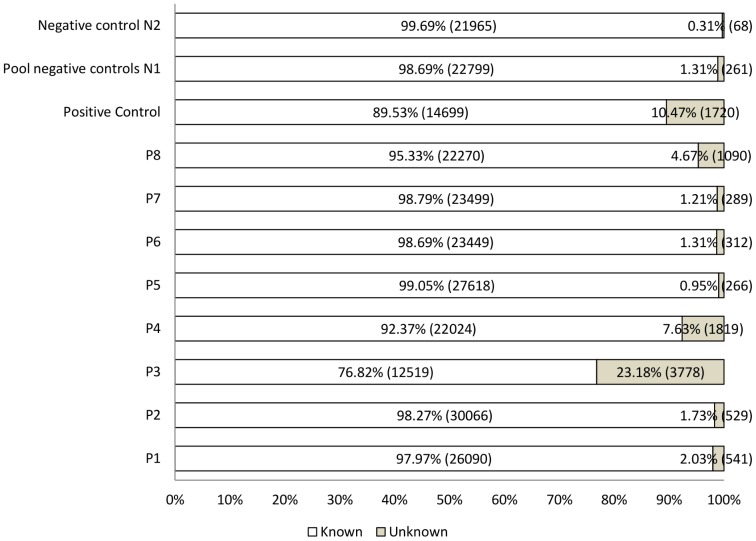
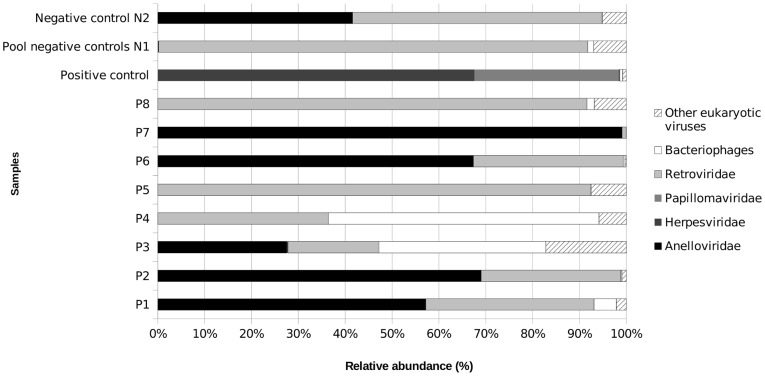
Pericarditis is a common human disease defined by inflammation of the pericardium. Currently, 40% to 85% of pericarditis cases have no identified etiology. Most of these cases are thought to be caused by an infection of undetected, unsuspected or unknown viruses. In this work, we used a culture- and sequence-independent approach to investigate the viral DNA communities present in human pericardial fluids. Seven viral metagenomes were generated from the pericardial fluid of patients affected by pericarditis of unknown etiology and one metagenome was generated from the pericardial fluid of a sudden infant death case. As a positive control we generated one metagenome from the pericardial fluid of a patient affected by pericarditis caused by herpesvirus type 3. Furthermore, we used as negative controls a total of 6 pericardial fluids from 6 different individuals affected by pericarditis of non-infectious origin: 5 of them were sequenced as a unique pool and the remaining one was sequenced separately. The results showed a significant presence of torque teno viruses especially in one patient, while herpesviruses and papillomaviruses were present in the positive control. Co-infections by different genotypes of the same viral type (torque teno viruses) or different viruses (herpesviruses and papillomaviruses) were observed. Sequences related to bacteriophages infecting Staphylococcus, Enterobacteria, Streptococcus, Burkholderia and Pseudomonas were also detected in three patients. This study detected torque teno viruses and papillomaviruses, for the first time, in human pericardial fluids.
心包炎是一种常见的人类疾病,定义为心包的炎症。目前,40%至85%的心包炎病例病因不明。这些病例大多被认为是由未检测到、未怀疑或未知的病毒感染引起的。在这项研究中,我们采用了一种不依赖培养和测序的方法来研究人类心包液中存在的病毒DNA群落。我们从未知病因的心包炎患者的心包液中生成了7个病毒宏基因组,并从一例婴儿猝死病例的心包液中生成了1个宏基因组。作为阳性对照,我们从一名由3型疱疹病毒引起的心包炎患者的心包液中生成了1个宏基因组。此外,我们将6名非感染性病因心包炎患者的6份心包液作为阴性对照:其中5份作为一个单独的样本进行测序,其余1份单独测序。结果显示,尤其在一名患者的心包液中存在大量的细小病毒,而阳性对照中存在疱疹病毒和乳头瘤病毒。我们观察到同一病毒类型(细小病毒)的不同基因型或不同病毒(疱疹病毒和乳头瘤病毒)之间的共感染。在三名患者的心包液中还检测到了与感染葡萄球菌、肠杆菌、链球菌、伯克霍尔德菌和假单胞菌的噬菌体相关的序列。这项研究首次在人类心包液中检测到了细小病毒和乳头瘤病毒。