Willis Andrew, Rivers Peter, Gray Laura J, Davies Melanie, Khunti Kamlesh
Diabetes Research Unit, University of Leicester, Leicester, United Kingdom.
DeMontford University, Leicester, United Kingdom.
PLoS One. 2014 Apr 1;9(4):e91157. doi: 10.1371/journal.pone.0091157. eCollection 2014.
Risk factors for cardiovascular disease including diabetes have seen a large rise in prevalence in recent years. This has prompted interest in prevention through the identifying individuals at risk of both diabetes and cardiovascular disease and has seen increased investment in screening interventions taking place in primary care. Community pharmacies have become increasingly involved in the provision of such interventions and this systematic review and meta-analysis aims to gather and analyse the existing literature assessing community pharmacy based screening for risk factors for diabetes and those with a high cardiovascular disease risk.
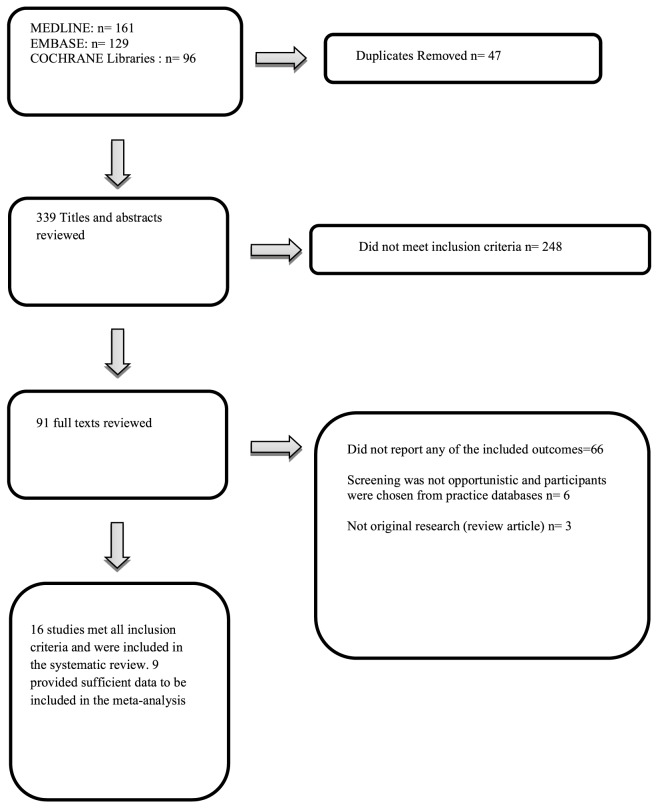
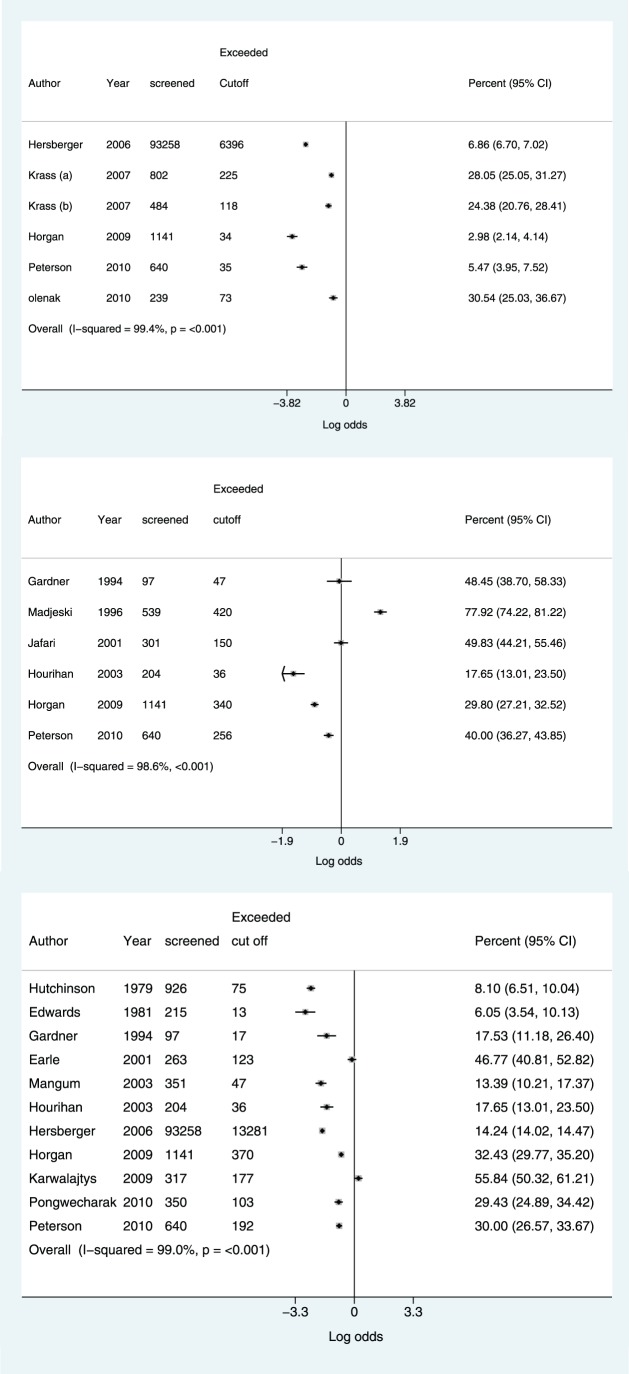
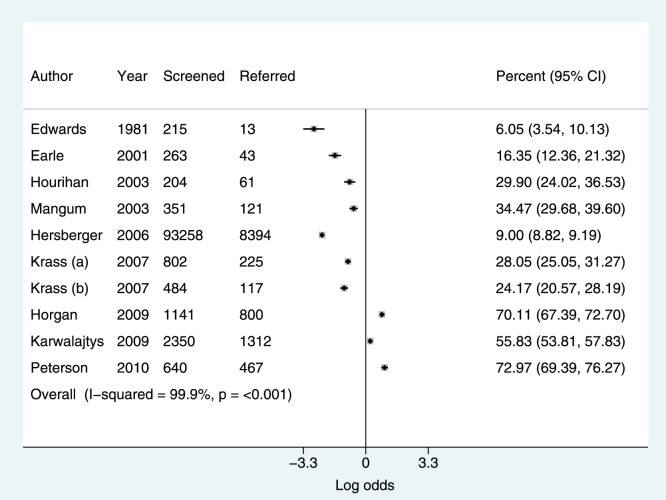
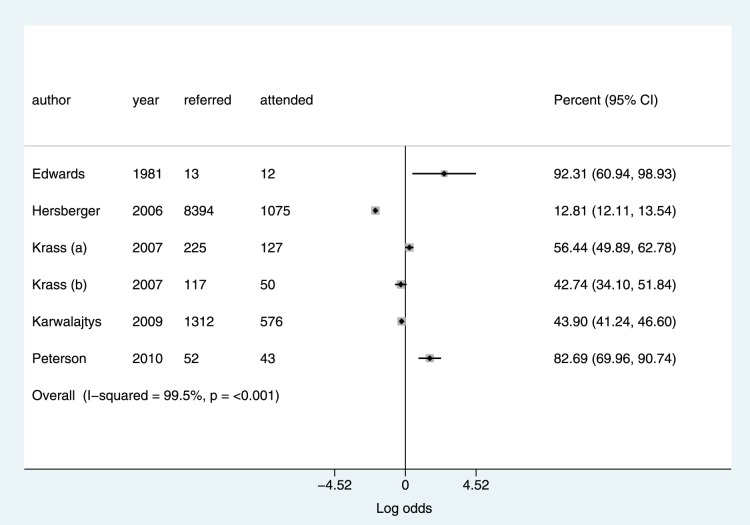
We conducted systematic searches of electronic databases using MeSH and free text terms from 1950 to March 2012. For our analysis two outcomes were assessed. They were the percentage of those screened who were referred for further assessment by primary care and the uptake of this referral.
Sixteen studies fulfilled our inclusion criteria comprising 108,414 participants screened. There was significant heterogeneity for all included outcomes. Consequently we have not presented summary statistics and present forest plots with I2 and p values to describe heterogeneity. We found that all included studies suffered from high rates of attrition between pharmacy screening and follow up. We have also identified a strong trend towards higher rates for referral in more recent studies.
Our results show that pharmacies are feasible sites for screening for diabetes and those at risk of cardiovascular disease. A significant number of previously unknown cases of cardiovascular disease risk factors such as hypertension, hypercholesterolemia and diabetes are identified, however a significant number of referred participants at high risk do not attend their practitioner for follow up. Research priorities should include methods of increasing uptake to follow up testing and early intervention, to maximise the efficacy of screening interventions based in community pharmacies.
近年来,包括糖尿病在内的心血管疾病危险因素的患病率大幅上升。这引发了人们对通过识别糖尿病和心血管疾病高危个体进行预防的兴趣,并增加了对初级保健中筛查干预措施的投资。社区药房越来越多地参与到此类干预措施的提供中,本系统评价和荟萃分析旨在收集和分析现有文献,评估基于社区药房对糖尿病危险因素和心血管疾病高危人群的筛查。
我们使用医学主题词(MeSH)和自由文本词对1950年至2012年3月的电子数据库进行了系统检索。我们的分析评估了两个结果。它们是被筛查者中被初级保健机构转介进行进一步评估的百分比以及这种转介的接受情况。
16项研究符合我们的纳入标准,共纳入108,414名接受筛查的参与者。所有纳入结果均存在显著异质性。因此,我们未呈现汇总统计数据,而是给出了带有I²和p值的森林图来描述异质性。我们发现,所有纳入研究在药房筛查和随访之间的失访率都很高。我们还发现,在最近的研究中,转介率有上升的强烈趋势。
我们的结果表明,药房是筛查糖尿病和心血管疾病高危人群的可行场所。大量此前未知的心血管疾病危险因素病例,如高血压、高胆固醇血症和糖尿病被识别出来,然而,大量被转介的高危参与者并未前往医生处进行随访。研究重点应包括提高随访检测和早期干预的接受率的方法,以最大限度地提高基于社区药房的筛查干预措施的效果。