Nascimento Thiago D, DosSantos Marcos F, Danciu Theodora, DeBoer Misty, van Holsbeeck Hendrik, Lucas Sarah R, Aiello Christine, Khatib Leen, Bender MaryCatherine A, Zubieta Jon-Kar, DaSilva Alexandre F
Headache and Orofacial Pain Effort (HOPE), Biologic and Materials Sciences Department, School of Dentistry, University of Michigan, Ann Arbor, MI, United States.
J Med Internet Res. 2014 Apr 3;16(4):e96. doi: 10.2196/jmir.3265.
Although population studies have greatly improved our understanding of migraine, they have relied on retrospective self-reports that are subject to memory error and experimenter-induced bias. Furthermore, these studies also lack specifics from the actual time that attacks were occurring, and how patients express and share their ongoing suffering.
As technology and language constantly evolve, so does the way we share our suffering. We sought to evaluate the infodemiology of self-reported migraine headache suffering on Twitter.
Trained observers in an academic setting categorized the meaning of every single "migraine" tweet posted during seven consecutive days. The main outcome measures were prevalence, life-style impact, linguistic, and timeline of actual self-reported migraine headache suffering on Twitter.
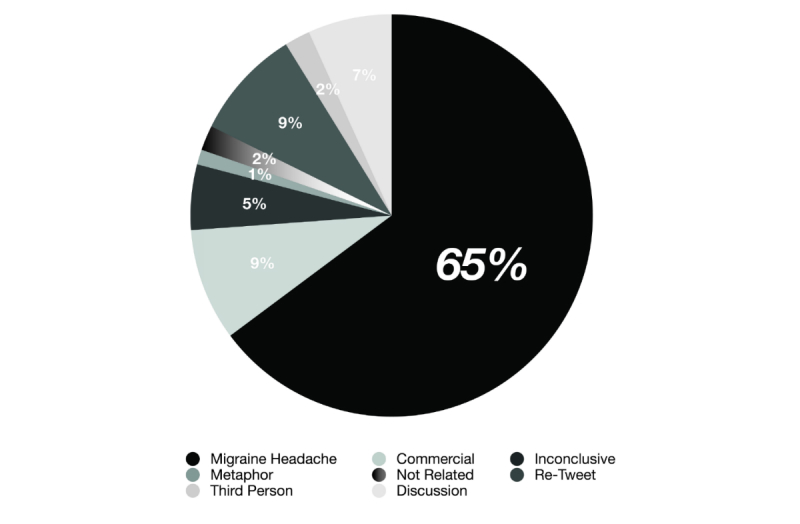
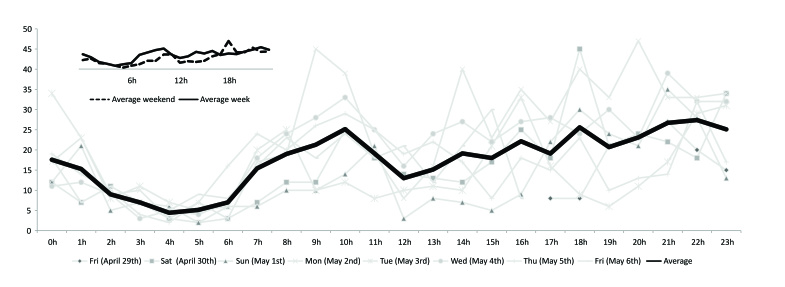
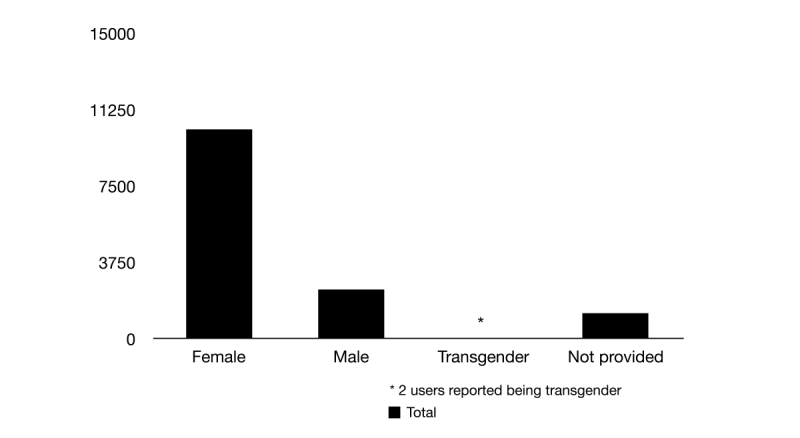
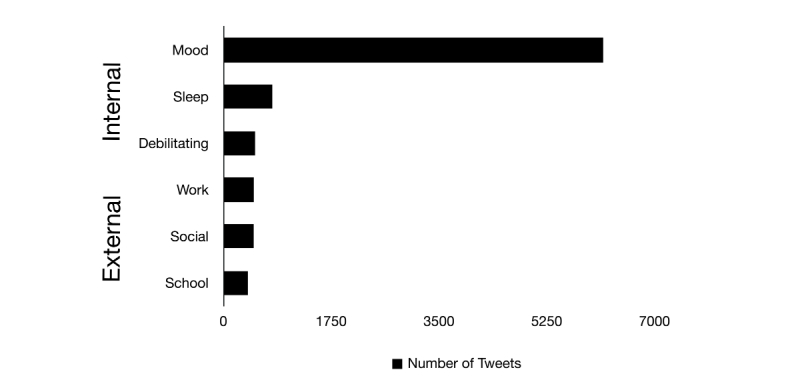
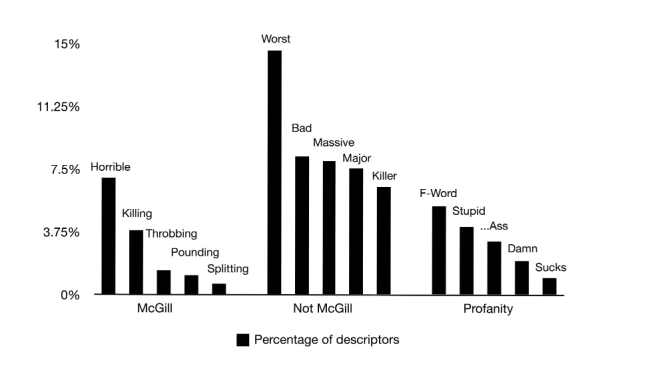
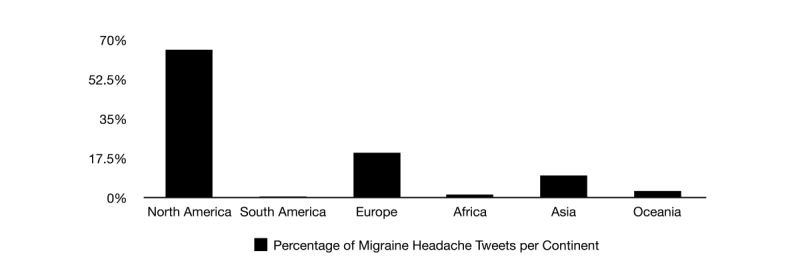
From a total of 21,741 migraine tweets collected, only 64.52% (14,028/21,741 collected tweets) were from users reporting their migraine headache attacks in real-time. The remainder of the posts were commercial, re-tweets, general discussion or third person's migraine, and metaphor. The gender distribution available for the actual migraine posts was 73.47% female (10,306/14,028), 17.40% males (2441/14,028), and 0.01% transgendered (2/14,028). The personal impact of migraine headache was immediate on mood (43.91%, 6159/14,028), productivity at work (3.46%, 486/14,028), social life (3.45%, 484/14,028), and school (2.78%, 390/14,028). The most common migraine descriptor was "Worst" (14.59%, 201/1378) and profanity, the "F-word" (5.3%, 73/1378). The majority of postings occurred in the United States (58.28%, 3413/5856), peaking on weekdays at 10:00h and then gradually again at 22:00h; the weekend had a later morning peak.
Twitter proved to be a powerful source of knowledge for migraine research. The data in this study overlap large-scale epidemiological studies, avoiding memory bias and experimenter-induced error. Furthermore, linguistics of ongoing migraine reports on social media proved to be highly heterogeneous and colloquial in our study, suggesting that current pain questionnaires should undergo constant reformulations to keep up with modernization in the expression of pain suffering in our society. In summary, this study reveals the modern characteristics and broad impact of migraine headache suffering on patients' lives as it is spontaneously shared via social media.
尽管人群研究极大地增进了我们对偏头痛的理解,但这些研究依赖回顾性自我报告,而此类报告容易出现记忆错误和实验者诱导偏差。此外,这些研究还缺乏发作实际发生时的具体细节,以及患者如何表达和分享他们持续的痛苦。
随着技术和语言不断发展,我们分享痛苦的方式也在变化。我们试图评估推特上自我报告的偏头痛痛苦的信息流行病学。
在学术环境中,训练有素的观察者对连续七天内发布的每一条“偏头痛”推文的含义进行分类。主要结局指标是推特上自我报告的偏头痛痛苦的患病率、生活方式影响、语言使用情况和时间线。
在总共收集的21741条偏头痛推文中,只有64.52%(14028/21741条收集到的推文)来自实时报告偏头痛发作的用户。其余帖子为商业内容、转发、一般讨论、第三人称的偏头痛或隐喻。实际偏头痛帖子的性别分布为女性73.47%(10306/14028)、男性17.40%(2441/14028)、跨性别者0.01%(2/14028)。偏头痛对个人的影响立即体现在情绪上(43.91%,6159/14028)、工作效率上(3.46%,486/14028)、社交生活上(3.45%,484/14028)和学业上(2.78%,390/14028)。最常见的偏头痛描述词是“最严重的”(14.59%,201/1378)以及亵渎性词汇“他妈的”(5.3%,73/1378)。大多数帖子发布于美国(58.28%,3413/5856),工作日的高峰时间为10:00,之后在22:00再次逐渐出现高峰;周末的高峰出现在上午稍晚时候。
推特被证明是偏头痛研究的强大知识来源。本研究中的数据与大规模流行病学研究结果相符,避免了记忆偏差和实验者诱导误差。此外,在我们的研究中,社交媒体上正在发作的偏头痛报告的语言使用情况高度异质且口语化,这表明当前的疼痛问卷应不断重新制定,以跟上我们社会中疼痛痛苦表达的现代化进程。总之,本研究揭示了通过社交媒体自发分享的偏头痛痛苦对患者生活的现代特征和广泛影响。