Lefevre Carmen Emilia, Wilson Vanessa A D, Morton F Blake, Brosnan Sarah F, Paukner Annika, Bates Timothy C
Centre for Decision Research, Leeds University Business School, Leeds, United Kingdom.
Department of Psychology, University of Edinburgh, Edinburgh, United Kingdom; Scottish Primate Research Group, Edinburgh, United Kingdom.
PLoS One. 2014 Apr 4;9(4):e93369. doi: 10.1371/journal.pone.0093369. eCollection 2014.
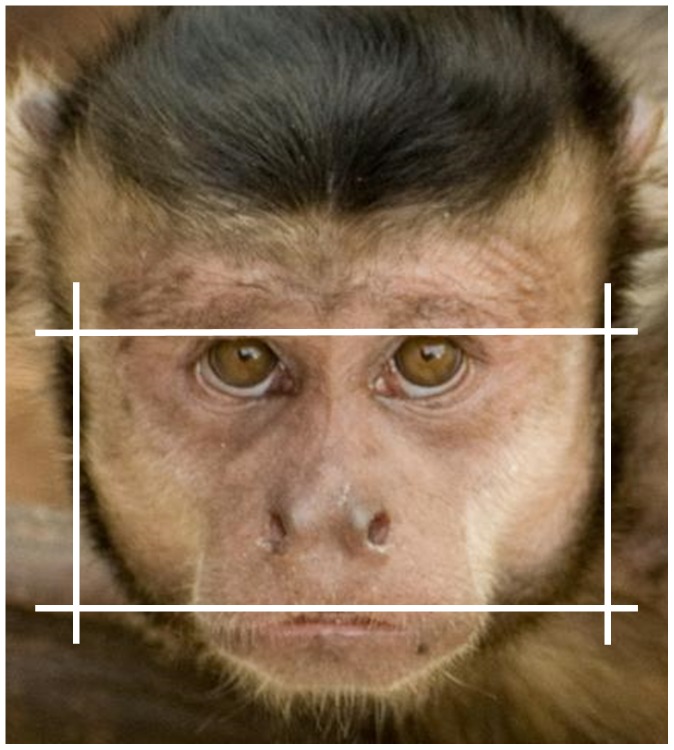
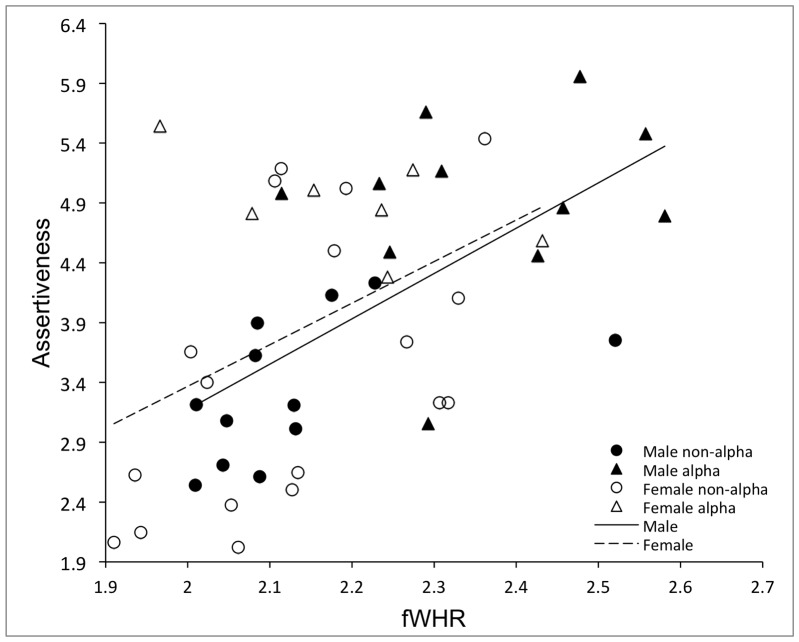
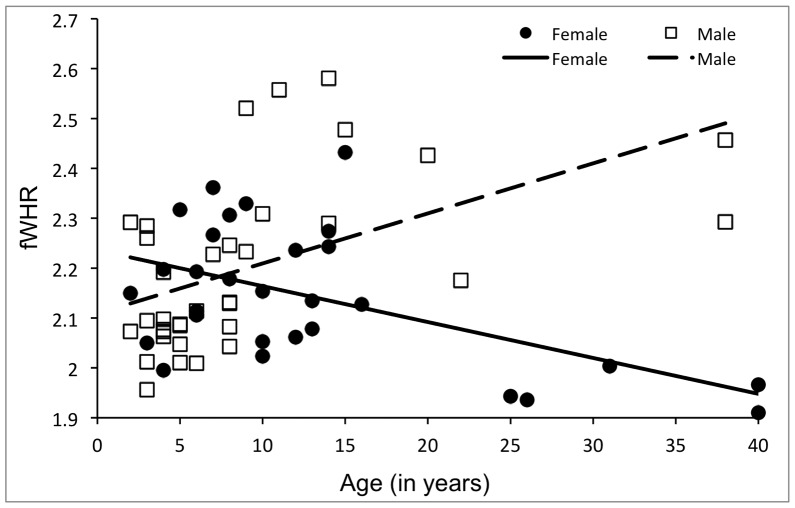
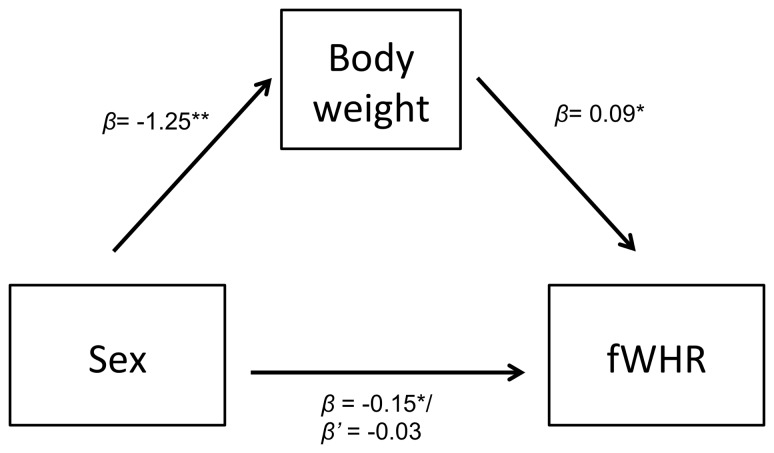
Social dominance hierarchies play a pivotal role in shaping the behaviour of many species, and sex differences within these hierarchies often exist. To date, however, few physical markers of dominance have been identified. Such markers would be valuable in terms of understanding the etiology of dominant behaviour and changes in social hierarchies over time. Animals may also use such traits to evaluate the potential dominance of others relative to themselves (i.e. a physical "cue"). Facial width-to-height ratio (fWHR), for example, has been suggested as a cue to dominance in humans, with links to both dominant behaviour and the perception of dominance in other individuals. Whether this association is present in non-human animals is currently not known. Therefore, here we examine within-species links between fWHR and dominant behaviour in 64 brown capuchin monkeys (Sapajus spp.) aged between 2 and 40 years. fWHR was positively associated with alpha status and with a dimensional rating of assertive personality in both males and females. Moreover, fWHR showed significant sexual dimorphism in adults but not juveniles, suggesting a developmental change may occur during puberty. In a sub-sample, sex differences were mediated by weight, suggesting fWHR dimorphism does not exceed what would be expected by differences in body weight. This is the first report of an association between face shape and behaviour in a non-human species. Results are discussed in terms of the role that face-behaviour associations might play within capuchin societies, and the possible selective forces that might have led to the evolution of fWHR-dominance associations in humans.
社会等级制度在塑造许多物种的行为方面起着关键作用,并且这些等级制度中往往存在性别差异。然而,迄今为止,几乎没有发现支配地位的生理标志物。就理解支配行为的病因以及社会等级制度随时间的变化而言,这样的标志物将具有重要价值。动物也可能利用这些特征来评估其他个体相对于自身的潜在支配地位(即一种生理“线索”)。例如,面部宽高比(fWHR)已被认为是人类支配地位的一种线索,它与支配行为以及对其他个体支配地位的认知都有关联。目前尚不清楚这种关联在非人类动物中是否存在。因此,在这里我们研究了64只年龄在2至40岁之间的棕色卷尾猴(僧面猴属)中fWHR与支配行为之间的种内联系。fWHR与雄性和雌性的首领地位以及自信人格的维度评分呈正相关。此外,fWHR在成年个体中表现出显著的两性差异,而在幼年个体中则没有,这表明在青春期可能会发生发育变化。在一个子样本中,性别差异由体重介导,这表明fWHR的两性差异不超过体重差异所预期的范围。这是关于非人类物种面部形状与行为之间关联的首次报告。我们从面部 - 行为关联在卷尾猴社会中可能发挥的作用,以及可能导致人类fWHR - 支配关联进化的潜在选择力量方面讨论了研究结果。