School of Pharmacy, China Medical University, Taichung, Taiwan. ; Contributed equally.
Department of Obstetrics and Gynecology, China Medical University Hospital, Taichung, Taiwan. ; Contributed equally.
J Tradit Complement Med. 2013 Jan;3(1):41-7. doi: 10.4103/2225-4110.106545.
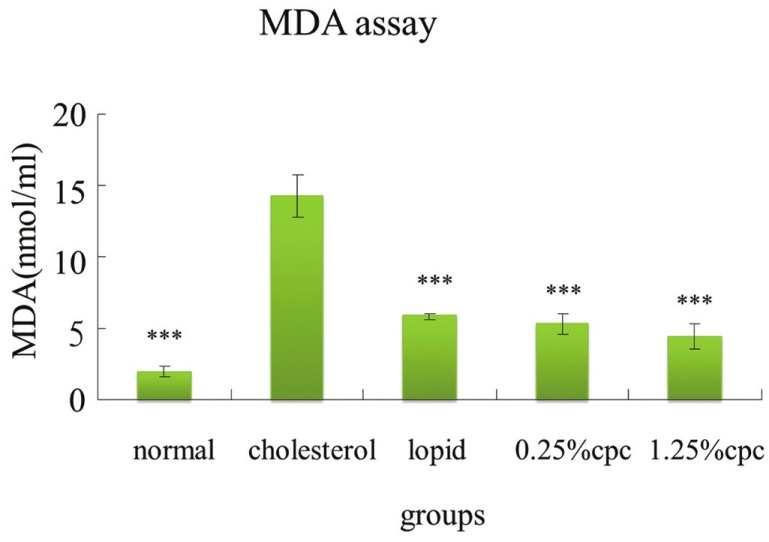
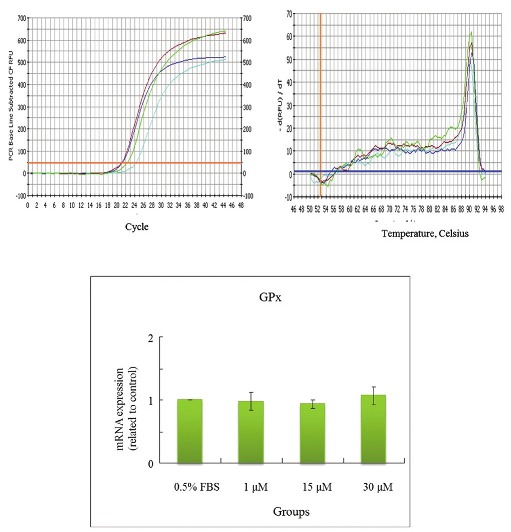
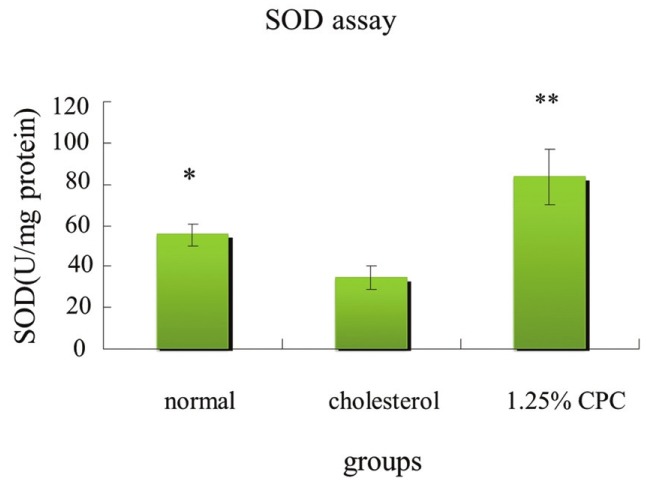
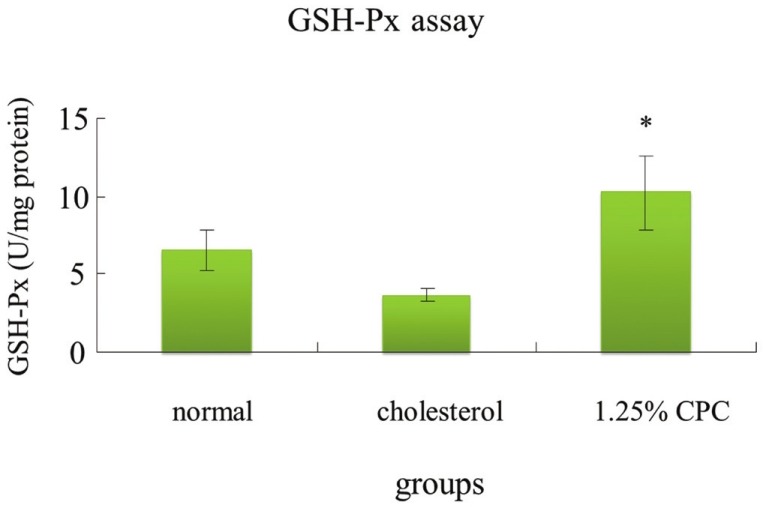
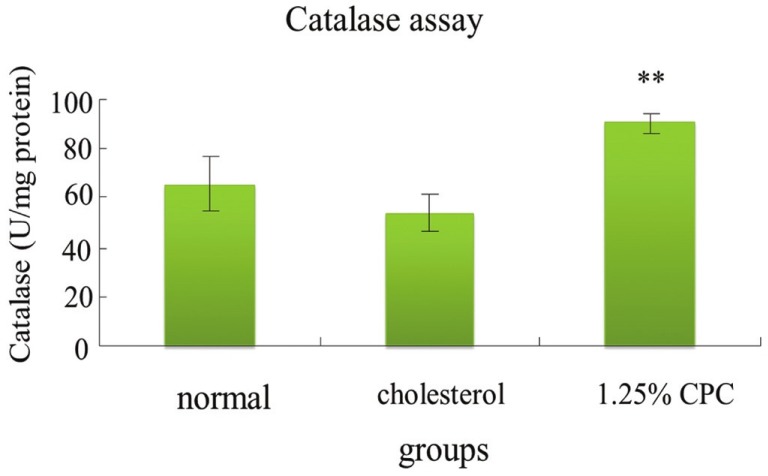
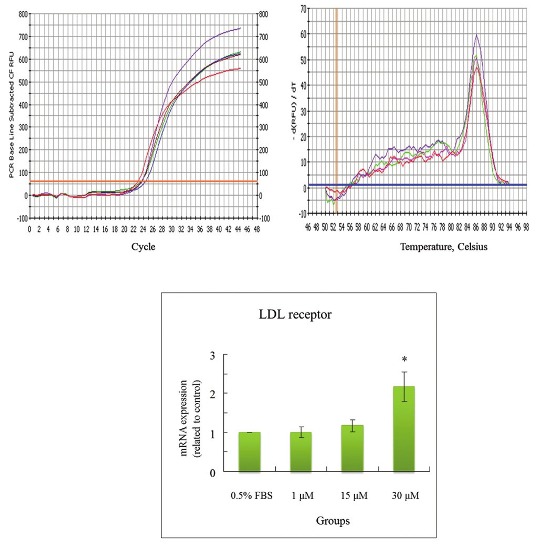
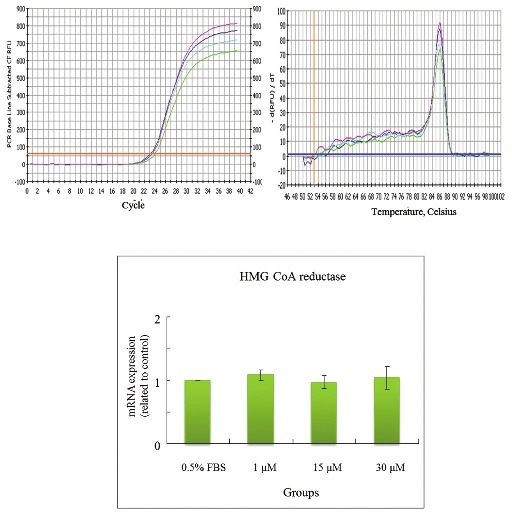
Hyperlipidemia and oxidation play major roles upon cardiovascular diseases (CVDs). C-phycocyanin (CPC), the major component in blue-green algae, possesses antiinflammatory and radical scavenging properties. Herein we aimed to investigate the effect of CPC upon lipid metabolism and its antioxidant effects. Golden Syrian hamsters were randomly assigned to five groups: (1) control; (2) 0.2% cholesterol; (3) 0.2% cholesterol+ 1% lopid; (4) 0.2% cholesterol+ 0.25% CPC; and (5) 0.2% cholesterol+ 1.25% CPC. All animals were sacrificed after 8-week feeding. Serum cholesterol, triglyceride (TG), low-density lipoprotein (LDL), glutamate-oxaloacetate transaminase (GOT), and glutamate-pyruvate transaminase (GPT) were examined. The diene conjugation in the Cu(2+)-mediated oxidation of LDL was measured. The protein levels of several antioxidative enzymes including catalase (CAT), superoxide dismutases (SOD), and glutathione peroxidase (GPx) of liver were assayed. HepG2 cells were cultured in medium containing various concentrations of CPC (0, 1, 15, and 30 μM). The mRNA concentrations of LDL receptor, 3-hydroxy-3-methylglutaryl-coenzyme A (HMG CoA) reductase, SOD-1 and GPx of HepG2 cells in each group were analyzed. CPC was effective in lowering serum cholesterol, total cholesterol (TC), TG, LDL, GOT, and GPT. CPC was found to decrease the malondialdehyde (MDA) equivalents and delay the diene conjugation in the Cu(2+)-mediated oxidation of LDL. CPC increase the enzyme expressions of CAT, SOD, and GPx. CPC concentrations were positively correlated with the mRNA level of LDL receptor while the mRNA levels of HMG CoA reductase, SOD-1, and GPx in HepG2 cells were not affected. The lipid-lowering and antioxidation effects of CPC suggest its roles in prevention of CVD and atherosclerotic formation.
高脂血症和氧化在心血管疾病(CVDs)中起着重要作用。C-藻蓝蛋白(CPC)是蓝绿藻的主要成分,具有抗炎和自由基清除特性。本研究旨在探讨 CPC 对脂代谢的影响及其抗氧化作用。金黄地鼠随机分为 5 组:(1)对照组;(2)0.2%胆固醇;(3)0.2%胆固醇+1%洛匹;(4)0.2%胆固醇+0.25%CPC;(5)0.2%胆固醇+1.25%CPC。所有动物在 8 周喂养后处死。检测血清胆固醇、甘油三酯(TG)、低密度脂蛋白(LDL)、谷草转氨酶(GOT)和谷丙转氨酶(GPT)。测定 Cu(2+)介导的 LDL 氧化中二烯的共轭。测定肝内几种抗氧化酶的蛋白水平,包括过氧化氢酶(CAT)、超氧化物歧化酶(SOD)和谷胱甘肽过氧化物酶(GPx)。将 HepG2 细胞在含有不同浓度 CPC(0、1、15 和 30 μM)的培养基中培养。分析各组 HepG2 细胞 LDL 受体、3-羟-3-甲基戊二酰辅酶 A(HMG CoA)还原酶、SOD-1 和 GPx 的 mRNA 浓度。CPC 能有效降低血清胆固醇、总胆固醇(TC)、甘油三酯(TG)、LDL、GOT 和 GPT。CPC 降低丙二醛(MDA)当量,延缓 Cu(2+)介导的 LDL 氧化中二烯的共轭。CPC 增加 CAT、SOD 和 GPx 的酶表达。CPC 浓度与 LDL 受体的 mRNA 水平呈正相关,而 HepG2 细胞中 HMG CoA 还原酶、SOD-1 和 GPx 的 mRNA 水平不受影响。CPC 的降血脂和抗氧化作用提示其在预防 CVD 和动脉粥样硬化形成中的作用。