Badran Mohammad, Ayas Najib, Laher Ismail
Department of Pharmacology and Therapeutics, Faculty of Medicine, University of British Columbia, Vancouver, BC, Canada V6T 1Z3.
Divisions of Critical Care and Respiratory Medicine, Department of Medicine, Sleep Disorders Program, UBC Hospital, Division of Critical Care Medicine, Providence Health Care, University of British Columbia, Canada V6Z 1Y6.
Oxid Med Cell Longev. 2014;2014:985258. doi: 10.1155/2014/985258. Epub 2014 Mar 6.
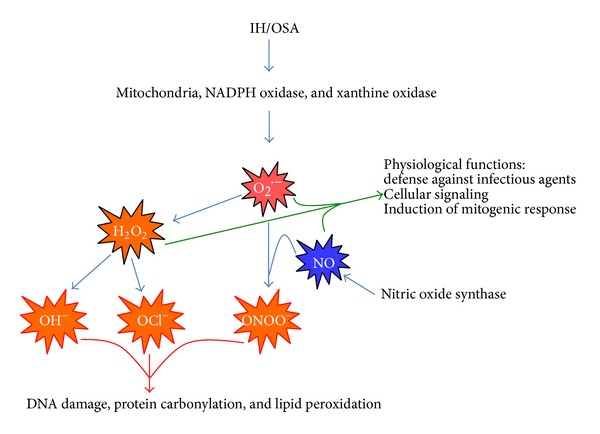
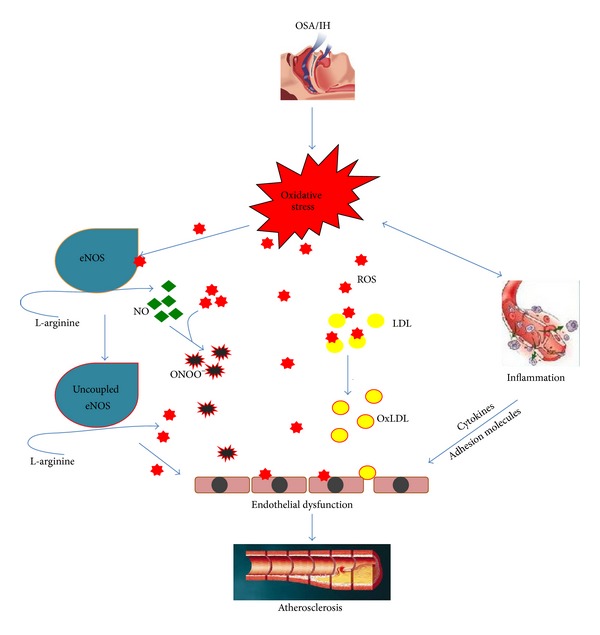
Obstructive sleep apnea (OSA) occurs in 2% of middle-aged women and 4% of middle-aged men with a higher prevalence among obese subjects. This condition is considered as an independent risk factor for cerebrovascular and cardiovascular diseases. One of the major pathophysiological characteristics of OSA is intermittent hypoxia. Hypoxia can lead to oxidative stress and overproduction of reactive oxygen species, which can lead to endothelial dysfunction, a hallmark of atherosclerosis. Many animal models, such as the rodent model of intermittent hypoxia, mimic obstructive sleep apnea in human patients and allow more in-depth investigation of biological and cellular mechanisms of this condition. This review discusses the role of oxidative stress in cardiovascular disease resulting from OSA in humans and animal models.
阻塞性睡眠呼吸暂停(OSA)在2%的中年女性和4%的中年男性中发生,在肥胖人群中的患病率更高。这种情况被认为是脑血管和心血管疾病的独立危险因素。OSA的主要病理生理特征之一是间歇性缺氧。缺氧会导致氧化应激和活性氧的过度产生,进而导致内皮功能障碍,这是动脉粥样硬化的一个标志。许多动物模型,如间歇性缺氧的啮齿动物模型,模拟人类患者的阻塞性睡眠呼吸暂停,从而能够更深入地研究这种疾病的生物学和细胞机制。本综述讨论了氧化应激在人类和动物模型中由OSA导致的心血管疾病中的作用。