Department of Internal Medicine, Hypertension and Clinical Oncology, Faculty of Medicine, Wroclaw Medical University, Borowska 213, 50-556 Wroclaw, Poland.
Int J Mol Sci. 2021 May 12;22(10):5139. doi: 10.3390/ijms22105139.
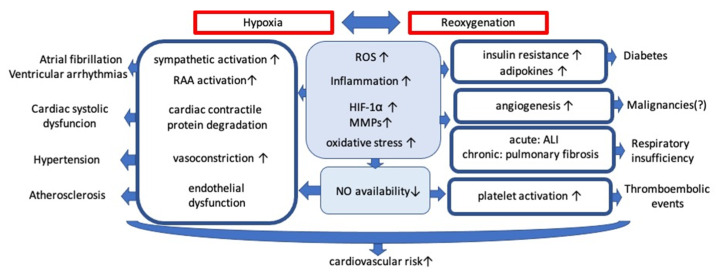
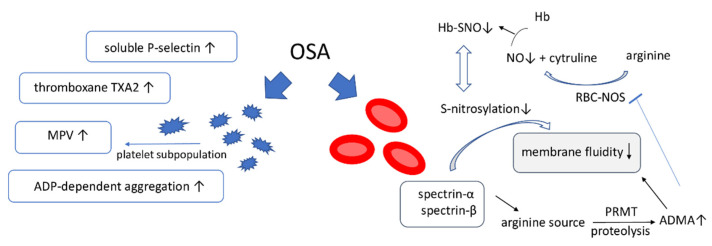
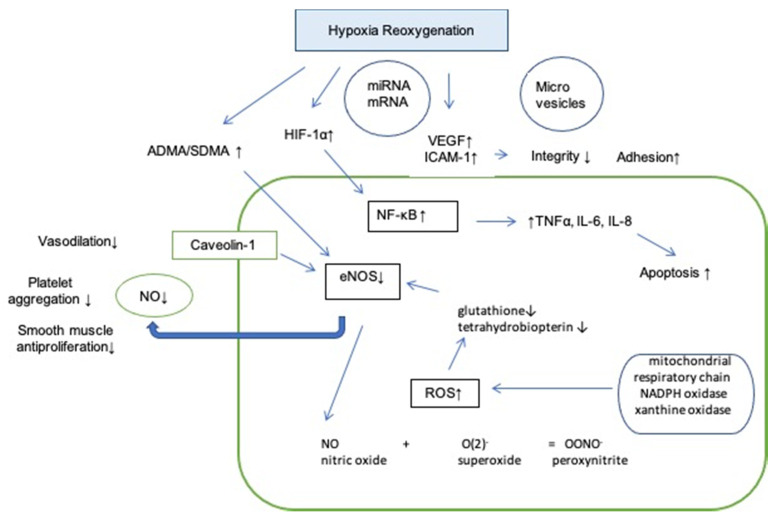
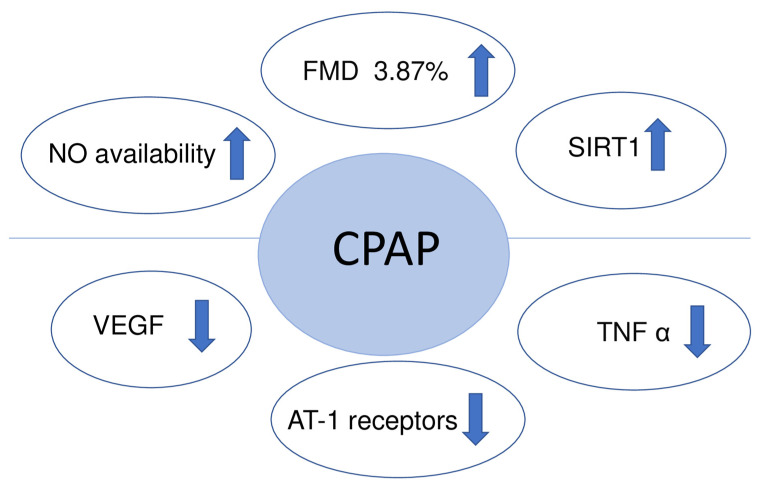
Obstructive sleep apnea (OSA) is known to be an independent cardiovascular risk factor. Among arousal from sleep, increased thoracic pressure and enhanced sympathetic activation, intermittent hypoxia is now considered as one of the most important pathophysiological mechanisms contributing to the development of endothelial dysfunction. Nevertheless, not much is known about blood components, which justifies the current review. This review focuses on molecular mechanisms triggered by sleep apnea. The recurrent periods of hypoxemia followed by reoxygenation promote reactive oxygen species (ROS) overproduction and increase inflammatory response. In this review paper we also intend to summarize the effect of treatment with continuous positive airway pressure (CPAP) on changes in the profile of the endothelial function and its subsequent potential clinical advantage in lowering cardiovascular risk in other comorbidities such as diabetes, atherosclerosis, hypertension, atrial fibrillation. Moreover, this paper is aimed at explaining how the presence of OSA may affect platelet function and exert effects on rheological activity of erythrocytes, which could also be the key to explaining an increased risk of stroke.
阻塞性睡眠呼吸暂停(OSA)是一种独立的心血管危险因素。在睡眠中觉醒时,胸内压增加和交感神经激活增强,间歇性低氧血症现在被认为是导致内皮功能障碍发展的最重要的病理生理机制之一。然而,关于血液成分的了解并不多,这正是当前综述的原因。本综述重点介绍了睡眠呼吸暂停引发的分子机制。反复的低氧血症后再氧化会促进活性氧(ROS)的过度产生和炎症反应的增强。在这篇综述中,我们还旨在总结持续气道正压通气(CPAP)治疗对内皮功能特征变化的影响,以及其随后在降低糖尿病、动脉粥样硬化、高血压、心房颤动等其他合并症的心血管风险方面的潜在临床优势。此外,本文旨在解释 OSA 的存在如何影响血小板功能,并对红细胞的流变学活性产生影响,这也可能是解释中风风险增加的关键。