Yoshimura Satoshi, Isobe Noriko, Matsushita Takuya, Masaki Katsuhisa, Sato Shinya, Kawano Yuji, Ochi Hirofumi, Kira Jun-Ichi
Department of Neurology, Neurological Institute, Graduate School of Medical Sciences, Kyushu University, Fukuoka, Japan.
Department of Molecular and Genetic Medicine, Ehime University Graduate School of Medicine, Ehime, Japan.
PLoS One. 2014 Apr 15;9(4):e95367. doi: 10.1371/journal.pone.0095367. eCollection 2014.
Abnormal intrathecal synthesis of IgG, reflected by cerebrospinal fluid (CSF) oligoclonal IgG bands (OBs) and increased IgG index, is much less frequently observed in Japanese multiple sclerosis (MS) cohorts compared with Western cohorts. We aimed to clarify whether genetic and common infectious backgrounds influence CSF IgG abnormality in Japanese MS patients.
We analyzed HLA-DRB1 alleles, and IgG antibodies against Chlamydia pneumoniae, Helicobacter pylori, Epstein-Barr virus nuclear antigen (EBNA), and varicella zoster virus (VZV) in 94 patients with MS and 367 unrelated healthy controls (HCs). We defined CSF IgG abnormality as the presence of CSF OBs and/or increased IgG index (>0.658).
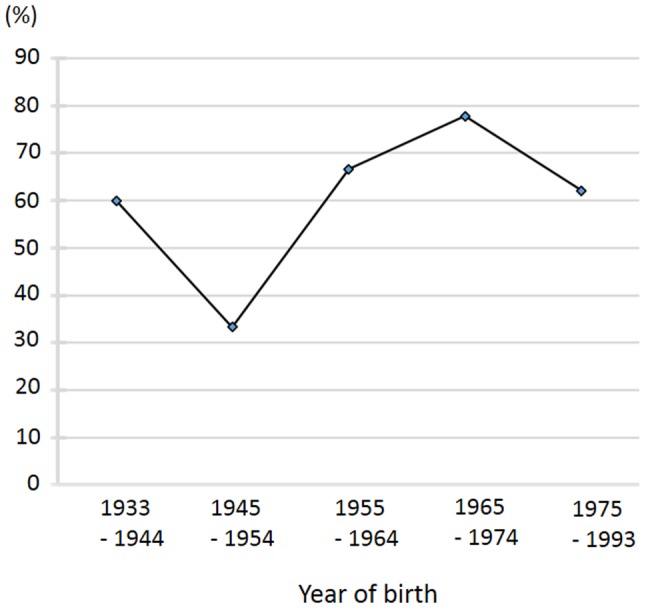
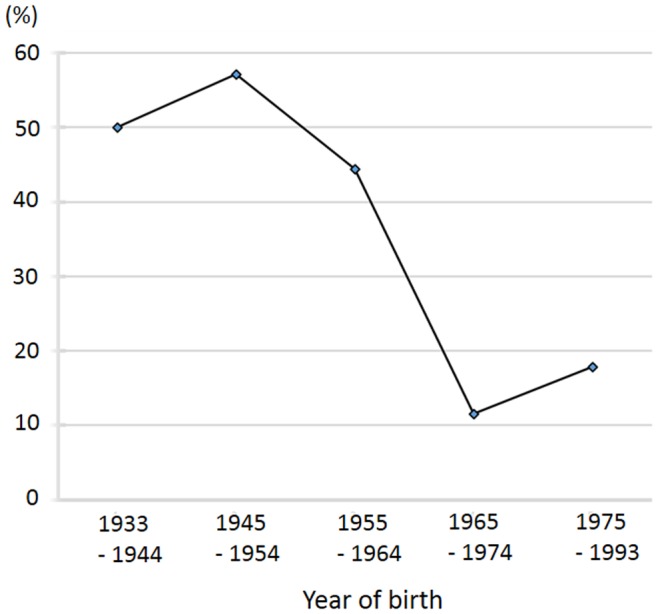
CSF IgG abnormality was found in 59 of 94 (62.8%) MS patients. CSF IgG abnormality-positive patients had a significantly higher frequency of brain MRI lesions meeting the Barkhof criteria compared with abnormality-negative patients. Compared with HCs, CSF IgG abnormality-positive MS patients showed a significantly higher frequency of DRB1 1501, whereas CSF IgG abnormality-negative patients had a significantly higher frequency of DRB1 0405. CSF IgG abnormality-positive MS patients had a significantly higher frequency of anti-C. pneumoniae IgG antibodies compared with CSF IgG abnormality-negative MS patients, although there was no difference in the frequency of anti-C. pneumoniae IgG antibodies between HCs and total MS patients. Compared with HCs, anti-H. pylori IgG antibodies were detected significantly less frequently in the total MS patients, especially in CSF IgG abnormality-negative MS patients. The frequencies of antibodies against EBNA and VZV did not differ significantly among the groups.
CSF IgG abnormality is associated with Western MS-like brain MRI features. DRB1 1501 and C. pneumoniae infection confer CSF IgG abnormality, while DRB1 0405 and H. pylori infection are positively and negatively associated with CSF IgG abnormality-negative MS, respectively, suggesting that genetic and environmental factors differentially contribute to MS susceptibility according to the CSF IgG abnormality status.
与西方队列相比,日本多发性硬化症(MS)队列中脑脊液(CSF)寡克隆IgG带(OBs)和IgG指数升高所反映的鞘内IgG异常合成情况较少见。我们旨在阐明遗传背景和常见感染背景是否会影响日本MS患者的脑脊液IgG异常。
我们分析了94例MS患者和367名无关健康对照(HCs)的HLA - DRB1等位基因,以及抗肺炎衣原体、幽门螺杆菌、EB病毒核抗原(EBNA)和水痘带状疱疹病毒(VZV)的IgG抗体。我们将脑脊液IgG异常定义为存在脑脊液OBs和/或IgG指数升高(>0.658)。
94例MS患者中有59例(62.8%)存在脑脊液IgG异常。与异常阴性患者相比,脑脊液IgG异常阳性患者符合Barkhof标准的脑MRI病变频率显著更高。与HCs相比,脑脊液IgG异常阳性的MS患者DRB1 1501频率显著更高,而脑脊液IgG异常阴性患者DRB1 0405频率显著更高。与脑脊液IgG异常阴性的MS患者相比,脑脊液IgG异常阳性的MS患者抗肺炎衣原体IgG抗体频率显著更高,尽管HCs与全部MS患者之间抗肺炎衣原体IgG抗体频率无差异。与HCs相比,全部MS患者中抗幽门螺杆菌IgG抗体检测频率显著更低,尤其是在脑脊液IgG异常阴性的MS患者中。各组之间抗EBNA和VZV抗体频率无显著差异。
脑脊液IgG异常与西方MS样脑MRI特征相关。DRB1 1501和肺炎衣原体感染导致脑脊液IgG异常,而DRB1 0405和幽门螺杆菌感染分别与脑脊液IgG异常阴性的MS呈正相关和负相关,这表明遗传和环境因素根据脑脊液IgG异常状态对MS易感性有不同影响。