• 文献检索
  • 文档翻译
  • 深度研究
  • 学术资讯
  • Suppr Zotero 插件Zotero 插件
  • 邀请有礼
  • 套餐&价格
  • 历史记录
应用&插件
Suppr Zotero 插件Zotero 插件浏览器插件Mac 客户端Windows 客户端微信小程序
定价
高级版会员购买积分包购买API积分包
服务
文献检索文档翻译深度研究API 文档MCP 服务
关于我们
关于 Suppr公司介绍联系我们用户协议隐私条款
关注我们

Suppr 超能文献

核心技术专利:CN118964589B侵权必究
粤ICP备2023148730 号-1Suppr @ 2026

文献检索

告别复杂PubMed语法,用中文像聊天一样搜索,搜遍4000万医学文献。AI智能推荐,让科研检索更轻松。

立即免费搜索

文件翻译

保留排版,准确专业,支持PDF/Word/PPT等文件格式,支持 12+语言互译。

免费翻译文档

深度研究

AI帮你快速写综述,25分钟生成高质量综述,智能提取关键信息,辅助科研写作。

立即免费体验

站立时对分级瓦尔萨尔瓦动作的脑血管反应。

The cerebrovascular response to graded Valsalva maneuvers while standing.

作者信息

Perry Blake G, Mündel Toby, Cochrane Darryl J, Cotter James D, Lucas Samuel J E

机构信息

School of Sport and Exercise, Massey University, Palmerston North, New Zealand.

School of Physical Education, Sport and Exercise Sciences, University of Otago, Dunedin, New Zealand.

出版信息

Physiol Rep. 2014 Feb 10;2(2):e00233. doi: 10.1002/phy2.233. eCollection 2014 Feb 1.

DOI:10.1002/phy2.233
PMID:24744902
原文链接:https://pmc.ncbi.nlm.nih.gov/articles/PMC3966248/
Abstract

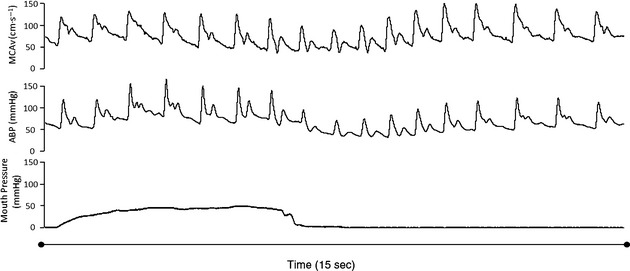
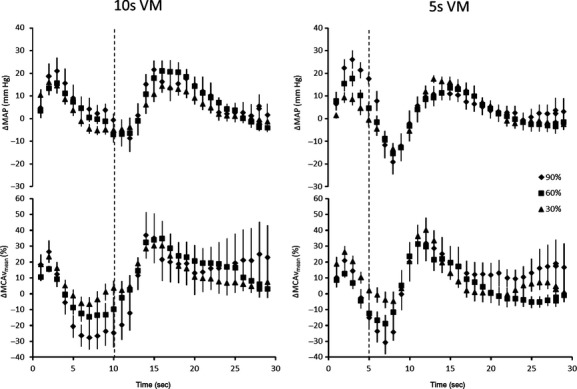
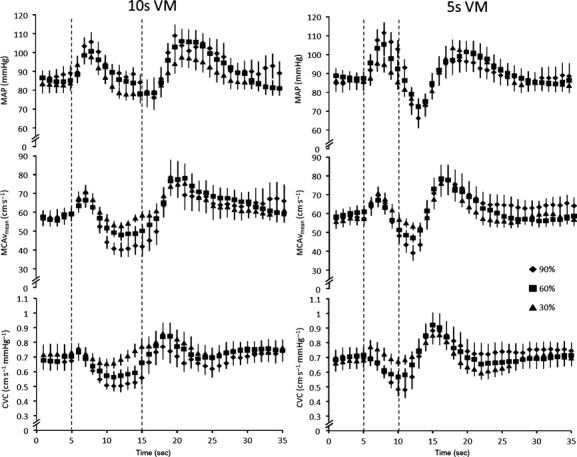
The Valsalva maneuver (VM) produces large and abrupt increases in mean arterial pressure (MAP) at the onset of strain (Phase I), however, hypotension, sufficient to induce syncope, occurs upon VM release (phase III). We examined the effect of VM intensity and duration on middle cerebral artery blood velocity (MCAv) responses. Healthy men (n =10; mean ± SD: 26 ± 4 years) completed 30%, 60%, and 90% of their maximal VM mouth pressure, for 5 and 10 sec (order randomized) while standing. Beat-to-beat MCAv and MAP during phase I (peak), at nadir (phase III), and recovery are reported as the change from standing baseline. During phase I, MCAv rose 15 ± 6 cm·s(-1) (P <0.001), which was not reliably different between intensities (P =0.11), despite graded increases in MAP (P <0.001; e.g., +12 ± 9 mmHg vs. +35 ± 14 for 5 sec 30% and 90% VM, respectively). During Phase III, the MCAv response was duration- (P = 0.045) and intensity dependent (P < 0.001), with the largest decrease observed following the 90% VM (e.g., -19 ± 13 and -15 ± 11 cm·s(-1) for 5 and 10 sec VM, respectively) with a concomitant decrease in MAP (P <0.001, -23 ± 11 and -23 ± 9 mmHg). This asymmetric response may be attributable to the differential modulators of MCAv throughout the VM. The mechanical effects of the elevated intrathoracic pressure during phase I may restrain increases in cerebral perfusion via related increases in intracranial pressure; however, during phase III the decrease in MCAv arises from an abrupt hypotension, the extent of which is dependent upon both the duration and intensity of the VM.

摘要

瓦尔萨尔瓦动作(VM)在用力开始时(I期)会使平均动脉压(MAP)大幅且突然升高,然而,在VM释放时(III期)会出现足以诱发晕厥的低血压。我们研究了VM强度和持续时间对大脑中动脉血流速度(MCAv)反应的影响。健康男性(n = 10;平均±标准差:26±4岁)站立时分别以其最大VM口腔压力的30%、60%和90%完成5秒和10秒(顺序随机)的动作。I期(峰值)、最低点(III期)和恢复期间的逐搏MCAv和MAP报告为相对于站立基线的变化。在I期,MCAv升高了15±6 cm·s⁻¹(P < 0.001),尽管MAP分级升高(P < 0.001;例如,5秒30%和90% VM时分别为+12±9 mmHg和+35±14 mmHg),但不同强度之间的MCAv升高并无显著差异(P = 0.11)。在III期,MCAv反应与持续时间有关(P = 0.045)且依赖于强度(P < 0.001),90% VM后观察到的下降最大(例如,5秒和10秒VM时分别为-19±13和-15±11 cm·s⁻¹),同时MAP也下降(P < 0.001,-23±11和-23±9 mmHg)。这种不对称反应可能归因于整个VM过程中MCAv的不同调节因素。I期胸腔内压力升高的机械效应可能通过颅内压的相关升高来抑制脑灌注的增加;然而,在III期,MCAv的下降源于突然的低血压,其程度取决于VM的持续时间和强度。
https://cdn.ncbi.nlm.nih.gov/pmc/blobs/3979/3966248/3915177ec137/phy2-2-e00233-g3.jpg
https://cdn.ncbi.nlm.nih.gov/pmc/blobs/3979/3966248/dc6425b0a838/phy2-2-e00233-g1.jpg
https://cdn.ncbi.nlm.nih.gov/pmc/blobs/3979/3966248/6f66124e3838/phy2-2-e00233-g2.jpg
https://cdn.ncbi.nlm.nih.gov/pmc/blobs/3979/3966248/3915177ec137/phy2-2-e00233-g3.jpg
https://cdn.ncbi.nlm.nih.gov/pmc/blobs/3979/3966248/dc6425b0a838/phy2-2-e00233-g1.jpg
https://cdn.ncbi.nlm.nih.gov/pmc/blobs/3979/3966248/6f66124e3838/phy2-2-e00233-g2.jpg
https://cdn.ncbi.nlm.nih.gov/pmc/blobs/3979/3966248/3915177ec137/phy2-2-e00233-g3.jpg

相似文献

1
The cerebrovascular response to graded Valsalva maneuvers while standing.站立时对分级瓦尔萨尔瓦动作的脑血管反应。
Physiol Rep. 2014 Feb 10;2(2):e00233. doi: 10.1002/phy2.233. eCollection 2014 Feb 1.
2
Cerebral hemodynamics during graded Valsalva maneuvers.不同程度瓦尔萨尔瓦动作期间的脑血流动力学
Front Physiol. 2014 Sep 15;5:349. doi: 10.3389/fphys.2014.00349. eCollection 2014.
3
Cerebrovascular and cardiovascular responses to the Valsalva manoeuvre during hyperthermia.在发热期间,瓦尔萨尔瓦动作对脑血管和心血管的反应。
Clin Physiol Funct Imaging. 2023 Nov;43(6):463-471. doi: 10.1111/cpf.12843. Epub 2023 Jun 25.
4
Cerebrovascular haemodynamics during isometric resistance exercise with and without the Valsalva manoeuvre.等长抗阻运动时有无瓦尔萨尔瓦动作对脑血管血流动力学的影响。
Eur J Appl Physiol. 2020 Feb;120(2):467-479. doi: 10.1007/s00421-019-04291-7. Epub 2020 Jan 7.
5
Forearm vascular resistance responses to the Valsalva maneuver in healthy young and older adults.健康年轻人和老年人在前臂血管阻力对瓦尔萨尔瓦动作的反应。
Clin Auton Res. 2021 Dec;31(6):737-753. doi: 10.1007/s10286-021-00810-9. Epub 2021 May 20.
6
Effects of hypovolemia and posture on responses to the Valsalva maneuver.血容量不足和姿势对瓦尔萨尔瓦动作反应的影响。
Aviat Space Environ Med. 1996 Apr;67(4):308-13.
7
Middle cerebral artery blood velocity during a valsalva maneuver in the standing position.站立位瓦尔萨尔瓦动作时的大脑中动脉血流速度。
J Appl Physiol (1985). 2000 May;88(5):1545-50. doi: 10.1152/jappl.2000.88.5.1545.
8
Effects of dehydration on cerebrovascular control during standing after heavy resistance exercise.重阻力运动后站立时脱水对脑血管控制的影响。
J Appl Physiol (1985). 2012 Jun;112(11):1875-83. doi: 10.1152/japplphysiol.01217.2011. Epub 2012 Mar 29.
9
Cerebral Blood Flow Velocity During Combined Lower Body Negative Pressure and Cognitive Stress.联合下体负压与认知应激期间的脑血流速度
Aerosp Med Hum Perform. 2015 Aug;86(8):688-92. doi: 10.3357/AMHP.4239.2015.
10
Regulation of middle cerebral artery blood velocity during dynamic exercise in humans: influence of aging.人体动态运动期间大脑中动脉血流速度的调节:衰老的影响。
J Appl Physiol (1985). 2008 Jul;105(1):266-73. doi: 10.1152/japplphysiol.00118.2008. Epub 2008 May 8.

引用本文的文献

1
Diffuse optical tomography system for acute traumatic brain injury in the intensive care unit: a prospective study on healthy volunteers.重症监护病房中用于急性创伤性脑损伤的扩散光学断层扫描系统:对健康志愿者的前瞻性研究
J Biomed Opt. 2025 Feb;30(Suppl 2):S23912. doi: 10.1117/1.JBO.30.S2.S23912. Epub 2025 Sep 17.
2
Larger reductions in blood pressure during post-exercise standing, but not middle cerebral artery blood velocity, in resistance-trained versus untrained individuals.与未受过阻力训练的个体相比,受过阻力训练的个体在运动后站立期间血压下降幅度更大,但大脑中动脉血流速度无差异。
Exp Physiol. 2025 Mar;110(3):424-437. doi: 10.1113/EP092327. Epub 2024 Dec 25.
3

本文引用的文献

1
Cerebrovascular response to valsalva maneuver: methodology, normal values, and retest reliability.脑血管对瓦尔萨尔瓦动作的反应:方法、正常值及复测可靠性。
J Clin Ultrasound. 2012 Nov-Dec;40(9):540-6. doi: 10.1002/jcu.21936. Epub 2012 May 7.
2
Effects of a brief Valsalva manoeuvre on hemodynamic response to strength exercises.短暂瓦尔萨尔瓦动作对力量训练血流动力学反应的影响。
Clin Physiol Funct Imaging. 2012 Mar;32(2):145-57. doi: 10.1111/j.1475-097X.2011.01069.x. Epub 2011 Nov 27.
3
Utility of transcranial Doppler ultrasound for the integrative assessment of cerebrovascular function.
Effects of low-pressure Valsalva maneuver on changes in cerebral arterial stiffness and pulse wave velocity.
低压瓦氏动作对脑动脉僵硬度和脉搏波速度变化的影响。
PLoS One. 2024 Sep 27;19(9):e0308866. doi: 10.1371/journal.pone.0308866. eCollection 2024.
4
Cerebral autoregulation across the menstrual cycle in eumenorrheic women.月经周期中生育期妇女的脑自动调节。
Physiol Rep. 2022 May;10(9):e15287. doi: 10.14814/phy2.15287.
5
The Acute Cardiorespiratory and Cerebrovascular Response to Resistance Exercise.抗阻运动对急性心肺和脑血管的反应
Sports Med Open. 2021 May 27;7(1):36. doi: 10.1186/s40798-021-00314-w.
6
Cerebrovascular haemodynamics during isometric resistance exercise with and without the Valsalva manoeuvre.等长抗阻运动时有无瓦尔萨尔瓦动作对脑血管血流动力学的影响。
Eur J Appl Physiol. 2020 Feb;120(2):467-479. doi: 10.1007/s00421-019-04291-7. Epub 2020 Jan 7.
7
High-intensity interval exercise and cerebrovascular health: curiosity, cause, and consequence.高强度间歇运动与脑血管健康:好奇、成因及后果
J Cereb Blood Flow Metab. 2015 Jun;35(6):902-11. doi: 10.1038/jcbfm.2015.49. Epub 2015 Apr 1.
8
Effect of acute high-intensity resistance exercise on optic nerve sheath diameter and ophthalmic artery blood flow pulsatility.急性高强度抗阻运动对视神经鞘直径及眼动脉血流搏动性的影响。
J Hum Hypertens. 2015 Dec;29(12):744-8. doi: 10.1038/jhh.2015.12. Epub 2015 Mar 5.
9
Cerebral hemodynamics during graded Valsalva maneuvers.不同程度瓦尔萨尔瓦动作期间的脑血流动力学
Front Physiol. 2014 Sep 15;5:349. doi: 10.3389/fphys.2014.00349. eCollection 2014.
经颅多普勒超声在脑血管功能综合评估中的应用。
J Neurosci Methods. 2011 Mar 30;196(2):221-37. doi: 10.1016/j.jneumeth.2011.01.011. Epub 2011 Jan 27.
4
Active regulation of cerebral venous tone: simultaneous arterial and venous transcranial Doppler sonography during a Valsalva manoeuvre.主动调节脑静脉张力:瓦尔萨尔瓦动作期间的动脉和静脉经颅多普勒超声同步检查。
Eur J Appl Physiol. 2010 Jul;109(4):691-7. doi: 10.1007/s00421-010-1411-0. Epub 2010 Mar 7.
5
Dynamic cerebral autoregulation during repeated squat-stand maneuvers.重复蹲起动作期间的动态脑自动调节
J Appl Physiol (1985). 2009 Jan;106(1):153-60. doi: 10.1152/japplphysiol.90822.2008. Epub 2008 Oct 30.
6
Transcranial Doppler assessment of the lower cerebral autoregulatory threshold.
J Clin Neurosci. 1999 Jan;6(1):42-5. doi: 10.1016/s0967-5868(99)90602-1.
7
Arterial stiffness following repeated Valsalva maneuvers and resistance exercise in young men.年轻男性反复进行瓦尔萨尔瓦动作和阻力运动后的动脉僵硬度
Appl Physiol Nutr Metab. 2007 Apr;32(2):257-64. doi: 10.1139/h06-107.
8
The effect of changes in cardiac output on middle cerebral artery mean blood velocity at rest and during exercise.静息和运动时心输出量变化对大脑中动脉平均血流速度的影响。
J Physiol. 2005 Dec 1;569(Pt 2):697-704. doi: 10.1113/jphysiol.2005.095836. Epub 2005 Oct 6.
9
The siphon controversy: an integration of concepts and the brain as baffle.虹吸管争议:概念整合与作为屏障的大脑
Am J Physiol Regul Integr Comp Physiol. 2005 Aug;289(2):R627-9. doi: 10.1152/ajpregu.00709.2004.
10
Unfavorable effects of resistance training on central arterial compliance: a randomized intervention study.阻力训练对中心动脉顺应性的不良影响:一项随机干预研究。
Circulation. 2004 Nov 2;110(18):2858-63. doi: 10.1161/01.CIR.0000146380.08401.99. Epub 2004 Oct 18.