Perry Blake G, Lucas Samuel J E
School of Health Sciences, Massey University, Wellington, New Zealand.
School of Sport, Exercise and Rehabilitation Sciences & Centre for Human Brain Health, College of Life and Environmental Sciences, University of Birmingham, Birmingham, UK.
Sports Med Open. 2021 May 27;7(1):36. doi: 10.1186/s40798-021-00314-w.
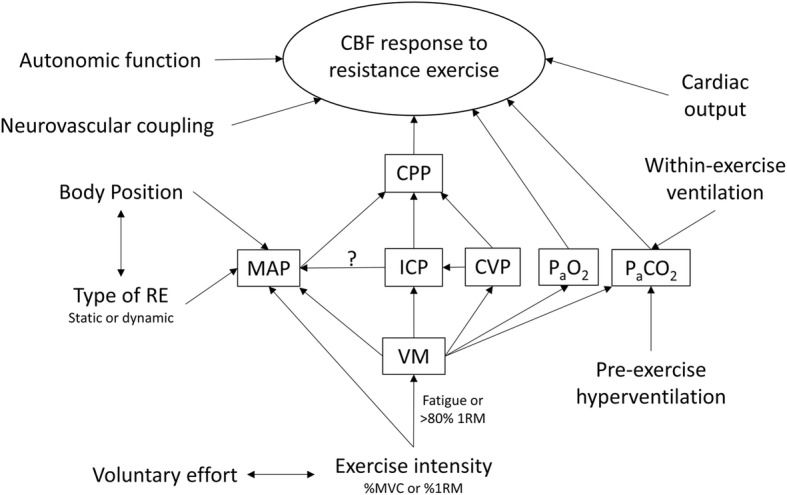
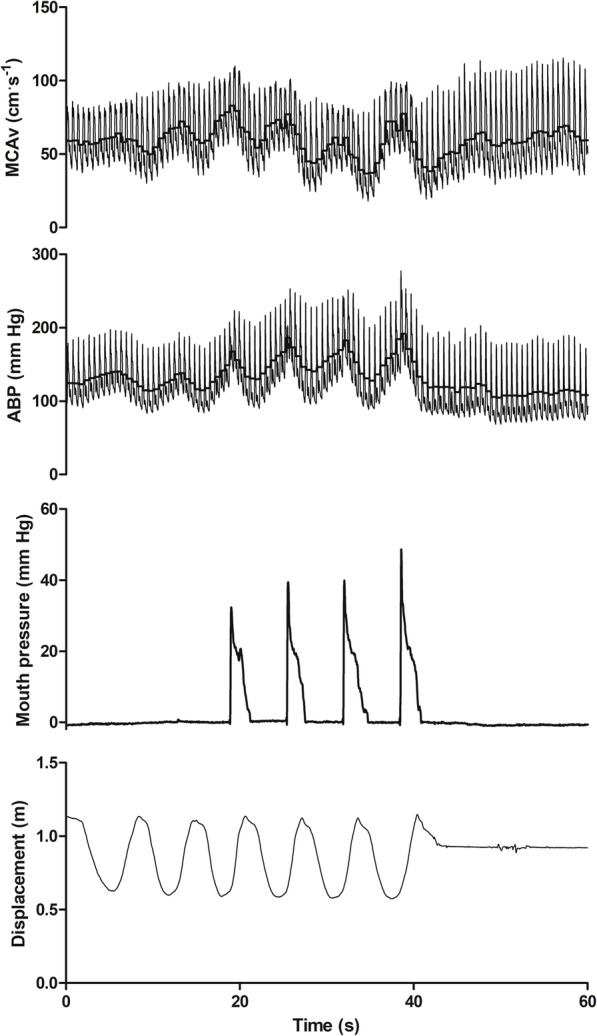
Resistance exercise (RE) is a popular modality for the general population and athletes alike, due to the numerous benefits of regular participation. The acute response to dynamic RE is characterised by temporary and bidirectional physiological extremes, not typically seen in continuous aerobic exercise (e.g. cycling) and headlined by phasic perturbations in blood pressure that challenge cerebral blood flow (CBF) regulation. Cerebral autoregulation has been heavily scrutinised over the last decade with new data challenging the effectiveness of this intrinsic flow regulating mechanism, particularly to abrupt changes in blood pressure over the course of seconds (i.e. dynamic cerebral autoregulation), like those observed during RE. Acutely, RE can challenge CBF regulation, resulting in adverse responses (e.g. syncope). Compared with aerobic exercise, RE is relatively understudied, particularly high-intensity dynamic RE with a concurrent Valsalva manoeuvre (VM). However, the VM alone challenges CBF regulation and generates additional complexity when trying to dissociate the mechanisms underpinning the circulatory response to RE. Given the disparate circulatory response between aerobic and RE, primarily the blood pressure profiles, regulation of CBF is ostensibly different. In this review, we summarise current literature and highlight the acute physiological responses to RE, with a focus on the cerebral circulation.
抗阻运动(RE)对普通人群和运动员来说都是一种流行的运动方式,因为定期参与有诸多益处。对动态抗阻运动的急性反应的特点是出现暂时的双向生理极值,这在持续有氧运动(如骑自行车)中通常不会出现,其主要表现为血压的阶段性波动,这对脑血流量(CBF)调节构成挑战。在过去十年里,脑自动调节受到了严格审查,新数据对这种内在血流调节机制的有效性提出了质疑,特别是对几秒钟内血压的突然变化(即动态脑自动调节),就像在抗阻运动中观察到的那样。急性情况下,抗阻运动可挑战脑血流量调节,并导致不良反应(如晕厥)。与有氧运动相比,抗阻运动的研究相对较少,尤其是伴有瓦尔萨尔瓦动作(VM)的高强度动态抗阻运动。然而,仅瓦尔萨尔瓦动作就会挑战脑血流量调节,并在试图区分抗阻运动循环反应背后的机制时带来更多复杂性。鉴于有氧运动和抗阻运动之间不同的循环反应,主要是血压曲线不同,脑血流量的调节显然也不同。在本综述中,我们总结了当前的文献,并重点介绍了抗阻运动的急性生理反应,尤其关注脑循环。